
In brief: An off-grid power supply typically consists of solar panels, a power station or battery, and a charge controller. In our 2026 test, systems with high efficiency, modular expandability and robust construction stand out. For mobile use, compact power stations with solar panels are ideal, while stationary systems provide more power. The key factor is your individual requirement for capacity and portability.
Being independent of the power grid is a dream for many homeowners, campers and businesses. An off-grid power supply makes it possible. It generates, stores and manages energy completely independently of the public grid. Our 2026 test and comparison shows you which systems currently stand out and what to look for when buying.
The technology is developing rapidly. While heavy lead-acid batteries and bulky inverters were once the norm, powerful lithium batteries, compact power stations and highly efficient solar panels now dominate the market. These systems can be expanded modularly, are easy to use and open up new possibilities for mobile and stationary power supply.
Table of contents
What is an off-grid power supply?
An off-grid power supply is a self-contained energy system. It does not require a connection to the public power grid. Instead, it generates its own energy, usually from sunlight, and stores it in batteries. When needed, an inverter converts DC power into 230 Volt AC power.
You can use these systems wherever there is no grid connection or wherever you want to be independent. Typical applications include garden sheds, workshops, campervans, boats and home backup power. They are also ideal for operating electrical installations in remote locations.
The benefits at a glance
- Independence: You are protected from power cuts and grid fluctuations.
- Mobility: Many systems are portable and can be used flexibly.
- Cost control: Once purchased, they have no ongoing electricity costs.
- Environmental friendliness: When using solar energy, you generate clean power.
- Flexibility: You can adjust the capacity through modular expansion.
Tip: Start with a basic system. Measure your typical consumption over several days. This will show you how much capacity you really need. You can expand the system at any time later, for example with an additional solar panel or technology accessory.
How does the system work?
Every off-grid power supply is based on three core components: the energy source, the storage unit and the user interface. In most cases, the energy source is a solar panel. It converts light into DC electricity. This flows to the charge controller.
The charge controller is the brain of the system. It controls the battery charging process and protects against overcharging and deep discharge. The battery stores the energy. Depending on the technology (lithium or lead), weight, service life and capacity vary. The inverter draws energy from the battery and makes it usable for your 230V devices.
The role of the charge controller
A good charge controller maximises efficiency. Modern MPPT controllers (Maximum Power Point Tracking) extract up to 30% more power from the solar panel than basic PWM controllers. They automatically adjust to changing light conditions. A high-quality controller is essential for a reliable system.
What types are available?
Off-grid power supplies can be broadly divided into mobile all-in-one solutions and stationary complete systems. Mobile power stations, such as the models tested, combine a battery, inverter and charging management system in one housing. They are ready to use straight away. Stationary systems are assembled from individual components, offering maximum flexibility.
Mobile power stations
These compact devices are the easiest way to get started. You can charge them via a mains plug, car cigarette lighter or solar panel. They then power your devices through integrated sockets and USB ports. They are perfect for short trips, use in the garden or as a home backup power supply. Capacities range from a few hundred to several thousand watt-hours.
Warning: Pay attention to the inverter's continuous output. Many devices have a high peak output for starting motors, but a lower continuous output. A 1000W device with a 2000W peak can start a circular saw, but can only power devices rated for up to 1000W continuous operation.
Stationary off-grid systems
For a permanent power supply in a garden shed or remote cabin, permanently installed systems are the better choice. They consist of separate solar panels, a stationary battery bank (often with 12V, 24V or 48V) and a powerful inverter. You select the components to suit your consumption. One advantage is that the battery capacity can be expanded easily.
Buying guide: What should you look for?
Choosing the right system depends on how you intend to use it. Answer these questions before buying: Where will I use the system? Which devices do I want to run and for how long? Does it need to be portable? How important is a fast charging time? These criteria will help you find the right solution.
1. Calculate capacity and power
Make a list of all the devices you want to run at the same time. Note their power consumption in watts (W) and the expected operating time in hours (h). Multiply watts by hours to calculate the required energy in watt-hours (Wh). Add up the values for all devices. Allow for a 20-30% buffer, as manufacturer specifications often apply only under ideal conditions.
2. Choose the right battery technology
Lithium-ion batteries (LiFePO4) are the standard today. They are lightweight, have a long service life (several thousand charging cycles) and have very low self-discharge. They also cope well with partial discharge. Traditional lead-acid batteries are heavier, have fewer cycles and must always be fully charged. However, they are cheaper to buy.
3. Connections and expandability
Systems with various outputs are practical: 230V Schuko sockets, 12V DC connections and USB-A/-C ports. Expandability is even more important. Can you connect additional battery modules later? Are compatible solar panels available from the manufacturer? A modular system grows with your needs.
Note: Charging speed is often overlooked. A large battery with a small solar panel can take days to charge fully. Check the power station's maximum solar input. It should be high enough to fill the battery in a reasonable time on a sunny day.
Test verdict: The comparison
In our practical test in 2026, we tested various systems under real-world conditions. We assessed ease of use, charging performance, discharge efficiency, build quality and the overall package. The following products were particularly impressive in their categories.
The highest-rated off-grid power supply products from our range in direct comparison:
| Model | Customer rating | Availability |
|---|---|---|
| Bison 230V mains adapter for 12V cordless tools | – | Currently unavailable |
| Expansion module for PS2200AC power station, 1408Wh | – | Currently unavailable |
| Expansion module for PS600AC power station, 640 Wh | – | Currently unavailable |
| SolarSaga 100 foldable solar panel | – | Currently unavailable |
| SolarSaga 200 foldable solar panel | – | Currently unavailable |
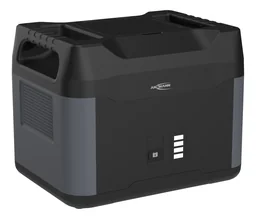
Our test winner in the expandable power station category is the expansion module for the PS2200AC power station. It doubles the capacity of the base system to an impressive 1408Wh and integrates seamlessly. The build quality is excellent and the connection is simple.
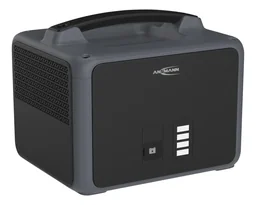
For users with moderate power needs, the expansion module for the PS600AC is a smart choice. It provides 640 Wh of additional energy and turns the compact power station into a reliable companion for weekend trips. The combination of the portable base station and this module is highly flexible.
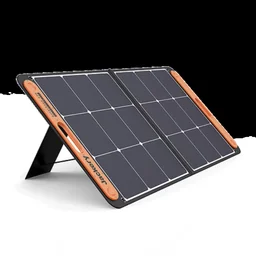
In the solar panel category, the SolarSaga 100 foldable solar panel stands out with its excellent value for money. It is lightweight, unfolds in seconds and still delivers useful performance in slightly cloudy conditions. The integrated stands and robust fabric also impressed us in the test.
Test winner in detail
The systems we tested show that modularity wins. A system that you can adapt with additional batteries and more powerful solar panels is the best long-term investment. Make sure components are compatible within the manufacturer's ecosystem. This helps you avoid costly mistakes.
Installation and operation
Setting up a portable power station is self-explanatory. Fully charge the battery, connect the solar panel if required and connect your devices. Stationary off-grid power supplies require more care. The wiring must be able to handle the current, and all connections should be protected from the weather.
Maintenance for a long service life
- Store lithium batteries at a medium charge level (approx. 50-60%) if you will not be using them for an extended period.
- Regularly clean solar panels to remove dust, bird droppings and leaves.
- Avoid both deep discharge and keeping the battery fully charged for extended periods.
- Regularly check the fluid level in lead-acid batteries.
- Protect all components from extreme temperatures and direct exposure to moisture.
The future and trends
The technology continues to evolve. In the coming years, we expect power stations with even higher energy density, meaning more capacity at the same size and weight. Charging times will continue to fall thanks to technologies such as passive balancing and faster solar charge controllers.
A major trend is intelligent app-based control. You can see the charge level and current input and output, and even switch devices on and off according to a schedule. Integration into smart home networks is becoming easier. This will turn off-grid power supply from a niche product into a mass-market solution for greater independence in everyday life.
Frequently Asked Questions
- What is the difference between a portable power station and a generator?
- A portable power station stores electricity in batteries and delivers clean power through inverters. It operates quietly, produces no emissions, and requires little maintenance. A generator burns fuel, producing exhaust fumes and noise, and requires regular maintenance. Power stations are better suited to sensitive electronics and indoor use.
- How long does a solar-powered off-grid power supply last?
- Runtime depends on the battery capacity, the power consumption of connected devices, and the amount of sunlight available. A system with 1000Wh can power a 50W refrigerator for around 20 hours. With suitable solar panels, you can recharge it during the day. Always plan for spare capacity on days with little sunshine.
- Can I use an off-grid power supply in winter?
- Yes, but with some limitations. Solar panels produce less power when the sun is lower in the sky and daylight hours are shorter. You will then need either larger panel surfaces or lower your power consumption. Batteries and components that are frost-resistant are important for continuous outdoor use.
- How much does it cost to maintain a system like this?
- Maintenance costs are low. Regularly check the connections for corrosion and keep the solar panels clean. With lead-acid batteries, you should check the water level. Lithium batteries and power stations are virtually maintenance-free. The components have a service life of several years.
- Do I need a permit for an off-grid power supply?
- Mobile, off-grid systems that are not connected to the utility grid generally do not require a permit. However, if you install the system permanently or connect it to the public grid, you may need to submit a building notification. Check with your local authority. For emergency use only in the garden or while camping, a permit is usually not required.