
In brief: In our 2026 petrol hedge trimmer test, we show which models are suitable for your hedges. We assess power, handling and durability. A good petrol hedge trimmer is characterised by a low-vibration engine, balanced weight distribution and a sharp, durable cutting blade. For large hedges and thick branches, 4-stroke engines with over 25 ccm displacement are a good choice. Our comparison will help you make the right decision.
Planning to buy a powerful petrol hedge trimmer? Our 2026 test and comparison will help you. We analyse the most important models on the market and show what really matters when choosing one. A petrol hedge trimmer is the first choice when you need to tackle large hedge areas, thick branches or uneven terrain. It offers maximum freedom without a cable and plenty of power.
Contents
Which criteria matter in a petrol hedge trimmer test?
We assess the machines according to practical criteria. These give you confidence when choosing.
- Engine power and displacement: They determine cutting power.
- Blade length and tooth spacing: They affect your working progress.
- Vibration damping: It enables fatigue-free working.
- Weight and balance: They are crucial for handling.
- Safety features: They protect you from injuries.
A good balance between power and weight is essential. A machine that is too heavy will make you tired even during short jobs.
How important are engine type and displacement?
The engine is the heart of the machine. You will mainly find 2-stroke and 4-stroke engines.
2-stroke vs. 4-stroke engine
2-stroke engines are lighter and have a higher power-to-weight ratio. They require a petrol-oil mixture. 4-stroke engines, such as the
, run more smoothly and use less fuel. They have separate tanks for petrol and oil.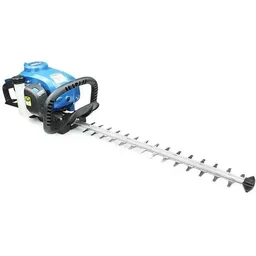
The role of displacement
Displacement in cubic centimetres (ccm) indicates the torque. For normal hedges, 22-26 ccm is sufficient. Models with over 30 ccm displacement are better suited to very thick, old branches. At 25,4 ccm, the
sits comfortably in the mid-range.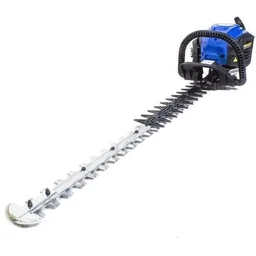
Never start the engine indoors. The exhaust fumes are hazardous to your health. Always ensure good ventilation.
What makes a good cutting blade?
The blade and its teeth are responsible for the result. Pay attention to quality.
The blade length determines how much material you can cut with each pass. For tall hedges, long blades of 60 cm or more are advantageous, as on the
. Shorter blades are more agile for precise work. The teeth must be sharp and made from robust steel. Double-sided cutting increases efficiency.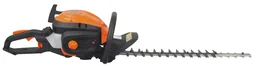
Protecting the blade
An intact blade guard is essential. It protects the teeth during transport and storage. Check its condition regularly. For all garden machines, the same applies: sharp tools are safer because they require less force and are less likely to jam.
How about comfort and safety?
A good hedge trimmer remains comfortable to handle even over longer periods.
- Anti-vibration system: Reduces strain on your hands and arms.
- Rotating handles: Allow ergonomic working positions.
- Hand guard and two-hand safety: Prevent accidental starting.
- Power-to-weight ratio: The machine should remain easy to control despite its engine.
Discover our wide range of petrol hedge trimmers for every need.
Always wear full protective equipment: hearing protection, safety glasses, gloves, sturdy shoes and robust clothing.
How can you keep your hedge trimmer in top condition?
Regular maintenance significantly extends its service life. Make time for proper care.
Maintenance after use
Remove plant residue from the blade and housing. Check that the screws are tight. Inspect the air filter and clean it when necessary. For storage, run the fuel tank empty or use a fuel stabiliser additive.
Sharp blades are essential
Blunt blades crush branches and damage plants. They increase fuel consumption and place greater strain on the engine. Sharpen the teeth regularly with a file or have the blade serviced by a specialist. You can find information on caring for all garden equipment in our guides.
The most-reviewed petrol hedge trimmers in our range compared directly:
| Model | Customer rating | Availability |
|---|---|---|
| 26cc petrol hedge trimmer with 4-stroke petrol engine | – | Currently unavailable |
| Fritz Göbel replacement edge for aluminium shovel size 9 - long-lasting shovel performance | – | Currently unavailable |
| Fritz Göbel Bison aluminium shovel with reinforced edge 38cm wide, 2,5mm thick | – | Currently unavailable |
| Fritz Göbel garden rake with levelling edge, 16 tines for soil cultivation | – | Currently unavailable |
| Fritz Göbel heart-shaped hand sheep shears 27 cm - sheep shearing & hedge trimming tool | – | Currently unavailable |
Our comparison table gives you an overview of the key data for the tested models.
Which petrol hedge trimmer is right for you?
The right choice depends on your specific needs. Answer these questions.
For occasional trimming
Do you trim medium-height hedges once or twice a year? A model with around 24-26 ccm displacement and a 55-60 cm blade length is perfectly adequate. Pay particular attention to low weight.
For professional use
Do you regularly work on large areas, privet or hornbeam? Choose a powerful trimmer with a 4-stroke engine, large displacement and a long blade. Durability and ease of maintenance are the top priorities.
For thick branches and overgrown hedges
Is your hedge old and woody? Then you need maximum cutting power. High torque and a heavily toothed blade are essential. Models such as the are a good choice here.
Our test shows that the best petrol hedge trimmer is the one that suits your hedges and your strength. Balance performance and comfort. With the right care, a robust machine will serve you for many years.
Frequently asked questions
- What are the advantages of a petrol hedge trimmer over an electric one?
- Petrol hedge trimmers offer maximum mobility and performance. They do not depend on a power socket and are ideal for large gardens, tall hedges and thick vegetation. Their powerful engines can cut through older, tougher branches with ease.
- How do I maintain a petrol hedge trimmer correctly?
- Clean the cutting blades and housing after every use. Check the air filter and oil level regularly. Always use fresh fuel and suitable 2-stroke or 4-stroke engine oil. Sharpen the blades at the end of the season.
- Are petrol hedge trimmers very loud?
- Yes, petrol hedge trimmers are among the louder garden tools. Always wear hearing protection. Modern models are often fitted with silencers, but the noise level remains high. Observe the legally prescribed quiet hours.
- Can I use a petrol hedge trimmer for shaping hedges?
- For precise shaping, lighter garden shears or cordless models are more suitable. Petrol hedge trimmers are powerful but often heavier. With a short blade and plenty of practice, simple shapes are possible.
- What should I bear in mind when starting a new petrol hedge trimmer for the first time?
- Read the operating instructions carefully. With 2-stroke engines, mix the fuel and oil in the correct ratio. Fill all operating fluids. Run in the machine according to the manufacturer's instructions, often at a lower engine speed.