
In brief: Plant hedges for privacy screening, wind protection and as a habitat for wildlife. Planning starts with the location, soil and desired height. Choose shrubs such as hornbeam, privet or thuja to suit the light and available space. Autumn is the best time to plant. Space the shrubs adequately, water them thoroughly and trim them regularly. Artificial hedges provide instant privacy without maintenance.
Planting Hedges and Shrubs: Planning, Planting & Selection
A hedge gives your garden structure. It creates privacy, protects against wind and provides a home for birds. Proper planning and planting determine its success and maintenance requirements. We show you how to do it.
Expert tip
Draw your garden plan to scale. Mark existing trees, paths and sunlight exposure. This will show you where a hedge makes sense and how much space you really have.
Why are hedges important for your garden?
Hedges are more than a green wall. They are living features. A well-chosen hedge improves your garden's microclimate. It filters dust, reduces noise and provides shade.
Compared with fences or walls, a hedge looks more natural. It blends into the garden and changes with the seasons. Birds nest in the dense branches, while insects find food there.
Privacy screening with ecological benefits
A dense hedge protects you from prying eyes. Choose evergreen shrubs such as yew or cherry laurel for year-round privacy. Deciduous hedges such as hornbeam do not provide complete screening in winter, but their delicate branch structure is attractive.
The ecological value is high. Native shrubs such as hawthorn or European beech support biodiversity in your garden. Exotic plants such as thuja, on the other hand, provide little food for insects.
A hedge is the backbone of a garden. It divides the space, creates a sense of security and connects us with the seasons.
How do you plan a hedge properly?
Good planning prevents problems later. First, clarify its purpose. Do you want privacy screening, a boundary or a decorative border? The answer determines the height, density and choice of plants.
Check the location. How many hours of sunlight does the planned area receive each day? Is the soil sandy, loamy or rich in humus? A soil analysis provides certainty. You can find the garden supplies you need for preparation in our shop.
Distance from neighbours and paths
Find out about local regulations. Many councils have rules on the distance hedges must be planted from boundaries. Keep at least 50 centimetres from the property boundary, and more for tall hedges.
Allow enough space for the mature hedge. A hornbeam hedge can easily grow two metres wide. You need to be able to trim it from both sides, so leave room to work.
Important note
Do not plant invasive non-native species such as butterfly bush or Canadian goldenrod. They displace native plants. Check the list published by the Federal Agency for Nature Conservation.
Which shrubs are suitable for which type of hedge?
There is a wide choice. Decide between deciduous and evergreen plants, and between fast and slow growth. Also consider the amount of maintenance required.
For formal, clipped hedges, boxwood, yew or hornbeam are suitable. They tolerate hard pruning. For informal, flowering hedges, plant forsythia, butterfly bush or weigela.
Classic plants in German gardens
- Hornbeam: Hardy, tolerant of pruning and deciduous; the old leaves often remain attached until new growth appears.
- European beech: Similar to hornbeam, but with reddish autumn foliage that remains brown in winter.
- Privet: Fast-growing, semi-evergreen and very undemanding; ideal for tall privacy hedges.
- Yew (Taxus): Evergreen, extremely tolerant of pruning and slow-growing; all parts of the plant are poisonous.
- Cherry laurel: Evergreen, very fast-growing, requires plenty of space and is not native.
For nutrient-poor or acidic soils, conifers such as arborvitae (thuja) or false cypress are an option. However, they are susceptible to disease if planted in the wrong location.
Choose mixed hedges made up of different species. This increases resistance to pests and looks more natural than a monotonous row.
When and how do you plant hedges?
Autumn is the classic planting season. The soil is warm and the plants focus their energy on root growth. You can also plant container-grown plants in spring when the ground is frost-free. Avoid hot summer days.
Step-by-step planting guide
- Prepare the soil: Loosen the soil to spade depth. Remove stones and weed roots. Mix heavy soils with sand.
- Dig a planting trench: Dig a trench twice as wide as the root ball. Its depth should match the height of the root ball.
- Prepare the roots: Place potted plants in a bucket of water until no more bubbles rise. Leave balled plants in their hessian wrapping.
- Plant and align: Place the shrubs in the trench. Stretch a string line to create a straight row. The top of the root ball should be level with the ground.
- Water and fill: Fill half the trench with soil and water thoroughly. Then fill it completely, gently firm down the soil and create a watering rim.
Water thoroughly after planting. A layer of bark mulch helps retain moisture. Check the soil moisture regularly during the first few weeks.
Additional advice
For a particularly dense hedge from the outset, plant the shrubs in a so-called "zigzag pattern". Place them in two staggered rows. This allows the shoots to intertwine more quickly.
How do you care for hedges after planting?
Care determines the hedge's health and shape. In the first year, regular watering is essential. After that, fertilise in spring with an organic fertiliser.
Pruning is the most important maintenance task. Lightly trim new hedges in the first year to encourage branching. Trim established hedges once or twice a year. The best time is late June and, if necessary, February.
Identify pests and diseases early
Keep an eye on your hedge. Yellow needles on thuja indicate fungal infection or a lack of water. Webbing on boxwood indicates box tree moth. If you notice an infestation, act quickly with a suitable plant protection product.
Strengthen the plants from the outset. Healthy shrubs chosen for the right location are more resilient. Avoid waterlogging and planting too closely.
What alternatives are there to living hedges?
Not every location is suitable for living shrubs. Alternatives are needed for extremely shady spots, balconies or instant privacy screening.
Artificial hedge panels made from UV-resistant plastic offer a practical solution. They are weather-resistant, require no maintenance and stay green every day. High-quality products such as
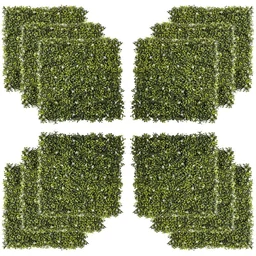
Benefits of artificial hedge panels
- Instant effect: Complete privacy screening from day one.
- Maintenance-free: No watering, trimming, fertilising or leaf removal.
- Flexible: You can mount the panels on fences, walls or balcony railings.
- Long-lasting: Quality products are frost- and UV-resistant.
Products such as
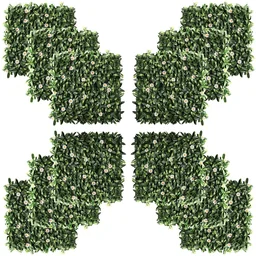
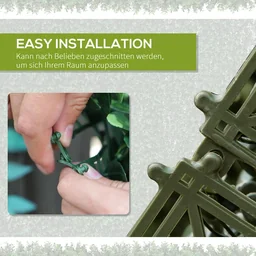
Whether living or artificial, a well-planned hedge enhances your garden. With the right preparation and selection, you can create a lasting green structure.
Frequently Asked Questions
- When is the best time to plant a hedge?
- The best planting time for most hedge plants is autumn, from September to November. The soil is still warm, allowing the plants to establish before winter and get off to a strong start in spring. Container-grown plants can theoretically be planted all year round, but avoid frost and extreme heat. Hedges planted in spring need intensive watering.
- How far apart should I plant hedge plants?
- The spacing depends on the type of shrub. For a dense hedge, plant slow-growing varieties such as box closer together, around 20-30 cm apart. For fast-growing varieties such as privet or hornbeam, 40-50 cm is ideal. Take the shrubs' final width into account. Planting too closely leads to competition for light, water and nutrients.
- Which hedge grows fastest?
- Privet, hornbeam and field maple are among the fastest-growing hedge plants. They can grow by up to 50 cm per year. Evergreen alternatives such as Leyland cypress grow extremely quickly but need frequent trimming. Bear in mind that fast growth often means more maintenance due to regular trimming.
- How do I care for a hedge in its first year?
- In the first year, consistent watering is the priority, especially during dry periods. Apply a specialist plant fertiliser in moderation. Avoid heavy shaping in the planting year; only trim lightly to encourage branching. Protect shallow-rooted shrubs from winter desiccation caused by frost.
- Are artificial hedges a good alternative?
- Yes, for areas with little light, balconies or instant privacy screening. High-quality artificial plants such as PRODUCT_92083 are UV-resistant and weather-resistant. They need no watering, trimming or fertilising. Choose a natural-looking design and secure the panels firmly. You can find them in our artificial plants category.
You may also be interested in
- Garden design with trees and shrubs: your garden, your rules
- Choosing and planting hedge plants correctly: the complete guide
- Shaping ornamental shrubs: how to design and care for your shrubs
- How do I plan and design my dream garden step by step?
- Privacy screen mesh or hedge: a direct comparison for your garden
- Garden fencing and privacy screens: design, materials and installation