
In brief: The best time to plant shrubs is in autumn from October to November or in early spring from March to April. The soil must be frost-free and sufficiently moist. Container-grown shrubs can be planted almost all year round, except during frost, summer heat or in waterlogged soil. The species and root ball determine the exact timing.
Plant shrubs in autumn or early spring when the soil is frost-free and moist. Container-grown plants can also be planted outside these periods if you water them reliably. The root ball, shrub species and current weather conditions are key factors.
Matching the planting time to the individual plant makes it easier for the shrub to establish. In autumn, the shrub still forms new roots even though there is little growth above ground. In spring, it uses the rising temperatures for a fast start.
The calendar only provides guidance. A mild November can be better than a dry October. Conversely, spring planting should be delayed if the soil is still frozen or waterlogged after heavy rainfall.
When to plant shrubs: Which season is best?
Container-grown, root-balled or bare-root shrubs?
The way a plant is sold determines how flexibly you can choose the planting date. A potted shrub has a protected root ball. Root-balled plants also have compact roots, while bare-root plants, whose roots are not covered with soil, dry out particularly quickly.
- Container-grown shrubs: You can plant these shrubs almost all year round. Frost, extreme heat, dry winds and waterlogged soil rule out planting.
- Root-balled shrubs: The traditional planting season is autumn and early spring. Plant on a cool day if possible and keep the root ball moist until planting.
- Bare-root shrubs: These woody plants are usually planted in late autumn or early spring. Plant them immediately after purchase or temporarily heel the roots into moist soil.
- Evergreen and frost-sensitive species: Planting in early autumn or spring gives them enough time to form new roots before winter.
Bare-root plants do not tolerate long waiting times. Wrap the roots in a damp cloth after transport and place the plant in the shade. Trim damaged roots cleanly before planting the shrub.
Autumn, spring or summer: Which season suits which shrub?
Autumn is suitable for many deciduous woody plants. After the leaves fall, the shrub loses less water through its leaves and can direct its energy towards root formation. Plant from September to November as long as the soil is open and not frozen.
Spring is suitable for evergreen, frost-sensitive and late-ordered shrubs. Wait until the soil has dried out but the first strong growth phase has not yet begun. March and April often offer good conditions for this.
Summer planting is reserved for container-grown plants. Prepare the planting hole before taking the shrub out of the pot and water it immediately after planting. If temperatures are above 30 degrees, postpone planting to an overcast day or evening.
“Woody plants can be planted as long as the soil is frost-free and not waterlogged. Planting time therefore depends on the soil and weather, not just the calendar.”
How do you prepare the site for shrubs?
The right planting time cannot replace a suitable site. Before buying, check how much sun, wind and soil moisture the species you want can tolerate. A shade shrub will suffer in the hot south-facing sun, while a sun-loving woody plant will flower only weakly in deep shade.
Check light, soil and mature size
Observe the site on a sunny day and on a cloudy day. Note whether it receives light in the morning, at midday or only in the evening. Also consider house walls, roof overhangs, large trees and hedges that block rain or heavily compete for root space.
- Sun: Many flowering ornamental shrubs produce more flowers and develop a compact crown in a bright location.
- Partial shade: Numerous woody plants grow well here as long as the soil remains evenly moist and does not become waterlogged.
- Shade: Choose species that can cope with little direct light. A bright woodland edge is more suitable than a permanently dark spot beneath dense trees.
- Soil: Loam, sand, humus content and pH value affect the supply of water and nutrients. The species' requirements must match the soil.
Take a small sample from different areas of the bed. If the soil crumbles excessively, it often lacks humus. If it remains sticky and wet, you need better drainage or a plant suited to the site. Loosen compacted soil across the whole area, not just in the planting hole.
Also plan for the plant's mature size. A small shrub from the garden centre can become several metres wide within a few years. Keep it away from paths, windows, walls, utility lines and property boundaries. You can find suitable garden and plant supplies for a spade, planting dibber and ties.
How large should the planting hole be?
Dig the planting hole about twice as wide as the root ball. The depth depends on the root ball, not on the length of the spade. The top of the root ball should later be level with the surrounding soil.
- Remove lawn, weeds and large stones from the planting area.
- Loosen the sides of the hole if the spade has left a smooth, compacted surface.
- Improve very sandy soil with mature compost and loamy soil with organic material. Mix the amendments into the excavated soil.
- Do not use fresh manure or apply concentrated fertiliser directly to the roots.
In heavy soil, check after watering whether the water drains away within a few hours. If it remains for longer, the risk of root rot increases. A drainage layer alone will not solve the problem if the underlying soil is permanently compacted.
Expert tip
Before planting, place the pot or root ball in a bucket of water until no more air bubbles rise to the surface. This gives the shrub a fully moistened root area to start with. Then let excess water drain away briefly before planting it.
How do you plant shrubs correctly?
Planting itself only takes a few minutes. Still, work carefully, because an uneven position, a buried root collar or a dry root ball can make it much harder for the shrub to establish. Prepare all the materials before removing the shrub from its container.
Planting a shrub in seven steps
- Prepare the planting site: Remove vegetation from an area at least as large as the shrub's eventual root zone. For small shrubs, a diameter of around 60 to 80 centimetres is initially sufficient.
- Check the roots: Carefully remove container-grown plants from their pots. Loosen any strongly circling outer roots with your fingers. Cut back damaged roots with clean scissors.
- Check the height: Place the shrub in the hole as a trial. The root collar must not be below the future soil surface. With grafted plants, the grafting point must remain clearly above ground level.
- Choose the orientation: Turn the shrub so that its most attractive side faces the path or seating area. For a hedge, align the plants along a string line.
- Fill in the soil: Fill the hole with the prepared excavated soil. Push the soil beneath and between the roots without leaving large air pockets.
- Firm the soil: Gently press down the soil with your foot. Excessive compaction deprives the roots of air and makes it harder for water to drain away.
- Create a watering basin: Form a low watering rim around the shrub. Water slowly and thoroughly until the soil throughout the root zone is moist.
Ensure good soil contact after planting
A generous amount of water immediately after planting settles the soil between the roots. This also applies in rainy weather if the rain has only moistened the surface. After watering, check whether the shrub has sunk and correct its height immediately.
Stake the shrub only if wind, loose soil or a large crown makes it unstable. Loosely tie the stem with a wide, elastic band. The tie must not rub and should be checked as the shrub grows.
A layer of mulch retains moisture in the soil and slows weed growth. Spread bark humus, leaf compost or other suitable organic material to a thickness of five to seven centimetres. Leave a clear ring around the stem so that the bark stays dry.
Important note
Never plant a shrub deeper than it was previously in its pot or at the nursery. A covered root collar stays too wet and can rot. Also, do not fill the planting hole with pure compost, as this separates the root ball from the surrounding soil.
How do you plan a garden with shrubs?
Good garden design with shrubs combines function and growth. First decide what you want the woody plant to provide: privacy, flowers, autumn colour, wind protection, food for birds or a clear boundary. Then choose species and varieties that suit the location and the level of maintenance you want.
Plan for the growth habit and mature size
Narrow, upright shrubs are suitable for confined beds. Broad-growing species need space away from paths and façades. Spherical or trailing forms make attractive feature plants, while identical plants arranged in groups create a calmer, more cohesive area.
- For privacy screening: Combine shrubs with similar mature heights and stagger the planting distances. This creates fewer gaps without planting the shrubs too closely together.
- For a mixed bed: Place taller shrubs at the back and shorter species at the front. Repeat individual colours or shapes so that the group looks cohesive.
- For a feature plant: Give the shrub enough room for its crown. A single woody plant only makes an impact when it is not squeezed between other plants.
- For small gardens: Choose compact varieties and check their mature width. Regular pruning cannot replace choosing a suitable variety.
- For property boundaries: Check local regulations before planting and keep the required distance.
When calculating planting distances, allow for half the diameter of the mature crown. A shrub with a mature width of two metres should be planted around one metre from the next shrub of a similar size if the crowns are meant to just touch. Plant slightly closer for a dense group and further apart for easier maintenance.
How do you combine ornamental shrubs effectively?
Plan for at least two flowering periods and complement them with attractive bark, autumn colour or evergreen foliage. Choose plants with similar requirements for sunlight and soil. A colourful selection will only remain harmonious over time if all the species included can thrive in the chosen location.
For a longer bed, the flowering set of 8 ornamental shrubs, 50 to 70 cm tall, , can serve as a starting point. Before planting, check the site requirements of every shrub included and distribute the plants according to their mature size. Do not automatically arrange all the specimens in a straight row.
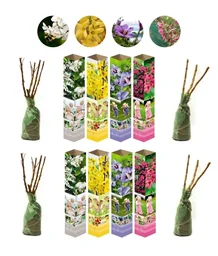
The Flower-up 4-piece set of ornamental shrubs, 50 to 70 cm tall, , is suitable for a smaller planting area or a repeated group along a path. Leave enough space between the plants for their mature crowns and include access paths for maintenance in your plans.
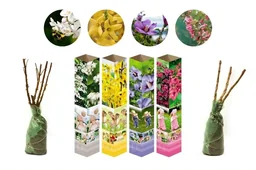
As a single accent, you can use the hardy ornamental shrub 'Tricolour', approximately 15 cm tall, . With a small initial size, the shrub's eventual growth is particularly important. Do not plant it too close to fast-growing neighbours that could shade it during its first year.
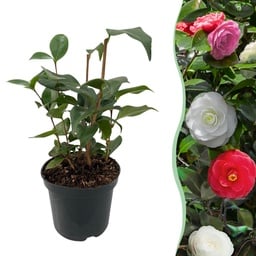
A planting plan on paper helps prevent unsuitable purchases. Draw the bed to scale, mark paths and windows, and indicate mature widths with circles. This lets you spot overlaps before you start digging.
“The choice of a woody plant must be based on the site and its eventual size. A small root ball at the point of sale is not a guide to planting distance.”
What care do newly planted shrubs need?
After planting, watering is crucial for a good start. The roots have not yet fully reached the surrounding soil and cannot compensate for dry conditions. Check the soil regularly, especially in windy conditions, sandy soil and sunny locations.
How often should you water newly planted shrubs?
Water slowly and thoroughly immediately after planting. For the first two to three weeks, check every two to three days whether the top five to ten centimetres of soil are dry. Check more often in hot weather and less often during prolonged rain.
- Water in the early morning or evening, when evaporation is lower.
- Apply the water to the soil rather than over the leaves. This ensures the moisture reaches the root area.
- Water less often but thoroughly, rather than applying small amounts every day.
- After watering, check that the water drains away and does not collect around the stem.
A newly planted shrub needs several thorough waterings during dry weeks. The exact amount depends on the root ball size, soil and weather. A larger root ball needs more water than a small container plant, but it must not be left permanently waterlogged.
With several shrubs, an easily accessible water connection makes care easier. Suitable solutions for garden irrigation help supply beds evenly. Still check each plant individually, as shady and sunny areas dry out at different rates.
How to use mulch, fertiliser and plant protection correctly
Only mulch the root area once the soil is sufficiently moist. A five to seven centimetre layer of suitable organic material reduces evaporation and protects the soil from strong temperature fluctuations. Do not pile the material directly around the stem.
Immediately after planting, the shrub usually does not need fertiliser. It first needs to develop new roots. Moderate fertilisation in the spring of the following year is often sufficient. Use a plant and flower fertiliser suitable for ornamental shrubs and follow the dosage instructions.
Check young shrubs regularly for broken shoots, signs of feeding damage and unusual leaves. Remove individual damaged parts cleanly. If problems keep recurring, you can find suitable information and products in the plant protection section.
Heavy pruning immediately after planting is not generally necessary. Remove damaged branches and only reshape the crown as far as the species can tolerate. Plan the main formative pruning according to the pruning requirements of the particular shrub.
Additional advice
Mark newly planted shrubs with small labels and note the planting date, variety and location. This will help you identify next spring which plants start shooting particularly early and when they need watering, pruning or protection.
When planting time, location and care are right, shrubs establish reliably. Monitor the plants regularly during their first year and adjust watering to the weather and soil. This allows a small plant to develop into a sturdy shrub that will shape the garden for years to come.
Frequently asked questions
- When is the best time to plant shrubs?
- For most deciduous shrubs, the best planting time is in autumn after the leaves have fallen or in early spring. The ground must be frost-free and workable. You can also plant container-grown shrubs in summer if you water reliably and avoid periods of hot weather. It is better to plant evergreen and frost-sensitive species in spring.
- Can I plant shrubs in summer?
- Yes, you can plant container-grown shrubs in summer. Choose a cool, overcast day and water the root ball before planting. The shrub will need regular watering during the first few weeks. Delay planting during extreme heat, dry conditions, bright sunshine or when temperatures above 30 degrees are forecast.
- How deep should a planting hole be for a shrub?
- The planting hole should be no deeper than the root ball and about twice as wide. Position the shrub so that the top of the root ball is level with the surrounding soil. The root collar should remain visible. Only loosen the bottom of the hole if the soil is compacted.
- How much space do shrubs need when planting?
- The spacing depends on the mature width, not the size of the plant when purchased. For small ornamental shrubs, 60 to 100 centimetres is often sufficient, while larger species need considerably more space. Check the variety information, allow for half the final diameter and plan around paths, windows and property boundaries.
- Do newly planted shrubs need fertilising?
- Newly planted shrubs initially need above all water and good contact between the roots and soil. Do not add fertiliser directly to the planting hole. A starter application in the spring of the following year is usually sufficient unless the soil is particularly poor. Use a suitable fertiliser and follow the requirements of the particular species.
You might also be interested in
- Planting trees and shrubs: The right guide for getting started
- Planting berry bushes: How to achieve a successful harvest
- Low-maintenance shrubs for the garden: Green variety
- Spring planting: What to plant in the garden and when
- Early-flowering shrubs: Colourful garden highlights in spring
- How to prune shrubs correctly: The ultimate guide