
In brief: You can successfully plant trees and shrubs by first checking the location and selecting the right tree. Dig a sufficiently large, loose planting hole. Set the root ball deep enough for its surface to be level with the ground. Fill the hole with soil, firm it down and water thoroughly. A tree ring and support stakes help the tree establish successfully.
Planting trees and shrubs: Important tips for getting started
A tree can transform your garden for decades. Planting it correctly determines its health, growth and stability. This guide shows you how to plant trees and shrubs properly. Avoid common mistakes from the outset.
The effort is worthwhile. Well-planted trees and shrubs in the garden require less maintenance. They enrich the ecosystem and improve quality of life. We begin with planning.
Why is preparation so important?
Thorough planning saves you from having to transplant the plant later or even losing it. Two factors are absolutely critical: the location and choosing the right tree.
How do I find the perfect location?
Analyse your garden carefully. Consider the tree's final height and width. Will the space still be sufficient in 20 years? Pay attention to distances from buildings, utility lines and neighbouring properties.
Light requirements vary by species. Sun-loving fruit trees struggle in the shade. Woodland trees can suffer in the blazing southern sun. Observe the sun's path throughout the day.
The soil has a major influence on success. Is it sandy and dry, or clayey and heavy? A simple finger test provides useful information. Choose the tree to suit the soil, not the other way around.
Pro tip
Never plant large trees directly in the lawn. A tree ring free of grass and competing plants is essential. Mulch this area with bark compost. It protects against drying out and weeds, and helps protect your lawn mower.
Which trees are suitable for a climate-friendly garden?
Choose native species such as rowan, field maple or small-leaved lime. They are adapted to our climate, robust and provide food for native insects and birds. Exotic species often look attractive but are usually of little ecological value.
Think about the future. A climate-friendly garden is resilient. Choose species that can cope with dry periods and higher temperatures. Sustainable garden design starts with this decision.
A plant is only as good as its root system. A healthy, compact root ball without circling roots is the foundation for a long tree life.
How do you dig the ideal planting hole?
Digging the planting hole involves more than simply excavating soil. It creates the ideal space for the plant to get started. The rule of thumb is: twice the width of the root ball and one and a half times its depth.
Thoroughly loosen the base and sides with a digging fork. Compacted sides act like a concrete tub and prevent the roots from spreading. In heavy soils, improve the excavated soil with sand or compost.
Never plant the tree deeper than it stood at the nursery. The surface of the root ball should be level with the surrounding soil. Planting too deeply causes a lack of oxygen and rot.
Important note
Remove the pot or root-ball cloth only when you are at the planting hole. Roots dry out within minutes in the sun. For wire baskets, cut the wire and fold it back. The material will decompose in the soil.
What tools do you need to plant shrubs?
A spade and shovel are enough for small shrubs. Large trees require a sturdy shovel, a digging fork and possibly a wheelbarrow. Sharp tools make the work easier. Our garden tools category offers the right selection.
Keep water within reach. Watering the tree in is the final, crucial step. A long garden hose is more practical than several watering cans.
What should you consider when planting the tree?
Place the tree in the prepared hole. Check the height with a board laid across the hole. Now fill in the soil in layers, carefully firming down each layer. This prevents large air pockets.
Shape a watering basin from the soil. It keeps water directly above the root area. Now comes the big drink: water thoroughly until no more air bubbles rise and a small puddle forms.
Water is the lift that carries nutrients. Without an adequate water supply during the establishment phase, the young plant's entire nutrient transport system comes to a standstill.
When and how should you support a young tree?
Insert one or two stakes before filling in the soil. The stake should be positioned in the direction of the prevailing wind. Secure the trunk with coconut rope or a special tree tie. The tie should form a figure eight to prevent rubbing.
: A tree spiral protects the delicate trunk not only from wildlife browsing by rabbits or deer, but also from mechanical damage when mowing. It is a worthwhile investment for young trees.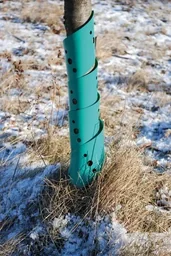
How do you care for trees and shrubs after planting?
The first growing season is critical. Water regularly and thoroughly during dry periods. Check the moisture in the root zone, not just at the surface. A mulch layer made from bark compost or shredded garden waste can reduce the need for watering by up to 50 percent.
Avoid using mineral fertiliser in the first year. The roots need time to develop. Organic fertiliser such as our
(organic fertiliser for fruit trees) works slowly and gently. It supports soil life and provides the plant with the nutrients it needs.
Additional advice
Applying seaweed lime in spring can be particularly useful for lime-loving plants such as boxwood or fruit trees
. It improves soil structure, supplies trace elements and can increase the plants’ resilience. You can also find out more in our plant protection section.
How do you protect young trees and shrubs in winter?
Newly planted trees and shrubs are more sensitive to frost. A layer of leaves or brushwood around the base of the tree insulates the shallow roots. For evergreen shrubs, garden fleece can provide protection from sun and wind and help prevent frost drought.
Remove winter protection in good time in spring. Check the tie to the stake and loosen it if it is cutting into the trunk.
How does planting trees contribute to greater sustainability?
Every tree you plant makes an active contribution. It absorbs CO2, produces oxygen, cools the surroundings through evaporation and filters dust. Planting a tree is a direct step towards a climate-friendly garden.
A tree donation to projects or planting a tree on your own property has a long-term impact. Combine trees with perennials and a flower-rich meadow for maximum biodiversity. Sustainable garden design focuses on creating habitats.
Use local materials. Avoid peat. Our range of plant and flower fertilisers offers many organic alternatives. Every decision counts.
With this guide, you are well prepared. You know how to assess the location and choose the right tree, dig the planting hole correctly and plant your tree. Your garden will thank you.
Frequently asked questions
- When is the best time to plant trees and shrubs?
- The ideal planting time for most trees and shrubs is autumn (October-November) or spring (March-April). In autumn, the soil is warm, the roots continue to grow and the plant gets off to a strong start in spring. Container-grown plants can be planted almost all year round when the ground is frost-free. Avoid periods of severe frost, heat or drought.
- How large should a planting hole for a tree be?
- The planting hole should be at least twice as wide and 1.5 times as deep as the root ball. For a root ball with a diameter of 50 cm, dig a hole 100 cm wide and 75 cm deep. Also loosen the base and sides of the hole thoroughly. A generous hole gives the roots room to grow and makes it easier for them to establish in the surrounding soil.
- Does every newly planted tree need a stake?
- No, not every tree needs support. A stake is advisable for standard trees, exposed locations or plants with a small root ball. Correct tying is important: position the stake in the direction of the prevailing wind before planting and secure the trunk with a wide, flexible tie. Remove the support after one to two years so that the tree can develop a strong, stable structure.
- How should I water newly planted trees and shrubs?
- After planting, water thoroughly once until a small puddle forms. In the following weeks, trees and shrubs need regular watering because their root systems are still small. Check the moisture in the root zone, not just at the surface. A layer of bark compost mulch significantly reduces evaporation. Avoid waterlogging.
- What does a climate-friendly garden through tree planting mean?
- Trees absorb CO2, produce oxygen, cool their surroundings through evaporation and provide habitats. A climate-friendly garden uses native, site-appropriate trees and shrubs that are adaptable and provide food for insects and birds. Avoid peat and choose durable materials. Every tree donation or planting directly contributes to the microclimate and biodiversity.
You may also be interested in
- Planting a tree: The perfect start for a strong, healthy tree
- Garden design with trees & shrubs: Your garden, your rules
- Planting hedges: Planning, planting and choosing the right hedge for your garden
- Creating a new garden: Planning, design and first steps
- Plant test & comparison 2026: The best trees and shrubs for your garden
- Caring for indoor bonsai: Beginner tips for small trees