
In brief: The right time to prune ornamental grasses depends mainly on the variety. Cut back deciduous grasses in late winter before new growth begins. Wintergreen and evergreen varieties need only light care in spring. Pruning too early leaves plants unprotected from frost, while pruning too late can damage young shoots. The simple rule: watch for new growth.
When to Prune Ornamental Grasses for Healthy Growth
Pruning ornamental grasses is about plant health, not personal preference. The right timing affects your grasses’ vigor, blooms and lifespan. Prune at the wrong time and you could weaken or even kill the plant. The good news is that the rule is simple once you know what kind of grass is growing in your garden.
The Biggest Mistake When Pruning Grasses
Many home gardeners cut everything back in fall to keep the garden tidy. For ornamental grasses, that’s a serious mistake. Dry stems aren’t dead material; they provide an essential layer of protection. They shield the plant’s sensitive crown and growing points from frost and prolonged dampness.
Important note
Never prune ornamental grasses in fall. The old stems provide essential winter protection. Without them, severe frost can reach the roots and cause the plant to die.
Tall grass stems also provide winter shelter for insects, while seed heads offer food for birds. In a winter garden, they add structure and movement, especially when covered in frost.
Deciduous Ornamental Grasses: The Hard Spring Cut
Deciduous grasses include some of the most striking and popular varieties. Their aboveground growth dies back completely in fall, and they sprout again in spring. These grasses need a thorough cutback.
Common Deciduous Grasses
- Pampas grass (Cortaderia selloana): An impressive specimen grass with feathery plumes.
- Chinese silver grass (Miscanthus): Comes in many varieties, from compact plants to giant grasses, with beautiful fall color.
- Switchgrass (Panicum virgatum): An ornamental grass with delicate growth and attractive reddish fall color.
- Fountain grass (Pennisetum): Known for its fluffy, bottlebrush-like flower heads.
- Chinese fountain grass (Pennisetum alopecuroides): A popular, medium-height grass with soft plumes.
The Best Time to Prune
Prune deciduous ornamental grasses in late winter to very early spring. In most areas, that means late February through mid-March. Wait until the hardest freezes have passed. The exact timing depends on your region and the weather.
Watch for new growth. As soon as you see the first fresh green tips at the base of the plant, it’s time to act. Prune BEFORE the new growth appears; otherwise, you may cut off the young shoots.
"The old rule, 'When the forsythias bloom, it is time to cut back the grasses,' is a good sign that you can start work in the ornamental garden."
How to Prune Deciduous Grasses
- Prepare: Put on sturdy gloves. Many grasses have sharp leaf edges.
- Tie them up: Loosely tie the old stems together about halfway up with twine. This makes cutting neater and the clippings easier to remove.
- Cut: Cut the grass back to about one hand’s width (10-15 cm) above the ground. Use sharp pruning shears for small clumps or a sharp hedge trimmer for larger areas.
- Dispose: Shred and compost the clippings or use them as mulch.
Find the right sharp garden tools for the job in our selection. A clean cut is the best start for a healthy plant.
Wintergreen and Evergreen Ornamental Grasses: Less Is More
This group keeps its foliage through winter. A drastic cutback would weaken the plants unnecessarily and leave unattractive bare patches. A light touch is best.
Common Wintergreen and Evergreen Grasses
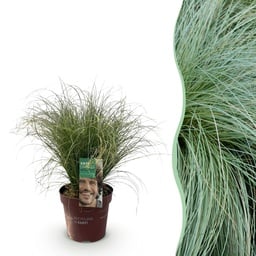
- Sedges (Carex): For example, the hardy Carex comans 'Frosted Curls'. It forms loose, gray-green clumps.
- Fescue (Festuca): Blue fescue (Festuca cinerea) is known for its intensely blue-gray, rounded clumps.
- Woodrush (Luzula): Evergreen grasses that thrive in woodland and shady spots.
- Molinia: A wintergreen grass with striking golden-yellow fall color.
Pro tip
Comb through wintergreen grasses in spring with your hands or a wide-toothed rake. Carefully remove all dead, brown stems from the clump. This keeps healthy green leaves in place and helps the plant look fresh and well cared for right away.
Spring Care Instead of Pruning
For these grasses, "pruning" isn’t quite the right word. The best care is to clean out or comb through the plant. Check your garden in March or April.
Gently hold a clump near the base and pull out any clearly dry, brown or damaged stems. Leave healthy green leaves alone. For very dense clumps, you can also use sharp scissors to cut individual old leaves down to ground level.
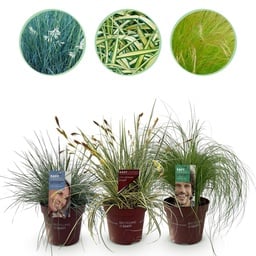
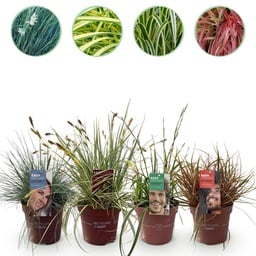
For a lush planting with hardy varieties, take a look at our sets, including
The Right Tool for a Clean Cut
The quality of the cut depends largely on the tool. Dull blades crush the stems and leave ragged wounds that can let fungi and rot take hold.
Recommended Tools
- Bypass pruning shears: For precise cuts on individual stems or small clumps. They cut cleanly without crushing the stems.
- Sharp hedge shears: Ideal for larger areas with lots of grasses or for cutting back compact, medium-height clumps.
- Grass or pruning knife: A traditional tool for quickly and cleanly cutting large amounts of grass.
- Gloves: Essential! Many grasses have microscopic, razor-sharp silica crystals along their leaf edges that can cause deep, itchy cuts.
You’ll find a wide range of durable cutting tools and protective gear in our garden tools category.
“A sharp tool is not only more efficient, it’s also more hygienic for the plant. A clean cut heals faster and significantly reduces the risk of disease.”
What to Do After Cutting: Care for a Fresh Start
Cutting is only half the job. The right follow-up care gives your ornamental grasses the best possible start to the new season.
Divide and Rejuvenate
Spring pruning is the best time to divide overgrown or aging clumps of grass. Dig up the entire clump and divide it into several sections with a sharp spade or large knife.
Each section should have several healthy growth buds. Replant the divisions right away or give them away. This rejuvenates the plant, encourages growth and can help restore flowering.
Additional advice
Apply a light layer of fertilizer after cutting. Use an organic, nitrogen-rich fertilizer such as horn shavings or a special ornamental grass fertilizer. This encourages strong new growth and helps the plant produce flowers later.
Watering and Mulching
Freshly cut or divided grasses need more water. Water them regularly during dry spring weather. A layer of fresh compost or bark mulch around the plant helps retain moisture.
It also suppresses weeds and gradually adds nutrients to the soil. Good garden watering makes these care tasks easier.
Pruning Ornamental Grasses: Your Most Frequently Asked Questions Answered
Along with the basic rule—cut back deciduous grasses in spring and comb out evergreen grasses—gardeners often have specific questions. Here are answers to the most common ones.
Can I cut back ornamental grasses with a brush cutter?
We don’t recommend using a brush cutter or clearing saw on ornamental grasses. The high-speed blade tears and shreds the stems instead of cutting them cleanly. The result looks unattractive, and the plant is left with large, vulnerable wounds. Use one only for large, natural-looking meadow areas, not for ornamental grasses planted in beds.
My grass is brown in the center but still green on the outside. What should I do?
This is a classic sign that the clump has become too dense. The inner stems no longer get enough light and begin to die. Dividing the plant as described above will help. After dividing and replanting, all the shoots will have room and light to grow.
The stems are flattened and matted after winter
There’s no need to worry. This is normal, especially after heavy snowfall. Tie the stems together as described before cutting. After cutting back to 10-15 cm, the plant will produce fresh, upright growth. Carefully tease apart matted evergreen grasses with your hands.
Conclusion: Observation Beats the Calendar
The best time to prune ornamental grasses is less about a fixed calendar date and more about observing your own garden. Pay attention to the weather and, above all, to the first signs of green growth.
With this simple distinction between deciduous and evergreen species, you’ll be on the safe side. Your patience will be rewarded with healthy, vigorous ornamental grasses that enhance your garden for years to come.
Explore our selection of durable, hardy ornamental grasses and plant accessories and create your own garden paradise.
Frequently Asked Questions
- When should pampas grass and other deciduous ornamental grasses be cut back?
- Cut back deciduous ornamental grasses such as pampas grass, Chinese silver grass and switchgrass from late February to early March. Wait until the hard freezes have passed, but cut them back before new growth begins. Tie the stems together before cutting to make the job easier and keep the clippings bundled.
- Do wintergreen and evergreen grasses such as Carex need to be cut back?
- Wintergreen and evergreen grasses, including many sedges (Carex), don’t need to be cut back drastically. In spring, carefully comb through them with your fingers or a rake to remove dead, brown stems. This lets light and air reach new growth without damaging healthy parts of the plant.
- What happens if I prune my ornamental grasses too late?
- If you cut too late, you may remove the grasses’ young, fresh shoots. This costs the plant energy and can affect its shape. It may not flower that year, or it may produce far fewer flowers. Once new growth has started, remove only individual dead stems.
- Can ornamental grasses be cut back in fall?
- Experts advise against cutting ornamental grasses back in fall. The old stems protect the plant’s crown from wet winter weather and hard freezes. They also shelter animals over winter and look decorative when covered with frost or snow. Leave the dried foliage in place as natural winter protection.
- What tool is best for pruning ornamental grasses?
- For medium-height to tall grasses, use sharp, clean bypass pruning shears or sharp hedge shears. For the thick, woody stems of large grasses such as pampas grass, sharp pruning shears or a small saw work well. Dull tools crush the stems and leave ragged cuts.