
In brief: Brown leaves on aloe vera are usually caused by waterlogging, cold drafts, direct midday sun or incorrect watering. Remove soft, brown leaves with a clean knife, check the roots and soil, and place the plant somewhere bright, warm and dry. Only water once the soil has dried out completely.
Quick answer: Brown leaves on aloe vera are usually caused by waterlogging, cold drafts, direct midday sun or incorrect watering. Remove soft, brown leaves with a clean knife, check the roots and soil, and place the plant somewhere bright, warm and dry. Only water once the soil has dried out completely.
Brown leaves are a warning sign on aloe vera, but they are not a reason to give up on the plant immediately. At first, the discolouration only shows that the leaf tissue has been damaged. The combination of colour, firmness, smell, location and moisture in the pot reveals the cause.
Aloe vera stores water in its fleshy leaves. It therefore copes better with dry soil than with permanently wet soil. When caring for aloe vera, allowing the soil to dry out between waterings often determines whether the plant recovers or develops root rot.
Why does aloe vera get brown leaves?
The most common cause is waterlogging. If water remains in the outer pot, the roots receive too little oxygen. They rot, can barely absorb water and still fail to supply the leaves adequately. The aloe then appears both wilted and overwatered.
A sudden change of location can also cause brown patches. Aloe vera that has spent weeks in a darker window often reacts to unfiltered midday sun with reddish or brown spots. Cold window panes, drafts and temperatures below around 10 to 12 degrees Celsius make the damage worse.
What does the appearance of the leaves reveal?
Do not look only at the colour. Carefully feel each affected leaf and check whether the damage starts at the tip, along the edge or at the base.
- Soft, glassy and dark brown: This combination indicates too much water, damaged roots or the beginning of rot. An unpleasant smell from the pot confirms the suspicion.
- Dry, thin and papery: Dry tips are caused by prolonged drought, intense heat or old leaf damage. The leaf usually remains firm but visibly loses its turgor.
- Reddish-brown spots on the upper surface: Unfamiliar, intense sunlight is often responsible. The plant needs to acclimatise gradually, especially after winter.
- Only the lowest old leaf is brown: A single old leaf may be ageing naturally. As long as new leaves grow firm and the base remains healthy, this does not necessarily indicate a plant disease.
How can you identify the actual cause?
Push a wooden stick or your finger deep into the soil. If the soil still feels damp several centimetres below the surface, wait before watering. A pot without a drainage hole retains water for particularly long periods and is one of the most common care mistakes with this houseplant.
Also check the leaf base. If the leaves are loose, fall to the side or the centre can be pulled out easily, the rosette may already be rotting. Firm leaves with dry tips are more likely to indicate light, heat or a lack of water.
Expert tip
Do not water according to a calendar. Check the soil all the way to the bottom of the pot each time and lift the pot. A noticeably lighter pot is a more reliable sign that the soil has dried out than following a fixed watering schedule.
How can you save aloe vera with brown leaves?
Act as soon as several leaves turn brown or the plant feels soft. First move the aloe to a bright, warm spot and let all excess water drain away. Remove the plant from its outer pot if water has collected there.
Which immediate steps help, step by step?
- Stop watering: Wait until the soil has dried out completely. If the leaves are soft or there is a rotten smell, do not water again; check the roots immediately instead.
- Remove the damage cleanly: Cut completely brown, mushy or dried-out leaves off at the base with a sharp, disinfected knife. Do not pull the leaves out, as this can injure the healthy rosette.
- Check the roots: Carefully take the aloe out of the pot. Healthy roots are light-coloured and firm. Cut black, brown or slimy roots back to firm tissue.
- Let the cut surfaces dry: Place the plant somewhere dry and shaded for several hours, or for a day after extensive root pruning. The injured areas must dry before coming into contact with moist soil again.
- Use a well-draining pot: Choose a pot with a drainage hole and a loose, mineral-based soil mix for cacti and succulents. You can find suitable accessories in the Garden + plant accessories section.
When do you need to repot aloe vera?
Repotting is necessary if the soil remains wet for days after watering, the pot has no drainage or the roots are rotting. Compacted soil also prevents water from draining evenly. A larger pot does not automatically solve the problem. Choose a container that is only a few centimetres larger all around than the root ball.
If the roots are healthy, you do not need to repot every time a leaf turns brown. Remove the damaged tissue, improve the location and monitor the plant. Repotting too often stresses the roots and makes recovery more difficult.
„Aloe vera stores water in its fleshy leaves and is therefore sensitive to permanently wet soil.“
Important note
Do not just cut off the visibly brown part of a rotting leaf base. Remove all soft tissue back to the firm, healthy area. Then use a clean tool and dispose of the cut plant parts in household waste, not in the compost.
How should you water after saving the plant?
After extensive root pruning, keep the aloe completely dry for at least five to seven days. Then water it thoroughly once, until some water runs out of the drainage hole. Empty the saucer after a few minutes. Do not water again until the soil has dried out completely.
- Water directly onto the soil, not continually into the leaf rosette.
- Use room-temperature water and avoid cold tap water.
- If your tap water is very hard, occasionally flush the soil thoroughly to reduce salt build-up.
- In winter, aloe needs considerably less water than during active growth in spring and summer.
What care mistakes cause brown leaves on aloe vera?
Many problems are not caused by one mistake, but by an unsuitable routine. Small pots dry out quickly, while large pots stay wet for a long time. That is why watering on a fixed calendar schedule rarely works all year round.
Why is waterlogging so dangerous?
The roots need air between the particles of the growing medium. If water remains in the pot, fine roots rot first. As a result, the plant loses its ability to absorb water and nutrients and develops limp, brown leaves despite the soil being moist. A saucer may catch water briefly, but it should never remain full.
Use a loose mix of succulent soil and mineral components such as pumice, coarse sand or perlite. The next time you water, check whether the water drains quickly from the pot. If it drains slowly, you should replace the growing medium.
Which location protects against sun and cold damage?
Aloe vera needs a bright location. A window with morning or evening sun is usually suitable. If you place the plant in a south-facing window, acclimatise it to direct sunlight over several days. Do not place it directly behind hot glass if temperatures rise sharply there in summer.
Avoid cold draughts, frost and a position directly above a radiator. Dry radiator air alone rarely causes brown leaves, but hot air and irregular watering increase stress. Turn the pot every few weeks so the rosette grows evenly.
When does fertiliser harm aloe vera?
A weakened aloe does not need additional fertiliser. Nutrient salts cannot repair rotten roots and may put further strain on damaged tissue. Only start fertilising again once the plant is visibly producing new leaves and the root system is healthy.
During the growing season, a weakly diluted succulent or cactus fertiliser every four to six weeks is sufficient. Stop fertilising in autumn and winter. Suitable products can be found in the Fertiliser category. Follow the dosage on the label and never apply fertiliser directly to dry soil.
How can you identify plant diseases and pests?
Not every brown spot is a disease. A single dry leaf ages differently from a dark lesion that spreads quickly. Observe whether the damage spreads within a few days, whether the tissue becomes soft and whether other plants are affected.
How do you treat root rot and leaf spot?
Root rot often first appears at the base of the plant. The leaves lose their firmness even though the growing medium is moist. When you remove the plant from its pot, the roots may smell musty or rotten. Remove affected roots, allow the cut surfaces to dry and repot the aloe in fresh, dry growing medium.
Flat, dry spots after moving the plant are more likely to indicate sun stress. If dark, wet spots spread in rings, check the plant for a possible fungal or bacterial infection. Isolate it, keep the leaves dry and remove badly affected parts. If the infection continues to spread, use only plant protection products suitable for aloe vera and follow the label instructions.
Which pests cause brown spots?
Check the undersides of the leaves, leaf axils and the area where the plant meets the soil. Mealybugs leave behind white, cotton-like deposits. Scale insects appear as small, firm spots on the leaf. Spider mites produce fine webs and a dull, speckled surface.
- Immediately place the affected aloe away from other houseplants.
- Wipe off individual pests with a damp cloth or cotton swab.
- Check the plant on several consecutive days, as eggs and hidden pests can easily be missed.
- Disinfect knives, scissors and the work surface after every cut.
Additional advice
Keep a rescued aloe separate from other plants for at least two weeks. Check the undersides of the leaves and the soil weekly. This helps you spot pests or new rot before they spread to the rest of your collection.
What is the right Aloe Vera care routine afterwards?
After being rescued, Aloe Vera mainly needs rest and consistent conditions. New leaves will not grow within a few days. The key is that the plant remains firm, the rosette does not become any softer and the leaf colour stabilises.
Which care routine works throughout the year?
- Spring: Place the Aloe Vera in a bright spot and gradually acclimatise it to more sunlight. Only start watering after a completely dry period and do not fertilise until new growth is visible at the earliest.
- Summer: Water thoroughly as soon as the substrate is dry. Check the pot more often on very hot days, but do not give it small amounts of water as a precaution.
- Autumn: Increase the intervals between watering. Check the plant for mealybugs and scale insects before bringing it indoors.
- Winter: Keep the Aloe Vera in a bright and relatively cool place. With little light and low temperatures, it needs hardly any water. Do not fertilise.
- All year round: Carefully remove dust with a dry or slightly damp cloth. Avoid wet leaf rosettes and standing water at all times.
Which Aloe products are right for your collection?
If you are looking for a compact, related Aloe for a bright windowsill,
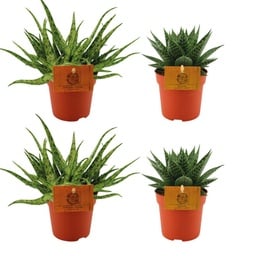
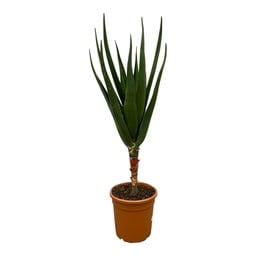
with an Aloe Spider in a pot with a diameter of 10,5 centimetres is a good choice. Check the roots of a newly purchased plant straight away too, and let the substrate dry out between waterings. combines two Aloe Spiders with two Gasteria Hybride Aurora plants. Gasterias have similar requirements for light, well-drained substrate and dry periods. Do not place the plants too close together, so you can regularly check the undersides of the leaves and the soil. is a large Aloe Barberae with a height of 180 centimetres. It is only suitable for a very bright, warm and spacious location. Plan the space before buying, as a large Aloe cannot easily be moved to just any window later.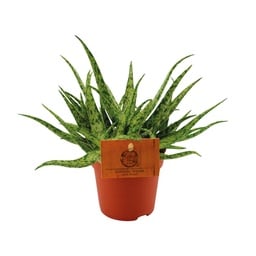
For more plant supplies, browse the Garden + Outdoor section. You can also find controlled watering aids and water supply accessories in the Garden irrigation category.
How can you prevent new brown leaves?
A brief weekly check is enough to spot many problems early. Lift the pot, feel the soil, check the base of the leaves and look underneath them. Do not just note the watering date; also record how dry the substrate actually was.
- Always use a pot with a drainage hole.
- Remove water from the cachepot after every watering.
- Gradually acclimatise the Aloe Vera to direct sunlight.
- Keep injured leaves and cut surfaces dry.
- Initially keep new plants separate from your existing collection.
“Succulents grow best in a very well-drained substrate with a clear dry period between waterings.”
Brown leaves on Aloe Vera will not become green again once the tissue has died. However, the plant can still recover as soon as you remove the cause. Remove the damaged parts, allow the roots to breathe and adjust the water, light and temperature. With this routine, you can identify care mistakes and plant diseases at an early stage.
Frequently asked questions
- Why are my Aloe Vera leaves turning brown?
- Brown leaves are usually caused by waterlogging, damaged roots, direct sunlight after being kept in a dark location or cold temperatures. If the leaves feel soft, check the roots and pot first. Dry, crispy tips are more likely to indicate drought stress, heat or older leaf damage.
- Can I cut off brown Aloe Vera leaves?
- Yes. Cut fully brown, soft or dried-out leaves off close to the base with a clean, sharp knife. Remove only clearly damaged tissue and leave firm green areas intact. Disinfect the tool afterwards to avoid transferring pathogens to other houseplants.
- How often do I need to water Aloe Vera?
- Only water Aloe Vera once the substrate is completely dry. Then give it enough water to thoroughly moisten the root ball and empty the saucer after a few minutes. In summer, this may be necessary every two to three weeks; in winter, much less often.
- Does Aloe Vera need direct sunlight?
- Aloe Vera likes a very bright position, but it needs to be gradually acclimatised to direct sunlight. After a dark winter location, unfiltered midday sun and heat can quickly cause reddish-brown patches. Initially place the plant by a bright window with morning or evening sun and gradually increase the length of exposure.
- What should I do about root rot on Aloe Vera?
- Take the Aloe Vera out of its pot, carefully rinse the roots and cut away black, mushy areas back to healthy, firm tissue. Allow the cut surfaces to dry and repot the plant in dry, well-drained substrate. Wait a few days before watering and continue to monitor its condition.
You may also be interested in
- How to care for Aloe Vera: Avoid common mistakes
- Yellow & brown leaves on houseplants: Causes & solutions
- Peonies: Brown leaves? Causes and quick solutions
- Blight on tomatoes: Identify, prevent and treat it
- White spots on leaves: Find the causes & solutions
- How to care for wild Aloe: Position, watering and propagation