
In brief: The biggest mistakes when using silicone spray include applying it to unsuitable surfaces such as floors, inadequate preparation, incorrect spraying technique, ignoring safety precautions and using it as a lubricant for high-load connections. Avoid these mistakes by working carefully, sparingly and with protective equipment.
Silicone spray is a true all-rounder. It lubricates, protects, conditions and waterproofs. From squeaky drawers and brittle rubber seals on your car to stiff zippers on your tent, its potential uses seem endless. Yet this versatility is precisely what makes it easy to use incorrectly. When misused, silicone spray can cause more problems than it solves—from dangerously slippery floors to ruined paintwork.
Do you know when it is better to leave silicone spray in the workshop? Can you spot the typical application mistakes that lead to frustration instead of perfect results? We will show you the five biggest mistakes when using silicone spray and explain how to avoid them easily. This will help you use the full potential of this useful product safely and effectively.
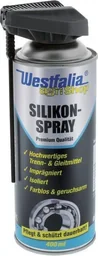
For most applications around the home, workshop and garden, a high-quality all-purpose product is the right choice. The offers excellent lubricating and conditioning properties for a wide range of materials, making it the ideal foundation for your projects.
Mistake 1: Using silicone spray on the wrong surfaces
The most common and also the most dangerous mistake is using silicone spray on unsuitable surfaces. The ultra-thin, extremely smooth film that works wonders on plastic and rubber can turn other surfaces into an invisible hazard or a technical problem area.
Where you should never use silicone spray
Certain areas are completely off-limits for silicone spray. Applying it in these places can lead to accidents or costly repairs.
- Floors, stairs and walking surfaces: This is the greatest of all silicone spray hazards. Once applied to tiles, laminate, parquet or stair treads, it creates a mirror-smooth surface with an immediate risk of slipping and injury. The lubricating film is invisible and extremely difficult to remove.
- Surfaces that will be painted or glued: Planning to paint or glue a workpiece? Keep silicone spray well away from it. Even the finest spray mist in the air can settle on the surface and completely prevent paints, coatings and adhesives from bonding. The result is “fish eyes” or “craters” in the paint and adhesive joints that do not hold.
- Brake systems on vehicles and bicycles: Never spray silicone spray on or near brake discs, brake pads or wheel rims. The lubricating film drastically reduces friction and can cause complete brake failure.
- Untreated wood: Silicone oil penetrates deep into the pores of raw wood. This makes later treatment with stain, glaze, oil or paint impossible because these coatings can no longer adhere to the wood.
- Electrical contacts and switches: While special electronics sprays clean contacts, silicone spray insulates them. On switches or plug connections, it can interrupt the flow of electricity and cause malfunctions.
A tiny drop of silicone oil on a brake disc can increase a bicycle’s stopping distance by several metres. Safety must always come first.
The ideal uses for silicone spray
When applied to the right materials, the spray delivers its full potential:
- Rubber seals: On car doors, windows, refrigerators or in the Plumbing + Irrigation area. It keeps rubber supple, prevents it from freezing in winter and protects against cracking.
- Plastic parts: It silences squeaky plastic hinges on bins, conditions the dashboard in your car and helps sticking plastic drawers glide smoothly again.
- Metal-to-plastic pairings: Ideal for car seat rails, guide rails on roller shutters or sunroofs.
- As a release agent: In model making or casting moulds, it prevents materials from sticking.
Mistake 2: Failing to prepare the surface properly
Have you found the right surface? Perfect. But the next mistake is already waiting: simply applying the spray to a dirty surface. Silicone spray can only form an effective, long-lasting protective and low-friction layer when the surface is properly prepared. Dirt, dust, grease or moisture act as a separating layer and prevent proper adhesion.
Imagine treating a rubber seal that is covered in sand and road grime. The silicone spray binds this dirt and turns it into an abrasive paste. Instead of conditioning the seal, you damage it with every movement. Thorough cleaning is therefore not an optional step, but the foundation for success.
Clean the surface to be treated with a mild cleaner and a clean cloth. Make sure the surface is not only clean, but also completely dry and free of grease. Remove old lubricant residue with a suitable degreaser before applying the new silicone layer. This small extra effort determines whether the conditioning effect lasts for weeks or leaves you with a useless, dirt-collecting lubricant.
Pro tip
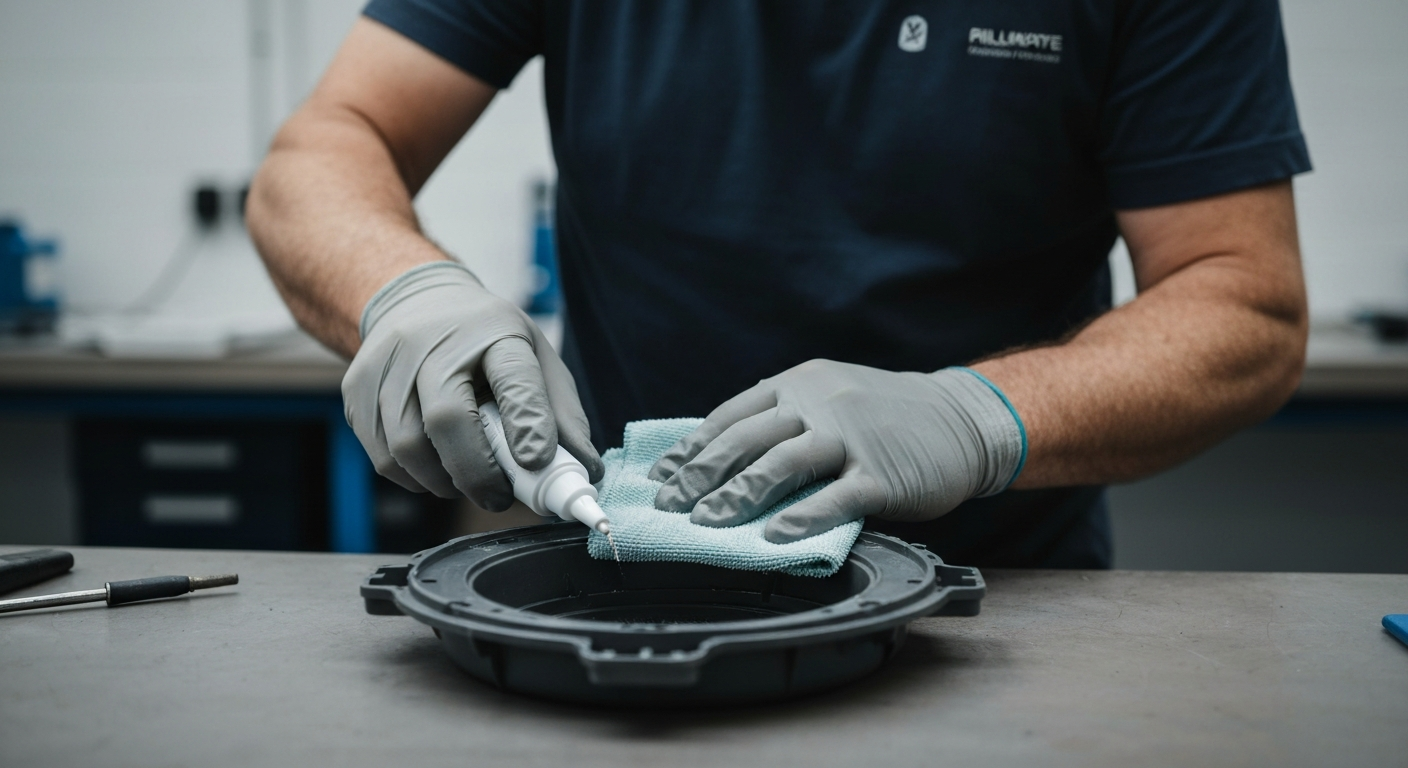
Do not spray silicone spray directly onto the surface being treated, especially when working with delicate parts. Instead, spray a small amount onto a clean microfibre cloth and wipe the surface with it. This gives you full control, prevents spray mist from reaching unwanted areas and ensures an even application.
Mistake 3: Incorrect application technique – too much, too close, too imprecise
The urge to follow the “more is better” principle is widespread. With silicone spray, exactly the opposite is true. Overapplication does not provide better lubrication or longer-lasting protection. Instead, it creates a sticky, wet layer that attracts dust and dirt like a magnet and quickly becomes unsightly. Another important point in silicone spray application is precision.
The right spraying technique for perfect results
The correct technique is simple but crucial for a clean result. Follow these steps:
- Shake the can well: Shake the can vigorously for at least one minute before use. This ensures that the propellant and active ingredient are mixed thoroughly.
- Keep your distance: Spray from a distance of approximately 20 to 30 centimetres. This creates a fine, even spray mist and prevents too much product from reaching one spot.
- Apply a thin coat: A very thin layer is more than sufficient. Spray in short, controlled bursts or use a gentle sweeping motion across the surface.
- Work precisely: For small or hard-to-reach areas, such as hinge pins or runners, use the spray tube supplied. Products such as the with its special nozzle allow precise application without overspray.
- Remove excess: Wipe off any excess product immediately with a clean, lint-free cloth. This leaves a dry, invisible, non-sticky lubricating film.
Additional advice
When treating surfaces near sensitive areas, such as car window seals, protect the surrounding surfaces. Cover paintwork and windows with cardboard or a cloth to avoid laborious cleaning caused by spray mist.
Mistake 4: Ignoring safety and health risks
Silicone spray in an aerosol can is a chemical product. In addition to silicone oil, it contains solvents and propellants. These substances can pose health and safety risks if handled incorrectly. Ignoring the warnings on the can is an avoidable mistake.
Why proper ventilation is essential
You should not inhale the vapours and aerosols contained in the spray can. They can cause dizziness, headaches and irritation of the respiratory tract. Always work in well-ventilated areas. Open windows and doors or, ideally, carry out the work outdoors in your Garden + Outdoor area. When carrying out larger jobs indoors, wearing a respirator is advisable.
Most accidents involving workshop chemicals are not caused by the product itself, but by ignoring simple safety rules. Good ventilation is half the battle.
Personal protective equipment (PPE) is not a luxury
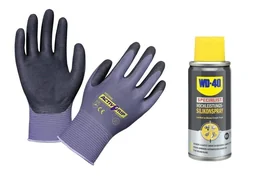
Protect yourself while working. Spray mist can easily get into your eyes and cause irritation. Simple safety glasses provide effective protection. Skin contact should also be avoided, as the solvents can remove the skin’s natural oils and dry it out. Therefore, wear gloves when applying the product. A practical set of gloves and spray is, for example, the . Also remember the risk of fire: the propellant gases in aerosol cans are highly flammable. Keep away from open flames, hot surfaces and running engines. Do not smoke while using the product.
Mistake 5: Treating silicone spray as a cure-all for every squeak
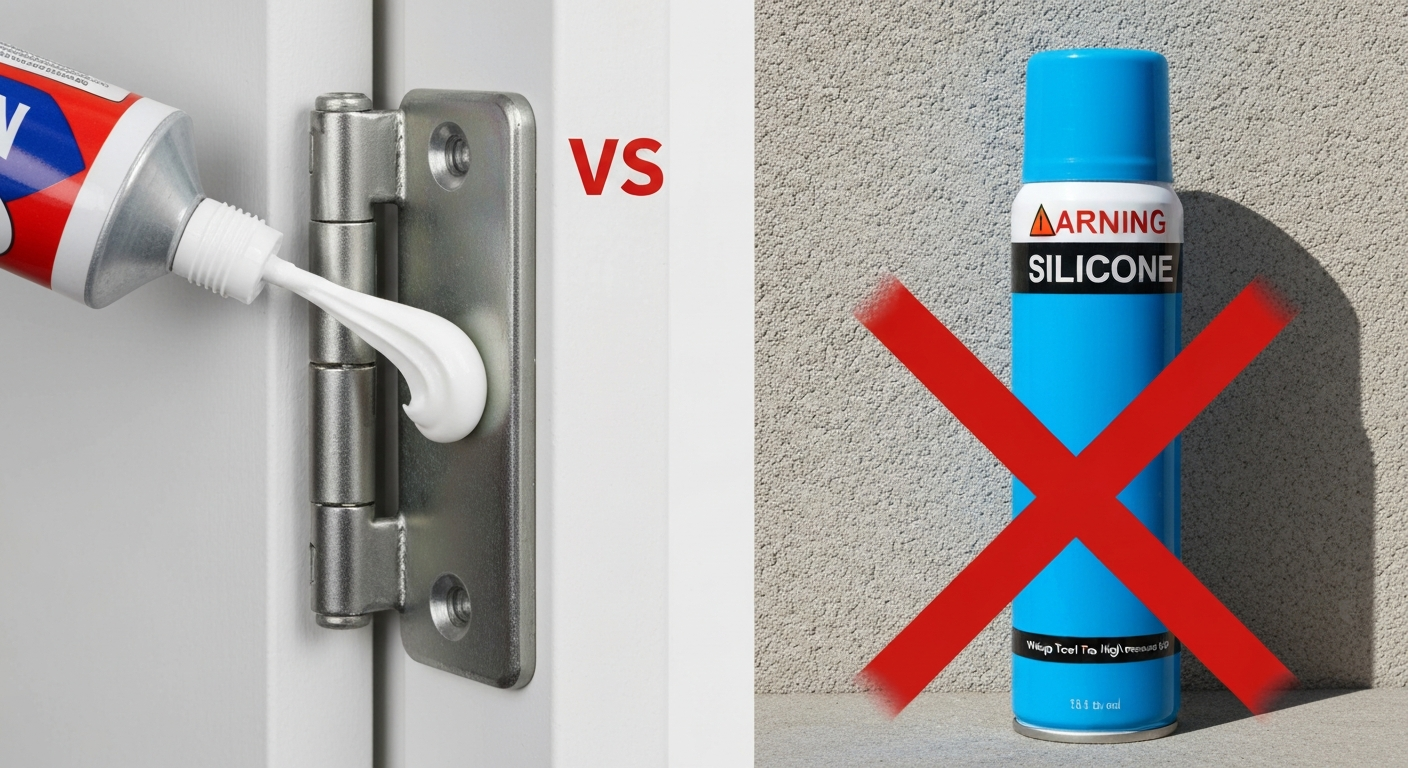
Silicone spray provides excellent lubrication, but it is not a miracle solution for every type of friction. The decisive factor is the load placed on the parts being lubricated. Silicone oil forms a very thin lubricating film designed for low to medium pressure loads. It is perfect when plastic slides against plastic or rubber slides against metal.
You should not use silicone spray when high pressures and loads are involved. This is where the thin film fails. It is simply displaced by the metal surfaces, and the lubrication breaks down. The squeaking soon returns, and wear continues.
Typical examples of unsuitable applications include:
- Squeaky hinges on house or interior doors: The entire weight of the door rests on small metal surfaces. A thick lubricating grease or a specialist adhesive lubricating oil is the right choice here.
- Bicycle chains: A chain is subject to extreme loads and requires a penetrating, pressure-resistant chain oil that gets into the links and stays there.
- Mechanical bearings (e.g. wheel bearings): These require special bearing greases designed for high pressures and temperatures.
Reaching for the wrong lubricant is a classic industrial supplies mistake. Choose the right product for every task. Silicone spray is the specialist for care and smooth operation, not heavy-duty work.
Important note
If you accidentally spray silicone spray onto a walking surface, act immediately. Eliminate the immediate slip hazard with a silicone remover or a strong degreaser. Several cleaning cycles are often required to remove the film completely. Secure the area until it is completely safe to walk on again.
Conclusion: Knowledge makes all the difference
Silicone spray is an invaluable aid when you understand its strengths and weaknesses. By avoiding the five most common mistakes – using it on the wrong surface, inadequate preparation, incorrect technique, ignoring safety and overestimating its lubricating performance – you can turn a potential nuisance into a reliable tool. Prepare your surfaces, apply the spray thinly and precisely, protect yourself and your surroundings, and choose the right specialist grease for high-load applications. This way, you will achieve perfect, long-lasting results every time and get the full benefit of your silicone spray.
Frequently asked questions
- Can I use silicone spray on squeaky metal door hinges?
- Only as a short-term solution. Silicone spray is not a high-performance lubricant for metal-to-metal connections under load. Specialised hinge grease or tacky lubricants are much better suited to door hinges because they provide long-lasting, pressure-resistant lubrication.
- Is silicone spray harmful to car paintwork?
- Silicone spray itself does not damage fully cured car paintwork. The problem arises if the surface is to be repainted later. Even the smallest traces of silicone prevent the new paint from adhering and cause unsightly craters. Always remove it completely before painting.
- How do I remove silicone spray accidentally sprayed on the floor?
- Act quickly to eliminate the extreme slip hazard. Use a special silicone remover or a strong degreaser. Several cleaning passes with a clean cloth are often needed to remove the greasy film completely. Always test the cleaner on an inconspicuous area first.
- Can I use silicone spray to waterproof my tent or shoes?
- Yes, silicone spray is well suited to making fabrics water-repellent. It forms a flexible film without completely blocking the pores. Apply it thinly and evenly, and always test material compatibility first on a small, concealed area.
- What is the difference between silicone spray and WD-40?
- Silicone spray is primarily a lubricant, release agent and care product that leaves a dry, non-greasy film. WD-40 is a penetrating oil with cleaning, water-displacing and rust-loosening properties. Silicone spray is the better choice for caring for rubber and plastic.
You may also be interested in
- Silicone Spray: The Invisible Helper for the Workshop, Home and Garden
- How to Use Sealant Spray Correctly: The 5 Most Common Mistakes
- The 5 Best Uses for Hardware Spray Around the Home and Garden
- 3 Mistakes When Lubricating Hardware: How to Keep Doors & Windows Moving Smoothly
- Wet Sanding: The 5 Most Common Mistakes and How to Fix Them
- How to Seal Properly: 7 Mistakes to Avoid with Transparent Sealant