
In brief: Security cameras help protect your smart home when you position them strategically, configure them correctly and observe privacy requirements. Choosing between indoor and outdoor models, Wi-Fi cameras for easy installation and devices with night vision is crucial. A clear security plan defines the required features before you shop in the Work Safety & Security section.
Smart Home Security: Use Security Cameras Correctly
Modern security cameras are more than simple recording devices. They are active security partners in your smart home. Using them correctly determines how much protection they provide. This guide shows you how to use video surveillance effectively and responsibly.
Why does my home need a security camera?
A camera documents events objectively. You gain visual certainty about who is approaching your property or whether an alarm is genuine. This provides peace of mind whether you are at home or away. Cameras also deter potential burglars.
In a smart home, cameras connect with other systems. They can switch on the lights when movement is detected or send a notification to your smartphone. This means you can always respond with the full context.
“The visible presence of a camera at the entrance to a home is one of the most effective preventive measures. It signals vigilance and increases the risk of offenders being discovered.”
How do I choose the right camera?
Start by considering how you intend to use it. Do you need indoor or outdoor surveillance? Do you only want to watch live, or do you also want to save recordings? Define your requirements before browsing our shop.
Indoor vs. outdoor: The basic decision
Outdoor cameras such as the
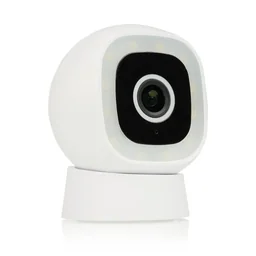
Indoor cameras such as the
are often quieter and less conspicuous. Pan and tilt functions allow you to monitor a room flexibly via an app. They are suitable for keeping an eye on pets or viewing the entrance from inside.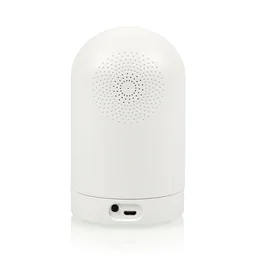
Pro tip
Combine outdoor and indoor cameras for multi-layered security. Position an outdoor camera at the property boundary and an indoor camera in the hallway. This gives you early warnings and detailed recordings.
Wi-Fi camera or wired?
Wi-Fi cameras stand out for their easy installation. You only need a nearby power outlet. Data is transmitted wirelessly. Make sure the connection to the router is stable, especially when using the camera outdoors.
Wired models provide a constant, more secure connection. They are ideal for permanent installations where Wi-Fi fluctuations must not cause interruptions. Routing the cable requires more work.
Understanding resolution and image quality
Full HD (1080p) is the current standard. It produces sharp images for identification. Models such as the
offer this resolution for indoor and outdoor use. Higher resolutions such as 2K or 4K require more storage space and a very fast internet connection for transmission.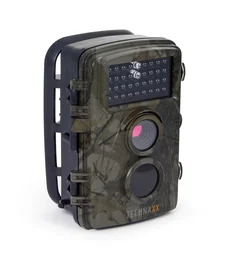
The frame rate affects how smooth the video appears. 15 to 25 frames per second (fps) are sufficient for surveillance purposes. Higher rates are beneficial when recording fast movement.
Where should I position my cameras for the best results?
Positioning determines how useful a camera is. The wrong angle creates blind spots. A location that is too obvious can be deliberately avoided. Plan the positions carefully.
Strategic points for outdoor surveillance
Monitor all access points. These include the front door, patio door, garage door and basement windows. Mount cameras at a height of 2.5 to 3 meters. This makes tampering more difficult and provides a wide field of view.
Angle the camera slightly downward. This helps capture faces clearly and prevents backlighting from the sky or streetlights from overexposing the image. Test the viewing angle during the day and at night.
Important note
Film only your own property. Recording public sidewalks or your neighbors’ properties without permission violates their privacy rights and may have legal consequences. Check your local privacy regulations.
Effective positions indoors
Position indoor cameras in the entrance area. This lets you document who enters or leaves the house. Another useful location is the hallway leading to the bedrooms or living areas.
Avoid private rooms such as bedrooms or bathrooms. Surveillance must be proportionate. A view of the living room door from outside is often sufficient.
“The best camera is useless if it has the wrong field of view. Take time to test it before installation. Use a camera app on your smartphone to simulate different perspectives.”
How do I set up my camera securely?
Once you have bought your camera, the next step is configuration. Secure settings protect your privacy and prevent unauthorised access. Take this step seriously.
Secure your network and passwords
Connect the camera to your Wi-Fi. Use a secure, encrypted network (WPA2/WPA3). Change the default password for the camera administrator account immediately. Choose a strong, unique password.
In the app, enable two-factor authentication (2FA) if available. You will then need an additional code each time you log in, typically sent by SMS or generated by an app.
Additional advice
Set up a separate guest network for your smart home devices. This keeps your security cameras and other IoT devices separate from your main network with its PCs and personal data. This limits the damage in the event of a security breach.
Configure notifications and recordings
Adjust the motion detection settings. Settings that are too sensitive will trigger alerts whenever a bird flies past. Define detection zones so the camera only alerts you to movement in a specific area, such as the path to your front door.
Decide where recordings should be stored. Local storage on a microSD card works independently of the internet. Cloud storage provides access from anywhere but often involves ongoing costs. Compare the available options.
How do I integrate cameras into my smart home?
Standalone cameras are useful. Connected cameras are better. In a smart home system, your devices work together.
Create smart security automations
Connect the camera to smart lights from the Garden + Outdoor section. When movement is detected at the boundary of your property, the outdoor lighting switches on. This deters unwanted visitors and provides the best possible lighting for the recording.
Pair the camera with your smart home hub. In the event of an alarm, it can activate all indoor sirens and send you a push notification with a live image. This allows you to assess the situation in real time.
Voice control and remote access
Many cameras work with assistants such as Amazon Alexa or Google Assistant. Use a voice command to ask, “Show me the front door.” The camera feed appears on your smart display or TV.
Remote access via an app is the central feature. When you are away from home, you can check whether your parcel has arrived or whether the front door is closed. Look for an easy-to-use app with stable performance.
Which accessories improve home security monitoring?
The right accessories make your video surveillance more reliable and convenient. Consider power supply, storage and mounting.
Uninterruptible power supply
Wired cameras require a power adapter. For outdoor models, it should be weatherproof. An UPS (uninterruptible power supply) keeps the camera running during a power cut. This is worth considering for critical security areas.
Solar panels for outdoor cameras are an environmentally friendly option. They charge a battery that also powers the camera at night. Ideal for remote locations without a power outlet.
Storage media and housing protection
Buy high-quality microSD cards with sufficient capacity (at least 64 GB) and a high write speed (Class 10 or UHS). They can record continuously in loop mode for weeks before the oldest recordings are overwritten.
A lightning protection module protects expensive electronics during thunderstorms. For extreme weather conditions, you can find suitable protective covers in our range. They protect against heavy rain and direct sunlight.
Conclusion: Security with a system
Effective home security monitoring requires careful planning. Start by developing a plan for your individual security risks. Then choose cameras that meet these requirements. The products , and demonstrate the range of solutions available.
Install and configure the devices with a focus on security and data protection. Integrate them into your smart home for automated processes. With this systematic approach, you can create a reliable digital guard for your home.
Browse our extensive range in the Occupational Safety & Security section now and find the right security camera for your needs.
Frequently asked questions
- Where is the best place to install a security camera?
- Install cameras at strategic access points such as the front door, patio door and garage entrance at a height of 2-3 metres. Make sure the camera has a wide field of view without blind spots, and avoid direct light sources such as low sun, which can overexpose the image.
- What is the difference between indoor and outdoor cameras?
- Outdoor cameras require a weatherproof housing (IP65 or higher) and more powerful infrared night vision for larger areas. Indoor cameras are often more compact, rotatable and quieter, but are not suitable for rain or frost. You can find both types in our Occupational Safety & Security category.
- Do I always need internet for a Wi-Fi camera?
- A stable Wi-Fi connection is required for live streaming to your smartphone and for notifications. However, many models store recordings locally on an SD card, which you can review later even without internet access. Check the storage options before buying.
- What does 1080p resolution mean on a camera?
- 1080p (Full HD) refers to a video resolution of 1920x1080 pixels. It provides sharp images in which you can recognise faces or number plates from a reasonable distance. For highly detailed recordings of large areas, 2K or 4K models may also be suitable.
- How do I protect my security camera from hackers?
- Protect your Wi-Fi network with a strong password. Enable two-factor authentication in the camera app if available. Install the manufacturer's firmware updates regularly and do not use the device's default password.
You might also be interested in
- Home security with IP cameras: Keep an eye on your home
- Smart home security: How to protect your home intelligently
- Security camera review and comparison 2026
- Set up a smart home: Your guide to greater comfort and security
- Preventing break-ins while on holiday: Make your home look occupied
- Get the most from your Fritzbox: Tips for smart homes and networks