
In brief: You can identify building defects by cracks, moisture, mould, draughts, unusual noises and deformations. Photograph every irregularity, measure gaps and moisture levels, and note the date and location. Secure evidence, report the damage in writing, and have the cause and renovation costs professionally assessed before carrying out repairs yourself.
A home often shows its weak points long before expensive damage occurs. Fine cracks, damp patches, sticking windows or recurring mould provide the first clues. Anyone who checks these signs systematically can protect the building structure and prevent a minor defect from becoming an extensive renovation case.
Building defects occur when construction work fails to meet agreed properties, the required function or accepted standards of technology. Not every visual deviation is automatically a defect. The decisive factors are the building contract, how the building is used, how the damage develops and the professional assessment.
Contents
- How can you identify building defects before the damage becomes expensive?
- Which types of damage should you check during a systematic home inspection?
- How do you document building defects clearly and verifiably?
- When do you need a surveyor?
- How can you protect your home until repairs are carried out?
- How do you plan your home renovation based on cause and urgency?
How can you identify building defects before the damage becomes expensive?
Start with a walk-around in daylight. First check the building envelope, then work your way through the basement, living areas, loft and utility spaces. Photograph not only the affected spot but also its surroundings. This will help you see later whether the damage is spreading.
Which warning signs should you take seriously?
- Cracks: Diagonal, stepped or clearly widening cracks deserve particular attention. Check walls, ceilings, floor slabs, facades and areas above windows and doors.
- Moisture: Dark discolouration, peeling paint, swollen skirting boards, salt deposits and a musty smell indicate water or excessive indoor humidity.
- Mould: Recurring patches on external walls, in room corners or behind furniture show that the cause of the moisture is still present.
- Deformations: Sagging ceilings, uneven floors, warped doors or visible roof lines may indicate movement in the building component.
- Draughts: Cold areas around edges, whistling windows and uneven surface temperatures indicate leaking connections or missing insulation.
- Noises: Creaking, rushing sounds in walls or recurring banging in pipes may indicate problems with the structure, heating or water installation.
Look for combinations of signs. A single hairline crack in interior plaster has a different meaning from a crack that appears on both sides of a wall, on the facade and around the floor. Damp on a basement wall may be caused by condensation, water entering from the side, a leaking pipe or missing external waterproofing.
How can you distinguish harmless and serious cracks?
Fine cracks in plaster are often caused by shrinkage, temperature changes or movement between different materials. They are often superficial and remain unchanged for a long time. Even so, a reliable assessment is only possible when you consider the pattern, depth, location and development together.
Pay particular attention to cracks that change quickly or are located in structurally important areas. These include the corners of windows and doors, junctions between extensions and the main building, load-bearing walls and ceiling connections.
- The crack becomes longer or wider within a few weeks.
- Several cracks form a diagonal or stepped pattern.
- Doors and windows suddenly stick or no longer close properly.
- The floor develops new uneven areas or slopes.
- Cracks occur together with moisture, creaking noises or visible deformations.
Expert tip
Always photograph a crack with a scale and a fixed reference point. Repeat the photo from the same perspective and note the date, room and any change. Do not fill or paint over the area until the cause has been clarified.
Which types of damage should you check during a systematic home inspection?
A good inspection follows the path of water and forces: from the roof through the facade to the foundations, and from the utility connection to each individual fitting. Work room by room and mark every irregularity on a floor plan. This ensures that you do not overlook any areas and can clearly assign damage later.
What should you check on the roof, facade and property?
Check roof tiles, junctions, penetrations, gutters and downpipes. Look for displaced tiles, missing fixings, unusually large amounts of moss, water stains beneath the roof and damp areas on the roof overhangs.
- Check the facade for cracks, hollow areas in the plaster, flaking coatings and open joints.
- Inspect window and door connections for cracks, leaking seals and missing covers.
- Check the base, external basement walls and transitions to the surrounding ground.
- Look for incorrect gradients, standing water and softened areas near the house.
- Check whether rainwater is safely diverted away from the building.
Blocked or damaged pipes often carry water to places where you would not initially suspect the actual cause. When checking damp basement walls, overflowing gutters and smells from floor drains, also inspect the house drainage pipe system. Do not repair a leaking pipe only at the visible point of escape.
Which issues can you find in the interior rooms?
Start in the basement. Smell the walls and floors, check wall surfaces for discolouration and look for peeling coatings. Take measurements in affected areas at different times of day, because condensation and penetrating moisture create different patterns.
- Inspect room corners, external wall surfaces and areas behind large pieces of furniture.
- Check ceilings beneath bathrooms, kitchens, roof areas and terraces.
- Look for swollen parquet strips, hollow-sounding tiles and damaged skirting boards.
- Open and close windows and doors carefully, looking for rubbing marks.
- Check joints, silicone seals and visible pipe penetrations.
- Note rooms where mould or odours quickly return after airing.
How can you identify defects in heating, water and electrical installations?
Check radiators, thermostats, visible pipes and connections for drops, rust, unusual noises and uneven heat. A single cold spot may indicate air in the system, while recurring moisture at a connection is more likely to indicate a leak.
When checking taps, drains and visible pipes, the Plumbing + Irrigation section can help if you are preparing to buy replacement parts or carry out a systematic inspection. Work on gas, electricity, load-bearing components and concealed pipes must be carried out by qualified contractors.
„Building damage must be fixed at the source, not just on its visible surface.“
How do you document building defects in a clear, verifiable way?
Good documentation separates observation from assessment. Start by recording what you see, smell, hear or measure. Mark assumptions about the cause as assumptions and have them professionally assessed later.
How do you create a reliable photographic record?
Photograph each area at three levels: an overview of the room or facade, a shot of the affected building component and a close-up with a scale for reference. Record the date and location. For outdoor photos, also note the weather conditions and, where relevant, how long it has been since the last rain.
- Save the original files and do not edit them afterwards.
- Name the files according to the date, room and damage.
- Photograph adjacent building components, connections and possible points of entry.
- For longer observation periods, take a photo from the same position.
- Also back up the documentation to a second storage location.
Which measurements help with the assessment?
Record crack length, visible width, room temperature, air humidity and measured material moisture, provided you have suitable measuring equipment available. Repeat measurements under comparable conditions. Individual readings do not replace a cause analysis, but they do show changes.
For room dimensions, distances to windows and doors, and the size of affected areas, a tape measure such as is suitable. For cracks, also use a small scale or crack gauge. Write each measurement directly in your record so that no information is misassigned.

- Location: side of the house, room, wall or building component.
- Time: date, time and weather or conditions of use.
- Observation: appearance, smell, sound, dampness or deformation.
- Development: unchanged, new, larger, drier or recurring.
How do you report a building defect in writing?
Describe the defect specifically: Where does it occur, how long have you observed it and what consequences are visible? Attach photos, measurements and a brief chronology. Send the report to the responsible contracting party or insurer and keep proof of dispatch.
Use factual language and request an investigation into the cause as well as a proposal for remedying the defect. In the case of a new build, an ongoing warranty or a dispute over responsibility, have the text reviewed by a legal professional or building surveyor before setting a deadline or carrying out further work.
Important note
Do not drill into, open up, seal, paint over or dry a suspected defect prematurely. First secure photos and measurements. In the event of an immediate risk from electricity, gas, collapse or escaping water, safety comes first: cordon off the area, switch off the relevant supplies and call a qualified contractor or emergency service.
When do you need a building surveyor?
A building surveyor is worthwhile as soon as the cause, extent or responsibility remains unclear. This is particularly true for damage to load-bearing components, recurring damp and major renovation costs. The earlier the inspection takes place, the less likely later repairs are to conceal the original condition.
Which warning signs require immediate action?
- Cracks are visibly widening or run through several building components.
- Ceilings, balconies, stairs or roof areas show sagging or deformation.
- After heavy rain, flooding or a burst pipe, water remains in walls or floors.
- Damp returns despite ventilation, heating or surface treatment.
- Windows and doors stick after groundworks, settlement or a renovation.
- You find mould over a large area or in several locations.
- Contracting parties deny the defect or offer only a superficial repair.
If there is a risk of collapse, leave the affected area and have the structure secured. If you smell gas or burning, or notice electrical problems, do not switch on any appliances and call the responsible emergency service.
Which professional is right for which type of damage?
- Building surveyor: for an independent inspection, documentation and assessment of several types of damage.
- Structural engineer: for cracks, deformation and suspected problems with load-bearing components.
- Damp or mould specialist: for unclear damp distribution, recurring mould and the measuring methods required.
- Roofer, plumbing contractor or electrical contractor: for clearly defined damage to their respective trades.
What should the inspection brief include?
Request a written scope of work. It should specify the affected area, the planned investigations, the documentation, an assessment of the cause and an evaluation of the urgency. Also ask whether the expert will describe renovation options, approximate costs and any necessary follow-up inspections.
Compare quotes based on the same inspection brief. An inexpensive short appointment without a report is less useful for a complex defect than a clearly documented investigation with photos, measurements and clearly defined limits to its conclusions.
„Mould cannot be permanently removed by painting over it. The crucial step is to eliminate the cause of the damp.“
How do you secure your home until repairs are completed?
There may be days or weeks between identifying a defect and carrying out the repairs. During this time, protect the building against further damage without concealing the cause. Check the protective measures regularly and document every change.
Which immediate measures prevent consequential damage?
- If a pipe bursts, shut off the water supply and remove any standing water.
- Protect furniture, floors and stored items from further moisture.
- Ventilate deliberately when the outdoor air is drier, and monitor the changes.
- Do not enter damaged ceilings, roofs or scaffolding without professional approval.
- Do not remove mould over large areas without suitable protective measures and clarification of the cause.
- Only isolate endangered electrical circuits if this can be done safely.
How do you protect exposed areas of the roof and façade?
Only cover a damaged area of the roof or façade temporarily and professionally. A loose sheet can become a hazard in windy conditions. You can find suitable solutions for appropriate covers and fastening materials in the Tarpaulins + Nets section.
The cover must direct water away from the building and must not block drainage routes, ventilation openings or escape routes. Photograph the protective measure, note the date and arrange the permanent repair as soon as possible.
How do you store renovation materials safely?
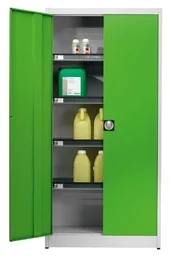
Store paints, solvents, cleaning agents, sealants and other hazardous substances in accordance with the manufacturer's instructions. A safety cabinet such as can support safe storage for suitable products and quantities. Before buying, check which substances you need to store and which requirements apply.
For suitable mechanical fastening of a temporary cover or safety barrier, self-locking nuts such as may be useful. Only use such parts for suitable mounting connections. They do not replace an inspection of a load-bearing component or the permanent repair of a building defect.

For barriers, protective clothing and other aids for renovation work, you can explore the Industrial Supplies section. Store materials so that children, pets and escape routes remain protected.
How do you plan home renovations based on cause and urgency?
Successful home renovation starts with the cause, not the visible surface. If you simply paint over a damp basement, the water problem will remain. If you fill a crack without checking for movement, the surface may crack again.
Which order of work reduces consequential damage?
- Make the area safe: Secure immediate hazards, risks of collapse, electrical problems, the smell of gas and active water leaks first.
- Find the cause: Have leaks, inadequate sealing, incorrect gradients, thermal bridges or movement professionally inspected.
- Renovate the building envelope and drainage: The roof, façade, plinth, waterproofing, gutters and pipes protect the building structure from new damage.
- Repair the building services: Inspect and repair the heating, water, ventilation and electrical systems after the cause has been eliminated.
- Renew the surfaces: Restore plaster, paint, flooring and built-in elements only once the component is dry and permanently stable.
How do you compare renovation quotes?
Ask every contractor to quote for the same scope of work. The quote should specify preparation, dismantling, materials, disposal, drying times, ancillary work and follow-up inspections. Also check whether the contractor is addressing the cause or only the visible symptom.
For extensive work, compare at least two quotes and have any outstanding points answered in writing. Changes to load-bearing components, the roof, façade or building services may require additional planning, permits or documentation. Clarify these points before placing the order.
How do you inspect completed work?
Compare the condition before and after the repair. Check visible surfaces, connections, gradients, operation and measured values. In the case of moisture damage, a dry surface alone is not proof of a permanent solution.
- Record any outstanding work and deadlines in writing.
- Keep invoices, inspection reports, product data and photos.
- Note maintenance intervals and any necessary follow-up inspections.
- Check whether windows, doors, radiators, drains and ventilation are working properly again.
- Have concealed work photographed before walls or floors are closed up.
Additional advice
Create a separate damage file for each room containing photos, measurements, quotes and invoices. This will help you keep track during a major home renovation and show contractors exactly when the damage began and which measures have already been carried out.
You can identify building defects most reliably through regular inspections, clear documentation and an assessment of the cause. Secure immediate hazards at once, preserve evidence and plan the repairs in the correct order. This will protect your home and help prevent damage from returning after the renovation.
Frequently Asked Questions
- How can you spot a possible building defect?
- Typical warning signs include new or widening cracks, damp, mould, flaking render, windows that stick, draughts, unusual noises and deformation. Check the pattern, record the date and location, and have the cause assessed. The appearance alone does not prove a building defect.
- How should you document damage to your home?
- Photograph the damage from a distance and in detail. Place a scale next to it, record the room, compass direction, date, weather conditions and readings, and save the original files. Keep a running log of any changes. Notify your contractor or insurer in writing and retain proof of postage or delivery.
- When do you need a building surveyor?
- Hire a building surveyor if you notice growing cracks, recurring damp, an unclear cause of mould, unusual deformation or a dispute about the cause and costs. A structural engineer is often required for load-bearing elements. Arrange the inspection before carrying out repairs so that the evidence and renovation plan remain intact.
- Can I repair building defects myself?
- You can carry out minor maintenance work yourself if there is no danger. Document the condition first. Do not drill into, open up, paint over or seal a suspected defect too quickly, as this can conceal the cause and destroy evidence. For damp, electricity, gas or load-bearing elements, hire a qualified professional.
- Which damage should you repair first?
- Prioritise immediate hazards, active water or gas leaks and unstable structural elements. Next, address the underlying cause involving the roof, façade, waterproofing or drainage. Only once the building is dry and safe should you repair installations, render, floors and surfaces. Professional planning helps prevent new work from repeating the same problems.
You might also be interested in
- Construction monitoring: Protect your home-building project with an expert
- Building your own home: Key steps in construction planning
- Construction management: How to successfully manage your building project
- Spot and decode burglars’ marks: How to protect your home
- Choosing fixtures and finishes for a new home: Checklist for making the right choices
- Spotting and preventing woodworm: How to protect your home