
In brief: Stone-effect non-woven wallpaper transforms your walls with its authentic, three-dimensional texture, creating a convincingly realistic stone wall. It is easy to work with, durable, and breathable. Its key advantage is that it can be removed wet, making it easier to redecorate later. For a perfect result, you need special non-woven wallpaper paste and a sharp utility knife blade.
Stone-effect wallpaper: Wall covering with character
A natural stone wall instantly gives any room depth, warmth, and unmistakable character. However, the effort and cost involved in creating a genuine stone wall are considerable. Stone-effect non-woven wallpapers offer a convincing and practical alternative. They imitate not only the appearance but also the tactile texture of slate, sandstone, or brick with remarkable realism.
The textile non-woven backing makes these wallpapers particularly dimensionally stable and easy to work with. You only need to paste the wall, not the wallpaper itself. This prevents tearing during application and makes positioning easier. For anyone who values individual wall design, this material opens up new possibilities.
Why non-woven wallpaper is ideal for a stone effect
Non-woven wallpapers are the first choice for demanding surfaces. This is due to their material properties. The non-woven backing is tear-resistant and dimensionally stable. It does not contract after being pasted and will not form seams later.
The surface of stone-effect wallpaper is usually vinyl-coated. This layer is wipe-clean, durable, and gives the pattern its three-dimensional depth. The combination of a sturdy non-woven backing and a detailed vinyl layer creates a durable, easy-care wall covering.
“Non-woven wallpapers are more forgiving during application than paper wallpapers. Because the paste is applied to the wall, you can still move and position the length precisely for several minutes without it tearing or becoming saturated.”
How do you prepare the wall for stone-effect wallpaper?
The basis for a perfect result is an immaculate surface. Completely remove old, loose wallpaper remnants. Thoroughly fill any cracks, holes, and uneven areas. Sand the entire surface smooth after filling.
Then apply a primer suitable for non-woven wallpaper evenly. This deep primer reduces the wall’s absorbency, improves the adhesion of the paste, and prevents stains. Allow the primer to dry for at least as long as specified by the manufacturer.
Important note
Never apply non-woven wallpaper to freshly plastered or painted walls. They must dry and release moisture completely for at least four weeks, or preferably six to eight weeks. Otherwise, moisture can become trapped behind the wallpaper and lead to mold growth.
What tools do you need to hang wallpaper?
Good preparation saves time and frustration. Have all your tools ready before you start hanging the wallpaper. You will need a sturdy paste tray and a roller for application. A level and pencil are essential for marking the first vertical guide line.
To cut the wallpaper lengths, you need a large, clean cutting table, a tape measure, and a sharp utility knife with enough replacement blades. Wallpaper scissors are suitable for rough cutting. A wallpaper brush or smoothing tool presses the wallpaper onto the wall without bubbles. A seam roller presses the seams neatly together.
Choosing the right paste is crucial
Use only special paste for non-woven wallpaper. It has particularly strong adhesion and is transparent, so it will not show through even thin wallpaper. It is generally available as a powder that you mix with cold water according to the instructions on the package.
Leave the mixed paste to swell for a few minutes before using it. Then stir it thoroughly once more. The consistency should be creamy but not too runny. Paste that is too thin dries too quickly, while paste that is too thick is difficult to spread.
How to apply non-woven wallpaper step by step
First measure the room height and cut the first length with an overhang of around 10 cm at the top and bottom. Roll up the length with the printed side facing inward. This makes it easier to handle. Using the level, draw an exactly vertical line at a distance equal to the wallpaper width minus 2 cm from your starting corner.
Now apply the paste generously and evenly to the wall area for the first length. The area should be slightly wider than the wallpaper. Start at the top of the wall and work downward.
Expert tip
Do not hang the first length directly into the corner. Corners are rarely perfectly straight. Instead, hang the length parallel to your vertical guide line. After applying the first length, cut the narrow strip for the corner precisely and hang it separately. This prevents crooked lines.
Positioning, smoothing, and creating the seams
Place the rolled-up length at the top of the wall and slowly unroll it downward. Leave the excess at the ceiling and floor. Align the edge with your vertical line. Use the wallpaper brush to smooth the wallpaper firmly from the center toward the edges.
Remove excess paste immediately with a damp sponge. Carefully roll the seams between the lengths with the seam roller. Make sure the stone-effect patterns line up precisely. With patterned wallpaper, matching the pattern repeat is crucial.
“With heavily textured stone-effect wallpaper, you should avoid using a seam roller and press the seams down only with the wallpaper brush. A roller could flatten the delicate texture and create a visible shiny strip.”
The final trimming
Once the length has been smoothed completely, trim it. Press the wallpaper firmly into the corner between the wall and ceiling with a smoothing tool. Then score along this edge with the utility knife.
Pull away the excess strip and trim it neatly along the scored line. Repeat the process at the floor. Proceed in the same way around outlets and light switches: press down, score in the center, and trim.
Where does a stone effect look its best?
Stone-effect non-woven wallpaper instantly creates a focal point in living spaces. It is ideal as a feature wall behind the sofa, in the dining area, or in the hallway. In the living room, a patterned stone wall creates rustic coziness.
In a home office or entryway, it gives the room a sense of sophistication and stability. Even in the bedroom, a subtle, light stone effect can create a calming atmosphere. Browse our wallpaper collection for more ideas.
Additional advice
Always test a sample of the wallpaper in your room before buying. View it in both daylight and artificial light. Colors and textures can look very different depending on the lighting conditions. Wallpaper that looks warm in the store may appear cool at home.
Caring for and maintaining your new stone wall
Vinyl-coated non-woven wallpapers are easy to clean. You can regularly remove dust with a dry, soft cloth or a feather duster. For light dirt, a damp cloth with mild soapy water is sufficient.
Avoid abrasive cleaning products or sponges, as they could damage the surface. The greatest strength of non-woven wallpaper becomes clear when it is time to redecorate: it can usually be removed dry and without leaving residue, as the paste adheres only to the wall.
Stone-effect design outdoors: ideas for your garden and patio
The appeal of a stone-effect look is not limited to indoor spaces. You can also use stone-effect elements in the garden, on the patio or balcony to create a harmonious connection between indoors and outdoors.
A
creates a rustic focal point for cozy evenings. The provides privacy with a stylish look. For paths and small patio areas, offer a practical and decorative solution.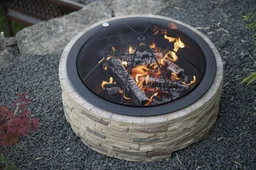
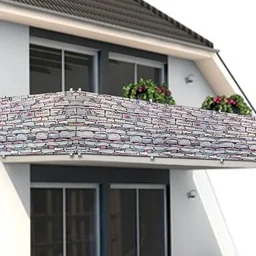
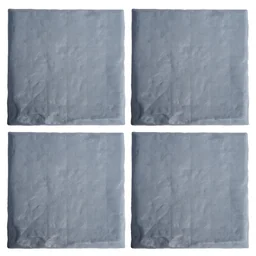
These products complement the stone-effect look of your interior walls perfectly and carry the design concept outdoors. They create a cohesive, natural look.
Conclusion: an easy way to add character to your walls
Stone-effect nonwoven wallpaper is a versatile, DIY-friendly material for your walls. It combines the sophisticated look of a natural stone wall with the practical benefits of modern wallpaper technology.
With the right preparation, the proper tools, and a little patience, even DIY beginners can achieve great results. The result is a durable, long-lasting, atmospheric wall design you can enjoy for years. For more inspiration, including accent wallpaper or decorative wallpaper trees, you have plenty of design options to choose from.
Frequently asked questions
- What is the difference between nonwoven and paper stone-effect wallpaper?
- Nonwoven wallpaper has a tear-resistant textile backing that holds its shape and does not rip easily. You apply the paste directly to the wall, not the wallpaper. This makes it easier to hang, especially on uneven walls. Nonwoven wallpaper can also be removed dry and without leaving residue later, whereas paper wallpaper usually has to be soaked or torn off.
- Can I use stone-effect nonwoven wallpaper in damp rooms such as the bathroom?
- Yes, many stone-effect nonwoven wallpapers are suitable for damp rooms if they have an appropriate coating, such as vinyl or a water-repellent finish. Choosing the right moisture-resistant paste is essential. Always check the manufacturer's information on the roll label to confirm that the wallpaper is suitable. Avoid areas exposed to direct splashes beside the shower or bathtub, or add extra protection.
- How do I prepare an old, cracked wall for nonwoven wallpaper?
- Fill deep cracks and holes with filler. Once it is dry, sand the repaired areas smooth and remove any old wallpaper. Prime the entire wall with a bonding primer specifically designed for nonwoven wallpaper. This seals the surface, evens out its absorbency, improves adhesion, and helps prevent stains. Wallpaper will only stay securely in place on a clean, dry, sound surface.
- How do I cut stone-effect wallpaper neatly around outlets and windows?
- Hang the wallpaper over the obstacle. Gently press it into the corners with a wallpaper brush. Then use a sharp utility knife to cut precisely along the edge of the outlet cover or window frame. Carefully trim along the cut line and remove the excess strips. Always work from the center of the obstacle toward the corners.
- Can I paint over stone-effect nonwoven wallpaper later?
- That depends on the type of wallpaper. Textured stone-effect nonwoven wallpaper is often printed in color to imitate the look of natural stone. Painting over it would hide the depth of the design. However, some nonwoven wallpapers have a coarse texture and are made to be painted in any color you like. Check the product description.
You may also be interested in
- Wall effects: create a modern stone-effect look for your walls
- How to hang lining paper: smooth walls made easy
- How to apply self-adhesive wallpaper quickly and neatly
- How to hang photo wallpaper: your guide to the perfect wall
- Living room wallpaper: modern wall design ideas
- Painting stones: creative décor for your home and garden