
In brief: The best submersible pump for you depends on how you plan to use it. For clean water in a cistern or at a campsite, quiet, float-operated or battery-powered pumps are ideal. For dirty water from a pond, basement or construction pit, you need robust dirty-water pumps with large impellers and a protective grille to keep out solids. Flow rate, pumping height and the maximum particle size are key. Our test and comparison will help you choose.
When water gets into areas where it does not belong, or when you want to redirect it deliberately, a submersible pump is the tool of choice. Whether you are dealing with flooding in the basement, maintaining a pond or watering the garden from a water butt – the right pump makes all the difference. Our test and comparison for 2026 compares the most important models and explains what to look for when buying.
Table of contents
Which submersible pump do I need for each application?
Not every submersible pump can do everything. Choosing the right type is the first and most important step.
Dirty-water pumps for basements, ponds and construction sites
These pumps are all-rounders for murky water. They can handle water containing solids such as sand, gravel, leaves or sludge. The specified maximum particle size is crucial. You can find these pumps in our range under submersible pumps.
Note: Although they are called "dirty-water" pumps, they are not designed for aggressive chemicals, oils or fats. You need special sewage pumps for these applications.
Clean-water pumps for cisterns, wells and camping
These models are designed for clean, clear water. They are perfect for pumping rainwater from a cistern to water the garden or for supplying a campsite shower with water from a container. They are quieter and often more energy-efficient than dirty-water pumps.
Battery-powered submersible pumps for maximum flexibility
Where there is no power connection nearby, battery-powered pumps come into their own. They are ideal for mobile use on a campsite, in a remote garden or as an emergency pump in the boot of your car. Pay attention to the runtime and compatibility with existing battery systems.
The most important submersible pump buying criteria
Do not rely on wattage alone. These parameters are crucial.
Flow rate and pumping height
The flow rate, given in litres per hour (l/h), tells you how much water the pump can move under ideal conditions. The pumping height, in metres (m), indicates how high it can pump the water.
Maximum particle size and material
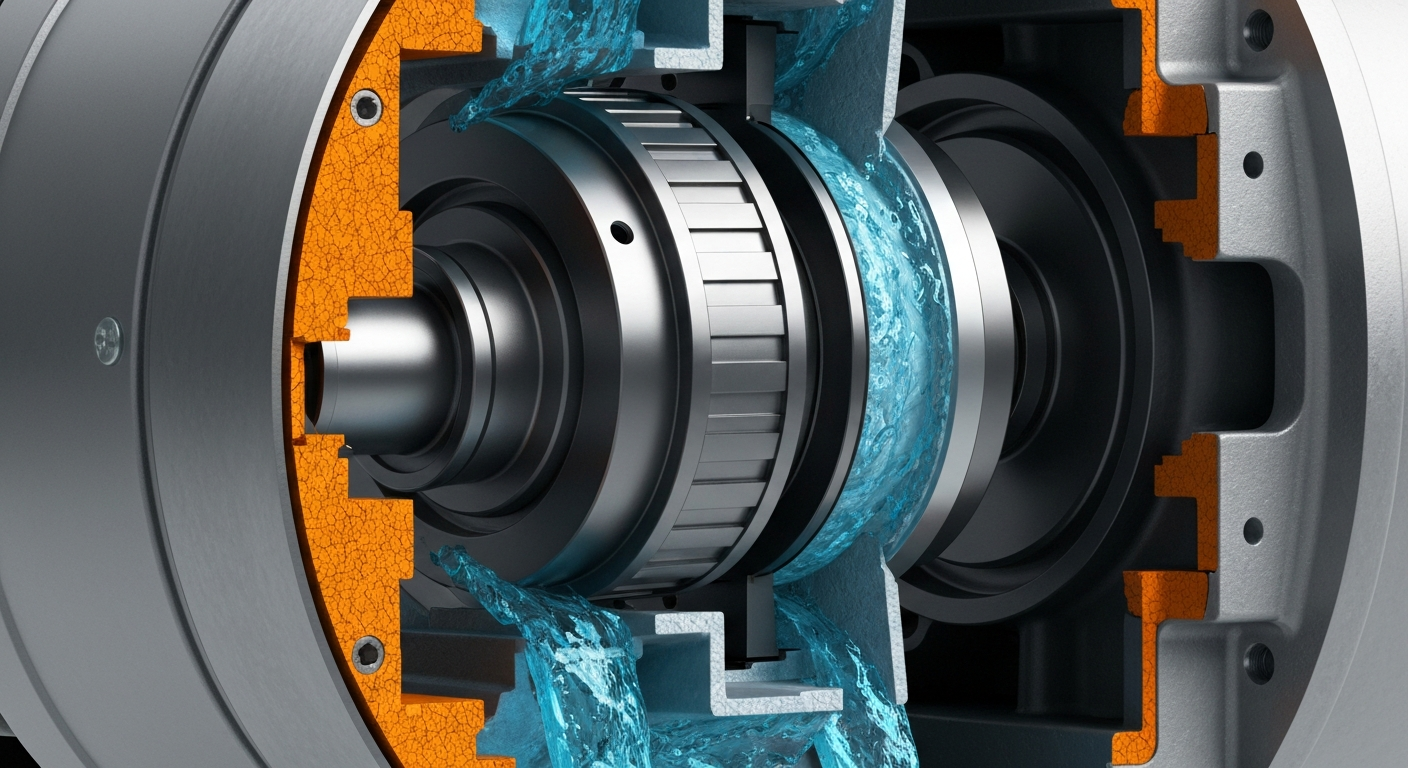
For dirty-water pumps, the maximum permitted particle size is the key figure. Typical values range from 5 to 40 mm. The housing material is also important: stainless steel is corrosion-resistant and durable, while high-quality plastic is lighter and more affordable.
Tip: Are you planning to run the pump continuously for a longer period, for example for a fountain or automatic watering? Then choose a pump that is explicitly designed for continuous operation. These pumps have better cooling and are fitted with more durable bearings.
Float switch and automatic function
A float switch turns the pump on when the water reaches a certain level and switches it off again before it runs dry. This protects the pump and makes it a reliable drainage solution, for example in the often damp basement of a garden.
Submersible Pump Test and Comparison 2026
In our overview, we compare representative models from various categories. The table helps you compare the specifications at a glance.
The highest-rated submersible pumps in our range compared directly:
| Model | Customer rating | Availability |
|---|---|---|
| Dirty water submersible pump STPK750, 750 Watt 🏆 Test winner | ★ 5,0 (7) | In stock |
| Dirty water submersible pump "STPK1100", 1100 Watt | – | In stock |
| 12 V battery water pump for rainwater tanks | – | Currently unavailable |
| Battery rainwater tank pump RFP 12V | Water pump | 1500 l / h | incl. battery and charger | – | Currently unavailable |
| Allweiler L5 brass replacement valve - durable replacement part for animal drinkers, 1,27 Ohm/m | – | Currently unavailable |
Robust dirty water pumps for demanding applications
Robust technology is essential for emptying a garden pond or draining a flooded construction pit. The dirty water submersible pump
with 750 Watt of power is a reliable helper for moderately dirty water and delivers solid performance for private use.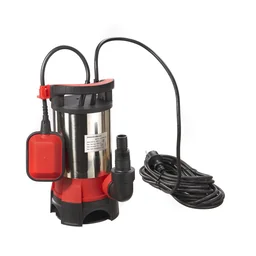
For even greater challenges, the dirty water submersible pump "STPK1100"
with 1100 Watt of power is ready for action. It pumps larger volumes of water in less time and reliably handles coarse solids.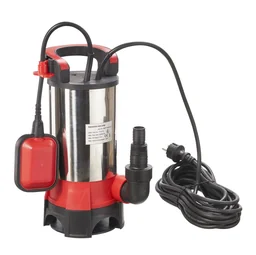
Flexible battery-powered solutions for use anywhere
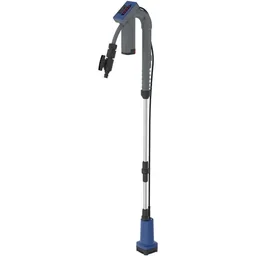
The battery rainwater tank pump RFP 12V
The heavy-duty option for permanent solutions
The cast iron submersible pump "Vortex 1500"
is designed with a solid housing for intensive, long-term use, such as agricultural drainage or handling wastewater. Its design is built for durability and high load capacity.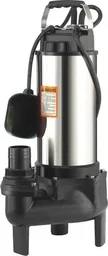
Warning: Never switch on a submersible pump when it is dry or allow it to run dry. The motor is cooled by the surrounding water. Dry running will destroy the pump within a few seconds. A working float switch or constant supervision is essential.
Maintenance and care for your submersible pump
Proper care can extend your pump's service life by years. Rinse the pump with clean water after every use to remove deposits and dirt. Check the protective grille on dirty water pumps for blockages. Store the pump in a frost-free, dry place during winter.
For maintaining all types of pumps, you will find suitable accessories in our shop. Regularly checking the seals and cables ensures safe operation.
Storage and frost protection
Remove any remaining water from the housing after use. Simply run the pump briefly without a hose while empty. Store it in a sheltered place. If residual water freezes inside, the housing may split and the mechanism may be irreparably damaged.
Safety instructions for operation
Submersible pumps combine water and electricity. Always connect the pump to a residual current device (RCD). Unplug the pump before touching or servicing it. Only use a cable and hose designed for the intended pressure and performance. Secure the hose properly to the connections.
The correct electrical connection
Do not use extension leads that are not suitable for outdoor use. Make sure the plug and socket remain dry. When using equipment near water, sockets with their own RCD protection are essential.
Conclusion: How to find the perfect submersible pump
Choosing the right submersible pump is easy when you know the key specifications. First, define the intended use: do you need a pump for clean or dirty water? Then determine the required delivery head and flow rate. The power in Watt follows from these requirements almost automatically.
For occasional hobby use, compact and affordable models are often sufficient. For professional or continuous use, it is worth investing in a robust pump with a long service life. Remember accessories such as suitable hoses and a float switch for automatic operation.
With the models and criteria presented here, you are well equipped to find the submersible pump in our extensive range that exactly matches your requirements. Whether for the garden, basement or your next camping adventure.
Frequently Asked Questions
- What is the difference between a clean water pump and a dirty water pump?
- Clean water pumps are designed for pure, clear water such as rainwater or well water. They cannot handle solids. Dirty water pumps have an open impeller and a protective screen that allows larger particles such as leaves, sand or sludge to pass through without damaging the pump. The maximum particle size is an important factor when choosing a pump.
- Can I use a dirty water pump for clean water?
- Yes, this is possible, but it is often not ideal. Dirty water pumps are generally louder, less energy-efficient and have a lower maximum head at the same power rating compared with clean water pumps. For continuous operation in a water tank, a dedicated rainwater or domestic water pump is therefore the better choice.
- How long does a good submersible pump last?
- Its service life depends on the materials, maintenance and workload. Pumps with stainless steel or high-quality plastic housings tend to last longer. Avoid dry running and observe the specified water temperature. Regular cleaning after use significantly extends the pump's service life.
- Do I need a special pump for my pond?
- Special pond pumps are available for pond filters and water features, and are often designed to float. If you want to drain the pond, you need a dirty water pump that can handle algae, sludge and leaves. Make sure it has a sufficient flow rate to save time.
- Which is more important: pumping height or flow rate?
- Both are important, but the pumping height sets the limit. It indicates how high the pump can lift the water. The flow rate decreases as the height increases. Choose a pump whose maximum pumping height is well above the height you need. The flow rate then determines how quickly the job is completed.
You may also be interested in
- Dirty Water Pump Test & Comparison 2026: The Best Models Reviewed
- Domestic Water Pump Systems Test & Comparison 2026
- Robot Pool Cleaner Test & Comparison 2026
- Pressure Washer Test & Comparison 2026
- Pump Attachment or Submersible Pump? The Ultimate Comparison
- Compressor Test & Comparison 2026: The Best Models Reviewed