
In brief: Crassulaceae are easy-care survivors. They need well-draining soil, plenty of light and little water. Only water once the soil has dried out completely. Waterlogging quickly causes root rot. In winter, they need a cool, bright location with minimal watering.
Contents
What are Crassulaceae?
The Crassulaceae family comprises more than 1,400 species. Their shared characteristic is succulent, water-storing leaves. This adaptation makes them perfect plants for forgetful waterers and sunny locations.
The best-known members include the frost-hardy houseleek (Sempervivum), decorative echeveria with their rosettes and versatile sedum varieties, also known as stonecrops. They all share a basic ease of care if you follow a few simple rules.
Crassulaceae are masters of adaptation. Their ability to store water in their leaves has made them survivors in dry regions around the world.
The best-known varieties for home and garden
For beginners, it is worth looking at three hardy genera. Sempervivum, the houseleek, is virtually indestructible and winter-hardy. It thrives in stone planters, on wall tops and in the rock garden.
Echeveria impresses with symmetrical rosettes in blue, green or with reddish edges. It is the classic indoor succulent. Sedum varieties are extremely diverse, ranging from low-growing ground cover to upright, flower-rich perennials for the garden bed.
How do you find the right location for succulents?
Light is the most important factor. Almost all Crassulaceae species need full sun or at least a very bright location. A south-facing window is ideal. In low light, they develop long, unstable stems and faded colours.
In summer, many Crassulaceae can be moved outdoors. However, acclimatise them slowly to direct sunlight to prevent sunburn. A spot in front of a sheltered wall or on the patio is perfect. You can find information about garden equipment in our shop.
Pro tip
Turn your potted succulents by a quarter turn every two weeks. This helps them grow evenly and prevents them from leaning towards the light source. This simple measure creates a perfect, symmetrical shape.
The temperature question
Most succulents like warmth, but not hot, humid conditions. Good air circulation helps prevent fungal diseases. In winter, many species, including echeveria, prefer a cool dormant period at temperatures between 5 and 10°C. This encourages compact growth and flowering the following year.
What soil and pot do Crassulaceae need?
The right soil determines success or failure. Ordinary potting soil is the biggest enemy of succulents. It holds too much water and causes root rot.
They need an extremely well-draining, mineral-based growing medium. Mix standard cactus soil with additional pumice, lava grit or perlite. The aim is a loose structure through which water drains immediately.
Important note
Be sure to avoid cachepots without drainage holes or saucers in which water collects after watering. Waterlogging can kill most Crassulaceae within just a few days. Always check that excess water can drain away.
For an uncomplicated solution, use a ready-made
. This specialist substrate is specially formulated for the needs of succulents and cacti.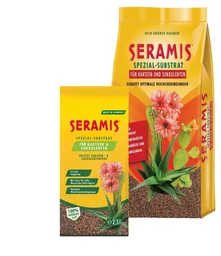
Choosing the right pot
Terracotta pots have one major advantage: their porous walls allow water to evaporate, helping the soil dry out faster. Plastic pots are lighter and cheaper, but require an even more cautious approach to watering. The pot should be only slightly larger than the root ball.
How should you water and fertilise Crassulaceae?
The rule is: less is more. Water your succulents thoroughly only when the substrate is completely dry all the way to the bottom of the pot. Check by inserting your finger into the soil. If in doubt, wait another two days.
In summer, depending on the location, this may be necessary every one to two weeks. In winter, during the dormant period, reduce watering to a minimum. Once a month or even less often is usually enough. The plants draw on their stored reserves.
Additional advice
Always water from below or directly onto the substrate, not into the rosettes of plants such as echeveria or houseleeks. Standing water in the leaf rosette encourages rot. Use a watering can with a long, narrow spout for precise watering.
The same strict rules apply to fertilising. Crassulaceae can manage with minimal nutrients. Only fertilise during the main growing season from April to August. Use a highly diluted cactus or succulent fertiliser, at most every four to six weeks. Do not fertilise at all in winter. Our range of plant fertilisers includes suitable products.
The most common care mistake with succulents is overwatering. These plants are adapted to extreme drought and tolerate periods of thirst far better than wet feet.
Special care for houseleek, Echeveria and Sedum
How to plant and care for houseleek (Sempervivum)
Houseleek is the hardiest of the Crassulaceae family. It tolerates full sun, severe frost and poor soils. Plant Sempervivum in a mixture of garden soil and plenty of grit or sand.
It produces numerous offsets and gradually covers larger areas. It is unbeatable in the rock garden, between stepping stones or for cemetery planting. Watering is only necessary for plants growing outdoors during extremely prolonged periods of drought.
Caring for Echeveria for perfect rosettes
Echeveria loves light and warmth. Make sure the lower leaves are not constantly resting on moist soil. Carefully remove any dried leaves from the stem. This helps prevent pests and gives the plant a beautiful shape.
When your Echeveria flowers, a long flower stalk emerges from the centre. Cut it off at the base after flowering to reduce the strain on the plant.
Sedum varieties: From ground cover to perennial
Sedum care depends on the species. Low-growing Sedum species such as Sedum spurium are undemanding ground cover plants. Taller varieties such as Sedum telephium (orpine) need well-drained soil in the bed and should be cut back in spring.
They are all attractive bee plants and require very little care. A handful of compost in spring is all the fertiliser they need.
When working with sharp-edged growing media or in the garden, protect your hands with sturdy
or the slightly lighter .

How do you propagate and overwinter your succulents?
Easy propagation using offsets and cuttings
Crassulaceae are remarkably easy to propagate. Houseleek produces small offsets on its own, which you can simply separate and plant. Echeveria and many Sedum varieties can be propagated from leaf cuttings.
Carefully twist a healthy, complete leaf away from the stem. Leave it in the air for a few days until a thin skin forms over the break. Then place it on poor soil. After a few weeks, roots and a new miniature plant will develop.
Expert tip
The best time to propagate is late spring or early summer. This gives young plants enough time to develop strong roots before their winter dormancy. Use tweezers when working with small plants.
The art of overwintering
Bring non-hardy succulents such as Echeveria indoors before the first night frosts. Place them in a bright but cool location. A lightly heated stairwell, a frost-free greenhouse or a bright bedroom windowsill are suitable.
From now on, water only occasionally, just enough to prevent the leaves from shrivelling significantly. The dormant period is essential for flower formation. Frost-hardy species such as Sempervivum and many Sedum varieties can stay outdoors. A wet winter is more dangerous than a cold one. Ensure good drainage, using a protective layer of garden fleece or a cover if necessary.
Repotting and root care
Repot your succulents every two to three years when the pot is completely filled with roots. The best time is spring, when growth begins. Carefully shake off the old soil and check the roots for rot.
Cut away dry or mushy roots with a clean, sharp knife. Leave the plant to dry in the air for a day before repotting it. This allows cut surfaces to heal and reduces the risk of infection.
With these basic rules, you can enjoy your robust, beautifully shaped succulents for many years. They prove that less care often leads to the most beautiful results.
Frequently Asked Questions
- How often do I need to water my succulents?
- There is no fixed weekly schedule. Only water your succulents when the soil in the pot is completely dry. If in doubt, it is better to wait a few more days. In winter, one or two waterings for the entire season are often enough.
- What is the ideal soil for Crassulaceae such as Echeveria?
- Regular potting soil contains too many nutrients and retains too much moisture. Mix it with at least 50% mineral components such as pumice, lava grit or fine gravel. Alternatively, use a ready-made specialist mix for cacti and succulents.
- Why are my Sedum plants growing tall and thin?
- This condition, known as etiolation, is a sign of insufficient light. The plant stretches to reach more light. Move your Sedum varieties to a brighter location, ideally directly beside a south-facing window. Cut off any stems that have already become elongated.
- Can houseleek (Sempervivum) stay outdoors in winter?
- Yes, houseleek is completely hardy and can tolerate severe frost. A well-drained location is important so that water does not collect around the rosettes. They are perfect for year-round planting in rock gardens or rooftop gardens.
- What is the easiest way to propagate my succulents?
- Many Crassulaceae produce offsets or can easily be propagated using leaf or stem cuttings. Allow the cut surface of the cuttings to dry for a day before placing them in poor soil. Roots usually develop within a few weeks.
Ergänzung: Dickblattgewächse pflegen: Sukkulenten im Garten & Haus
Dickblattgewächse benötigen auch im Garten einen sonnigen, gut drainierten Standort. Staunässe lässt sich durch sandiges Substrat, Kies oder eine Drainageschicht vermeiden. Empfindliche Arten sollten vor anhaltendem Regen und Frost geschützt oder rechtzeitig ins Haus gebracht werden.
Im Haus stehen Sukkulenten ideal an einem hellen Fensterplatz. Gegossen wird erst, wenn die Erde vollständig abgetrocknet ist; überschüssiges Wasser aus dem Übertopf sollte sofort entfernt werden. Während der Winterruhe genügt deutlich weniger Wasser, und Dünger ist in dieser Zeit nicht erforderlich.
- Garten: sonnig, trocken und windgeschützt pflanzen.
- Haus: hell aufstellen und sparsam gießen.
- Umtopfen: im Frühjahr mit durchlässiger Kakteenerde.
You may also be interested in
- Succulents in glass: How do you create a stylish terrarium?
- How to care for houseplants: Tips for healthy leaves
- Hardy plants: Your path to an easy-care dream garden
- How to care for aloe vera: Location, watering and propagation
- Easy-care houseplants: Green oases without the effort
- How to care for Dipladenia: Tips for abundant blooms