
In short: Create an insect-friendly garden or balcony by choosing native flowering plants, providing food year-round and offering varied nesting sites. Avoid pesticides and maintain your garden with low-intensity care. Even small areas with suitable flowers, dead wood and a patch of sandy soil can make a crucial difference for wild bees and other insects.
Support Wild Bees: Create an Insect-Friendly Garden & Balcony
Practical steps to increase biodiversity right outside your door.
Table of contents
Why do we need wild bees in the garden?
More than 560 wild bee species live in Germany. Most are solitary and perform irreplaceable pollination work. They often pollinate fruit trees, berry bushes and vegetable plants more effectively than honey bees.
Many wild bees are specialists. They collect pollen only from specific plant families. If these plants disappear, the corresponding bee species disappears too. Your garden can be a lifeline.
A diverse insect population aerates the soil, fertilizes plants and provides food for birds. This creates the foundation for a stable ecosystem. It all starts with choosing the right plants.
A garden without wild bees is like an orchestra without violins. There may still be sounds, but the essential melody and diversity are missing.
How do you choose the right flowers for bees?
The first step is to avoid double flowers. They look lush, but often produce neither pollen nor nectar. Wild bees cannot reach the few resources that are available.
Choose native flowering plants. They are adapted to our climate and provide the right food for the insects that live here. Exotic ornamental plants are often of little value.
Pro tip
Do not plant a random mix of colours; instead, plant small groups of the same species. Wild bees are “flower-faithful” and prefer to visit many blooms of one plant species before moving on to the next. This saves energy.
Choose plants with different flowering periods. The season begins in March with willows and ends in October with ivy. This provides a continuous food supply from spring through autumn.
Native perennials and herbs are particularly valuable. These include viper’s bugloss, meadow sage, bellflowers, oregano, wild marjoram and scabious. You will find a wide selection of suitable flowers and seed mixes in our range.
Top 10 bee-friendly plants
- Spring: Pussy willow, lungwort, pasque flower
- Early summer: Viper’s bugloss, meadow sage, columbine
- Midsummer: Wild marjoram (oregano), thyme, lavender, knapweed
- Late summer/autumn: Ivy, sedum, asters
Do not forget trees and shrubs. Cornelian cherry, blackthorn, hawthorn and wild roses are excellent sources of pollen and nectar. They also provide shelter and nesting opportunities.
How do you create a natural balcony?
Every balcony can become an insect oasis. Start with your containers. Deep pots and planters hold more water and give roots more room. Use high-quality, peat-free potting soil.
Plant your boxes with perennial plants instead of only annual summer flowers. Herbs such as thyme, sage, chives and borage are perfect for sunny balconies. They are easy to care for, fragrant and flower abundantly.
Provide a shallow dish of water with pebbles. The stones serve as landing places and prevent insects from drowning. Birds also use this drinking station.
Additional advice
A large pot or wooden box filled with nutrient-poor sand and loam becomes a nesting aid for ground-nesting wild bees. Place it in a sunny, sheltered spot. Keep the surface dry and free of vegetation.
Climbing plants such as native bryony or sweet pea add greenery to railings and provide extra flowers. A small insect hotel on a south- or east-facing wall completes the offering.
Do not use chemical fertilizers or pesticides. Organic fertilizer from our plant fertilizer range is all you need. Water in the morning or evening to minimize evaporation.
How do you build a functional insect hotel?
A poorly built insect hotel does more harm than good. The most common mistakes are rough drill holes that cause injuries and unsuitable filling materials. Avoid pinewood, fir cones and glass tubes.
Use hardwood such as beech, oak or ash. Drill the holes across the grain to prevent cracks. The holes must have smooth inner walls. Sand the entrances afterwards.
Offer a range of hole diameters. Between 2 and 10 millimetres is ideal. The depth should be about 8 to 10 times the diameter. Do not drill the holes all the way through the wood.
Important note
Never hang the insect hotel in full shade or facing north. Ideally, place it in a sunny spot protected from rain and wind, at least one metre above ground. Secure it firmly so that it does not swing.
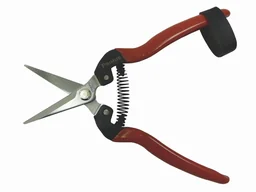
For construction, you need suitable garden tools. A precision-working ("Wunderschere" - the all-purpose cutter) is ideal for cutting reed or pithy stems cleanly to length.
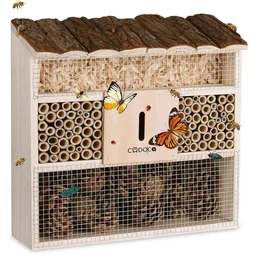
Pithy stems from blackberry, mullein or elder are a natural alternative to drilled holes. Cut them to bundle length and seal one end with clay. Or choose a ready-made, species-appropriate model such as the (Cadoca insect hotel).
The best nesting aid is often the garden itself. A sunny, bare patch of ground, piles of deadwood and old gaps in walls are used by more species than any ornate hotel.
Materials for your DIY insect hotel
- Nesting blocks: Hardwood (beech, oak) with clean drilled holes
- Reed/pith stems: Closed at the back, smoothly cut at the front
- Deadwood: With a range of hole sizes for beetles
- Clay bricks: For mason bees and wasps
- Roofing material: Roofing felt or shingles to protect from rain
Which maintenance measures really help insects?
Leave your garden a little messier. Leave dried perennial stems standing over winter. Insects overwinter in their hollow or pith-filled stems. Mow meadow sections only late in the season and never all at once.
Create patches of bare ground. Many wild bees, such as mining bees, nest in the ground. A sunny, sparsely vegetated patch with sandy-loamy soil is perfect. Do not hoe or dig over these areas.
Create a deadwood pile. Stacked branches and tree trunks provide shelter for countless insects, spiders and small mammals. It is a living part of the food web.
Use rainwater for watering. It is free of limescale and better for most plants. A water butt from the garden irrigation range makes you more self-sufficient and helps protect the environment.
Completely avoid chemical-synthetic pesticides and herbicides. They kill not only pests but also important beneficial organisms. If problems arise, use mechanical methods or biological controls.
Which mistakes should you absolutely avoid?
The biggest mistake is using pesticides. Even products labelled “bee-friendly” can be deadly to wild bees. They disrupt their orientation or damage larval development.
Mowing the lawn too frequently and too short destroys flowers. Leave at least the edges or some islands to grow longer. Clover, daisies and other wild herbs can then flower there.
“Tidying up” in autumn removes overwintering habitats. Leave leaves under hedges, perennial stems and deadwood until spring. Only tidy up once temperatures remain consistently above 10 degrees.
Exotic plants such as forsythia, geraniums or ornamental cherries usually provide no food. They are no substitute for native species. Focus on ecological value, not just appearance.
Do not place insect hotels incorrectly or fill them with unsuitable materials. Styrofoam, straw and fir cones are useless. Plastic or glass tubes encourage mould growth and are a death trap.
Also think about storing your garden tools and materials. A sturdy (12-bottle wine carton) is suitable not only for bottles but also for sorting and storing seed packets, small tools or harvested produce.
Every garden and every balcony matters. With these practical steps, you can create vibrant refuges. You will support biodiversity and experience the fascinating world of wild bees up close. Start creating a bee-friendly corner today.
Frequently Asked Questions
- Which flowers are best for wild bees?
- Wild bees need single flowers with accessible pollen and nectar. Native perennials such as viper's bugloss, meadow sage, bellflowers, oregano and wild marjoram are ideal. Choose plants with different flowering periods from early spring to autumn to provide a continuous food supply.
- How do I build a good insect hotel?
- Use only hardwood such as beech or oak for the nesting blocks. Drill holes with clean, smooth edges in various diameters between 2 and 10 mm. Filling materials such as pithy stems (blackberry) or bundles of reeds must be closed at the back. Hang the hotel in a sunny spot protected from rain and wind.
- Can I really help wild bees on my balcony?
- Yes, even a small balcony can provide an important food source. Plant bee-friendly herbs such as thyme, sage and marjoram in pots. A shallow water dish with pebbles provides a drinking station. Compact insect hotels for mason bees or a pot filled with sandy soil offer nesting opportunities.
- What are the biggest mistakes when supporting wild bees?
- The biggest mistakes are double flowers that provide no nectar, using pesticides, unsuitable nesting aids with roughly drilled holes or glass tubes, and mowing or clearing too often. In autumn, also leave dried stems and leaves in place as overwintering sites.
- Why are wild bees important for my garden?
- Wild bees are more efficient pollinators than honeybees, helping to secure fruit and vegetable harvests. Many species depend on specific plants, helping to preserve biodiversity. They are an indicator of a healthy, functioning ecosystem right on your doorstep.
You may also be interested in
- Garden for biodiversity: Encourage insects and a wealth of flowers
- Wild bees in the garden: Create and protect habitat
- Bee-friendly balcony plants: How to support biodiversity in a small space
- Flowering areas in the garden: Create a paradise for insects
- Year-round insect protection: A garden for beneficial insects
- Build a wild bee hotel: A DIY guide for your garden