
In brief: The right trailer lights depend on your tow vehicle's socket, the functions you need and how you want to mount them. Choose a fully wired kit to save time, or individual lights to meet specific requirements. Look for features such as StVZO approval, splash protection and durable construction. You may need an adapter if the plugs are incompatible.
Fully functional, road-legal lights are essential for every trailer. They help keep you safe and make your trailer visible to other road users. Our 2026 comparison explains what to look for when choosing trailer lights and which options suit your needs.
What functions do my trailer lights need?
Germany's Road Traffic Licensing Regulations (StVZO) set out the minimum requirements. Your trailer lights must reliably provide these functions:
- Tail lights: Make your trailer visible from behind in the dark.
- Brake lights: Shine brighter than the tail lights when you apply the brakes.
- Turn signals: Signal your intention to turn to other road users.
- Reflectors (cat's eyes): Reflect light from other vehicles.
- License plate light: Keeps your trailer's license plate readable at night.
Many modern kits also include a rear fog light, which improves visibility from behind in poor conditions. Larger trailers or caravans may also need side marker lights or parking lights. A good kit includes all the functions required for your trailer.
7-pin or 13-pin? Choosing the right trailer plug
Choosing a plug system is an important decision. The classic 7-pin plug (ISO 1724) is enough for most car trailers. It carries the basic lighting signals.
The 13-pin plug (ISO 11446) is now standard on newer vehicles, especially motorhomes and caravans. Its main advantage is the extra contacts, which let you:
- Supply power to a separate battery in the caravan.
- Use a separate ground connection for more reliable operation.
- Connect a trailer reversing light control system.
- Run separate wiring for electric brakes.


Comparing mounting options: Which is best?
Trailer lights come with several mounting options, each with its own advantages and disadvantages.
Fixed-mounted lights
Traditional lights bolt securely to the trailer frame for a stable, durable fit. The wiring can be installed permanently or connected with plugs. This option is ideal for trailers that always have lights fitted.
Magnetic mounts for flexibility
Lights such as the
with a strong magnetic mount are highly versatile. They're ideal for trailers you use occasionally or with different vehicles, such as tractors or vans. Simply remove the lights after your trip. Make sure the magnets are strong enough to stay in place on uneven surfaces and during vibration.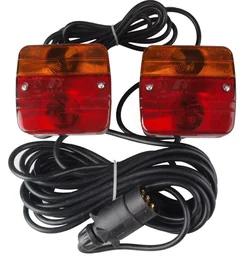
Fully wired kits
A fully wired kit such as the
is the most convenient option for a first-time installation. The cables are already connected to the lights and often come with plugs. This saves you from wiring and trimming individual wires and greatly reduces the risk of mistakes.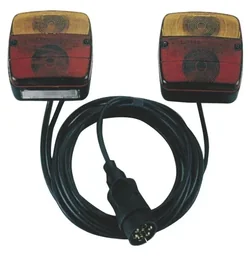
Buying criteria: What to look for
Beyond features and plug type, there are several other important quality factors to consider.
StVZO approval and inspection marks
Only buy lights with a General Operating Permit (ABE) or an ECE approval mark. This confirms that the product meets legal requirements and is approved for use on public roads. Without this approval, you could face a fine and risk losing your insurance coverage.
Ingress protection rating (IP code)
Because trailer lights are constantly exposed to the elements, they need solid protection from water and dust. An IP rating of at least IP54 is recommended. IP54 provides reliable protection against splashing water. If you often drive in the rain or in dirty conditions, IP67 or higher is a better choice.
Build quality
Look for sturdy housings made from durable plastic or metal. The cables should have an adequate cross-section and resist oil, gasoline and UV radiation. High-quality plug connections resist corrosion and provide reliable contact over time.

Compare trailer lights
Our comparison will help you understand the different types of trailer lights and find the right one for your needs.
Here are the most-reviewed trailer lights in our range:
| Model | Customer rating | Availability |
|---|---|---|
| 2-chamber rear light with license plate light, 1 pc. | – | Currently unavailable |
| 3-chamber light with magnetic mount, 7.5 m cable, 7-pin | – | Currently unavailable |
| 3-function trailer lighting, fully wired | – | Currently unavailable |
| Marker light, 12 V | – | Currently unavailable |
| Fritz Göbel 13-pin to 7-pin trailer adapter for cars | – | Currently unavailable |
Care and maintenance for a long service life
Regular maintenance helps keep your trailer lights working reliably for years.
- Cleaning: Clean the light lenses regularly with water and a mild cleaner. Dried-on dirt can reduce light output.
- Contact care: Apply contact spray to the plug contacts from time to time. This helps prevent corrosion and maintain a reliable electrical connection.
- Function check: Test all lighting functions before every trip, especially after the trailer has been parked for a long time. A tester lets you do this on your own.
- Cable check: Regularly inspect the cables for damage, breaks or worn insulation.
A little routine maintenance can prevent costly failures and help keep your trailer road-ready.
Conclusion: How to choose the right trailer lights
There is no single best trailer lighting solution for everyone. The right choice depends on your needs. If you only tow a small car trailer occasionally, a flexible magnetic kit is a good fit. It is quick to install and remove.
If you use your trailer regularly and want to keep it equipped, consider investing in a high-quality, fully wired kit. It saves installation time and delivers consistent performance. Pay close attention to the IP rating and cable quality.
If the plugs are incompatible, an adapter is a simple, safe solution. For peace of mind that everything is working, a lighting tester is essential. Whichever option you choose, make sure all products have valid StVZO approval. That way, you can stay compliant and travel with confidence.
Frequently asked questions
- Which trailer lights are legally required?
- The StVZO requires trailers to have working tail lights, brake lights and turn signals, as well as reflectors and license plate lights. The exact setup depends on the trailer's size and type. Use only lights with a General Operating Permit (ABE) or an ECE approval mark.
- What's the difference between 7-pin and 13-pin trailer lighting?
- A 7-pin plug carries basic functions such as turn signals, brake lights and tail lights. The 13-pin standard adds connections for the rear fog light, charging the trailer battery, grounding for caravans and other functions. A 13-pin connection is usually needed for caravans and trailers with electric brakes.
- Can I install trailer lights myself?
- Yes, you can install them yourself if you have some DIY experience. Fully wired kits make installation easier. After installation, test every function with a vehicle lighting tester or ask someone to help. Check that the polarity is correct and that all cable connections are secure and waterproof.
- What does the IP rating mean for trailer lights?
- The IP rating (International Protection) indicates how well a housing is protected from solid objects and water. For trailer lights, IP54 or higher is recommended. It protects against splashing water from any direction. Higher ratings such as IP67 protect against temporary immersion and are a good choice for frequent use in wet conditions.
- Do I need a complete lighting kit for a small car trailer?
- For a standard car trailer, a complete kit with tail lights, brake lights, turn signals, reflectors and license plate lights is the simplest and safest option. It includes all legally required components and ensures they work together. Browse the kits in our trailer lighting category.
You may also be interested in
- Car Trailer Test & Comparison 2026: The Best Models Reviewed
- Camping Lights Test & Comparison 2026
- Backup Camera Test & Comparison 2026: The Best Systems Reviewed
- Rear Cargo Carrier Test & Comparison 2026
- Bicycle Accessories Test & Comparison 2026: The Best Products Reviewed
- Automotive Tools Test & Comparison 2026: The Best Kits Reviewed