
In brief: Water pump pliers are a versatile tool for plumbing and heating work, with continuously adjustable jaws. In our 2026 review and comparison, models with ergonomic handles, precise adjustment mechanisms and robust construction stand out. For household and professional use, pay attention to the right size, material quality and gripping comfort.
Water pump pliers are part of the basic equipment for DIY enthusiasts and professionals. They are indispensable for plumbing and heating work. Our 2026 review and comparison shows which models stand out in terms of quality, ease of use and durability. We present the most important criteria and help you make the right choice.
You will learn what matters when it comes to the adjustment mechanism, jaws and handle. Whether you occasionally replace a faucet or regularly work on pipes: our buying guide will help you find the right model. We compare different sizes and designs for every application.
Table of contents
What are water pump pliers?
Water pump pliers are adjustable hand tools. They have a movable jaw that can be continuously adjusted to different diameters. Adjustment is carried out using a lever mechanism on the handle. This allows the pliers to adapt to pipes, nuts and fittings.
The name dates back to a time when these pliers were often used to loosen pump flanges. Today, they are a universal tool. They are suitable for any task where you need a powerful, secure grip. Their design ensures a firm hold even on round surfaces.
Tip: Never use water pump pliers as a striking tool or lever. This can damage the adjustment mechanism. For such tasks, it is better to choose a specialized tool.
Buying guide: What to look for
Size and reach
The size of water pump pliers is specified in millimeters. It refers to the overall length. Common sizes are 180, 250 and 300 millimeters. Smaller pliers are easier to handle in tight spaces. Larger models provide more leverage for seized connections.
Consider which pipe diameters you want to work on. The maximum jaw opening is crucial. For household tasks, pliers with a length of 250 millimeters are usually sufficient. They cover most fittings and standard pipes. Professionals often own several sizes.
Material and workmanship
High-quality water pump pliers are made of chrome vanadium steel. This material is hard, fracture-resistant and withstands heavy loads. The surface is often chrome-plated or nickel-plated. This protects against rust and makes cleaning easier.
Look for precisely manufactured teeth. They should be sharp and clearly defined. The adjustment track should move smoothly without any play. Casting defects or rough edges indicate inferior quality. Invest in a durable tool.
Comfort and ergonomics
The handle must feel comfortable in your hand. Soft, rubberized grips increase comfort and prevent slipping. You should have a secure grip even with wet hands or while wearing work gloves. The shape should prevent pressure points.
Test how the adjustment mechanism operates. It should be possible to operate it with one hand. The locking mechanism must engage securely and hold under load. A mechanism that is too heavy or stiff makes work more difficult. Comfort saves effort and time in the long run.
Warning: Do not use damaged or worn water pump pliers. A faulty adjustment mechanism can give way unexpectedly and cause injuries. Check your tool regularly for wear.
The most important features at a glance
These features determine the quality of water pump pliers. Compare the models based on these points.
- Continuous adjustment: Allows precise adaptation to any workpiece.
- Quick adjustment: Enables fast opening and closing without lengthy turning.
- Robust jaws: Hardened steel jaws with sharp teeth for optimal grip.
- Ergonomic handles: Reduce fatigue and improve work safety.
- Corrosion protection: Chrome plating or a special coating for long-lasting durability.
A good tool combines all of these features. You can recognize quality by the workmanship and the smooth movement of the moving parts. Cheap products often compromise on the precision of the mechanism.
Comparison of the Best Tongue-and-Groove Pliers
In this section, we compare selected models, focusing on functionality, build quality, and how well they suit different tasks. The tongue-and-groove pliers in our range have been tested for practical use.
For occasional DIY projects, the
offers solid performance. At 250 mm long, it is versatile. The chrome-plated finish helps protect it from moisture, and the handles are comfortable to hold.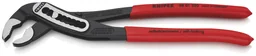
For demanding jobs, the
is up to the task. The 300 mm pliers provide more leverage, which is useful for loosening tight connections. The adjustment mechanism works precisely and locks securely in place. They are built for frequent use.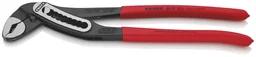
For working in tight spaces, the
is a great choice. At 180 mm long, it can reach even hard-to-access areas. Its compact design and slim jaws are a real advantage. The high-tech version also features a smooth-operating adjustment mechanism.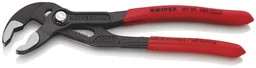
Here are the highest-rated tongue-and-groove pliers in our range, compared side by side:
| Model | Customer rating | Availability |
|---|---|---|
| Alligator water pump pliers 250 mm | – | Currently unavailable |
| Alligator water pump pliers 300 mm | – | Currently unavailable |
| Allweiler L5 brass replacement valve - Durable replacement part for drinker, 1,27 Ohm/m | – | Currently unavailable |
| Cobra high-tech water pump pliers 180 mm | – | Currently unavailable |
| Collaps-A-Bowl Foldable bowl, red, for food & water | – | Currently unavailable |
Note: The products mentioned are examples from our range. Availability and specifications may change. Check the current details for the model you want.
Applications and Usage Tips
Common Household Uses
At home, you can use tongue-and-groove pliers to loosen seized nuts on faucets. You can replace strainer inserts or install flexible hoses. They also make it easy to tighten radiator valves or loosen drain pipes. They are a go-to tool for minor plumbing repairs.
When turning, position the pliers so the movable jaw points in the direction you are pulling. This helps prevent the adjustment from slipping open. Keep the jaws as flat against the workpiece as possible to avoid damage. Use a cloth to protect chrome-plated fittings.
Professional Applications
Professionals use tongue-and-groove pliers when installing pipework. They tighten threaded connections and loosen old ones. They are essential for connecting components in heating systems. Professionals often use several sizes to handle different pipe diameters.
For extremely tight connections, pair the pliers with a pipe wrench for extra leverage. Do not use the jaws as a crowbar. For special applications, such as gripping plastic pipes, use jaw attachments or specialized pliers.
Care and Storage
Clean your tongue-and-groove pliers after every use. Wipe off dirt and moisture with a dry cloth. If they are heavily soiled, wash them with water and a mild cleaner, then dry them thoroughly.
Store the tool in a dry place. A toolbox or wall mount helps protect it from moisture and damage. Occasionally apply a light tool oil to the adjustment mechanism to keep it moving smoothly and help prevent rust.
Check the jaws regularly for wear. Blunt or broken teeth can significantly reduce grip. Replace the tool if its locking components are damaged; do not attempt to repair them. Safety comes first.
Conclusion
The right tongue-and-groove pliers depend on the jobs you need to do. For general household use, a medium-size 250 mm model is a good choice. It provides plenty of leverage while remaining easy to handle. Look for a precise adjustment mechanism and a corrosion-resistant design.
Professionals and avid DIYers will appreciate the extra reach and leverage of 300 mm pliers. For tight spaces, a compact 180 mm model is a practical solution. Invest in quality pliers built to last. The right tool makes every job easier and safer.
Our 2026 review and comparison shows that build quality and ease of use set the models apart. Choose a pair that fits your hand and suits the jobs you do most often. With the right tongue-and-groove pliers, you will be ready for a wide range of repairs and installation work.
Frequently Asked Questions
- What’s the difference between tongue-and-groove pliers and a pipe wrench?
- Tongue-and-groove pliers offer continuous adjustment and work with pipes of different diameters. They feature a quick-adjustment mechanism. A pipe wrench usually has a toothed jaw designed to grip pipes firmly. For plumbing work, tongue-and-groove pliers are typically the more versatile choice.
- What size tongue-and-groove pliers do I need for household tasks?
- For typical household tasks involving faucets, radiators, and small pipes, a length of 250 to 300 millimeters is ideal. This size provides enough leverage while remaining easy to handle. For working in tight spaces under sinks, smaller 180-millimeter pliers can be advantageous.
- What should I look for in the adjustment mechanism?
- Look for a precise, continuously adjustable mechanism. It should operate smoothly and hold securely under load. A quick-adjustment feature saves time, and the jaws should not shift on their own. High-quality mechanisms remain reliable for years.
- Are chrome-plated or galvanized tongue-and-groove pliers better?
- Chrome-plated tongue-and-groove pliers offer better corrosion protection and are easier to clean. They’re ideal for damp environments such as plumbing work. Galvanized models are more resistant to mechanical damage but may tarnish. For continuous professional use, chrome plating is often the preferred choice.
- Can I also use tongue-and-groove pliers to loosen hex nuts?
- Yes. Their continuous adjustment accommodates many hexagonal profiles. However, if you frequently work with nuts, open-end or box-end wrenches offer a more precise fit and are gentler on the edges. Tongue-and-groove pliers are best used as an all-purpose tool.
You may also be interested in
- Pipe Wrench Review & Comparison 2026
- Combination Pliers Review & Comparison 2026: The Best Models Compared
- Ratchet Wrench Review & Comparison 2026
- Spirit Level Review & Comparison 2026
- How to Use Tongue-and-Groove Pliers Correctly: A DIY Guide
- Blind Rivet Pliers Review & Comparison 2026: The Best Models Tested in Practice