
In brief: The best times to apply iron fertilizer are spring (March-May), to promote growth and greener color, and fall (September-November), to strengthen your lawn before winter. Apply it to damp grass in mild, overcast weather, ideally a few days after mowing.
A lush, deep-green lawn is every gardener’s pride. But yellow grass, poor growth, and moss can quickly take hold. The solution is often an overlooked nutrient: iron. Iron fertilizer helps your lawn develop a rich green color and suppresses unwanted moss. For the best results, though, timing is key.
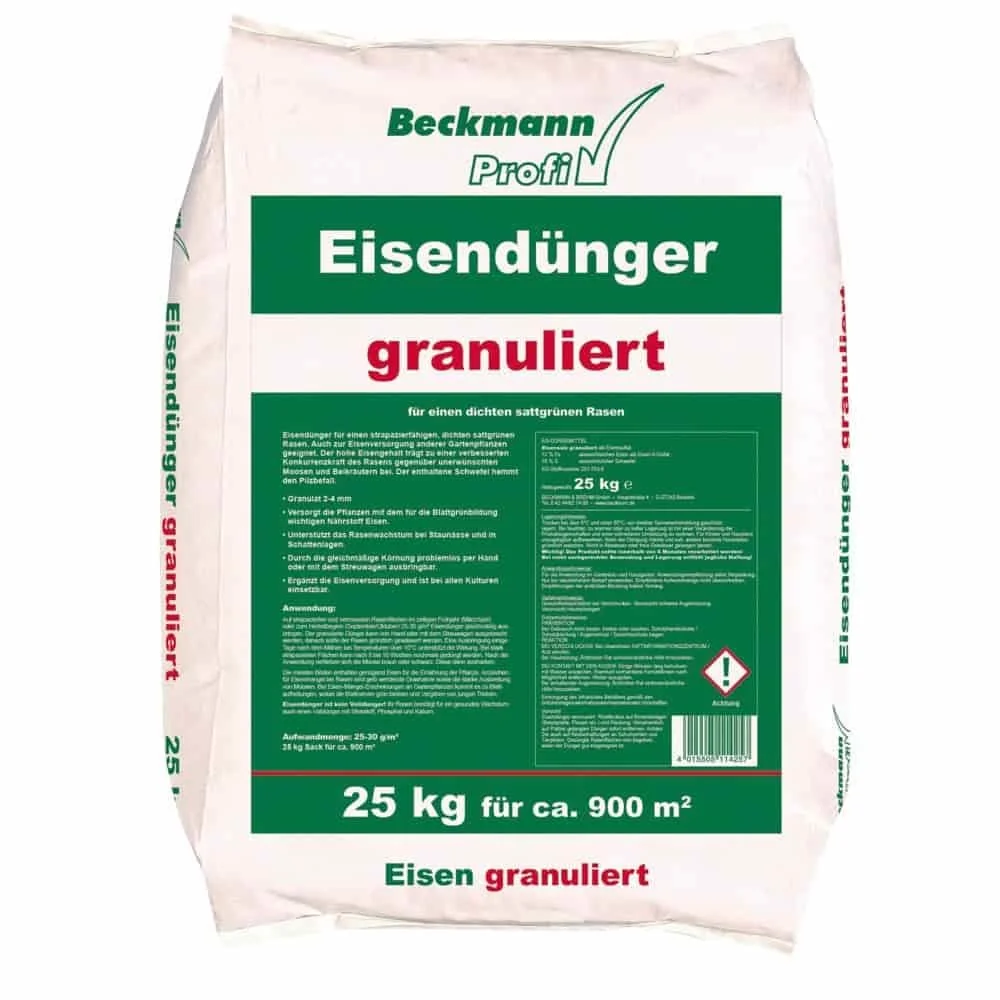
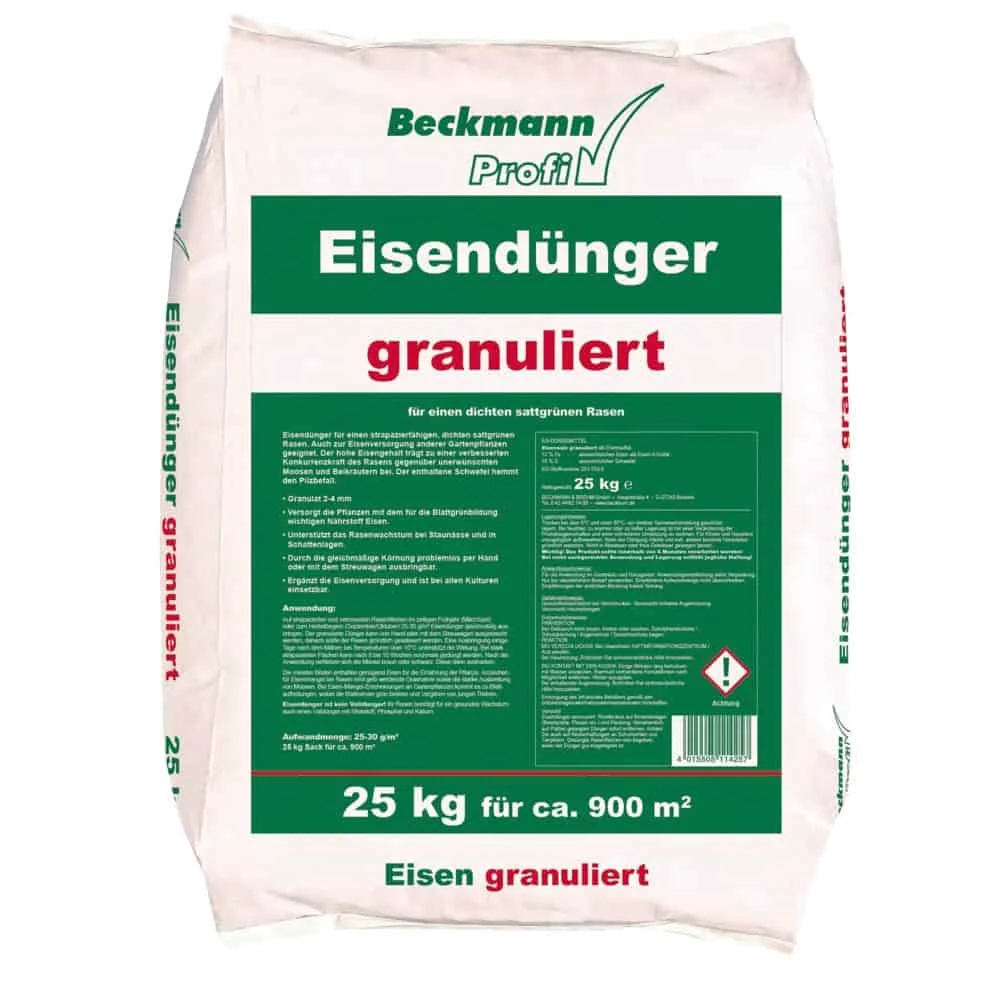
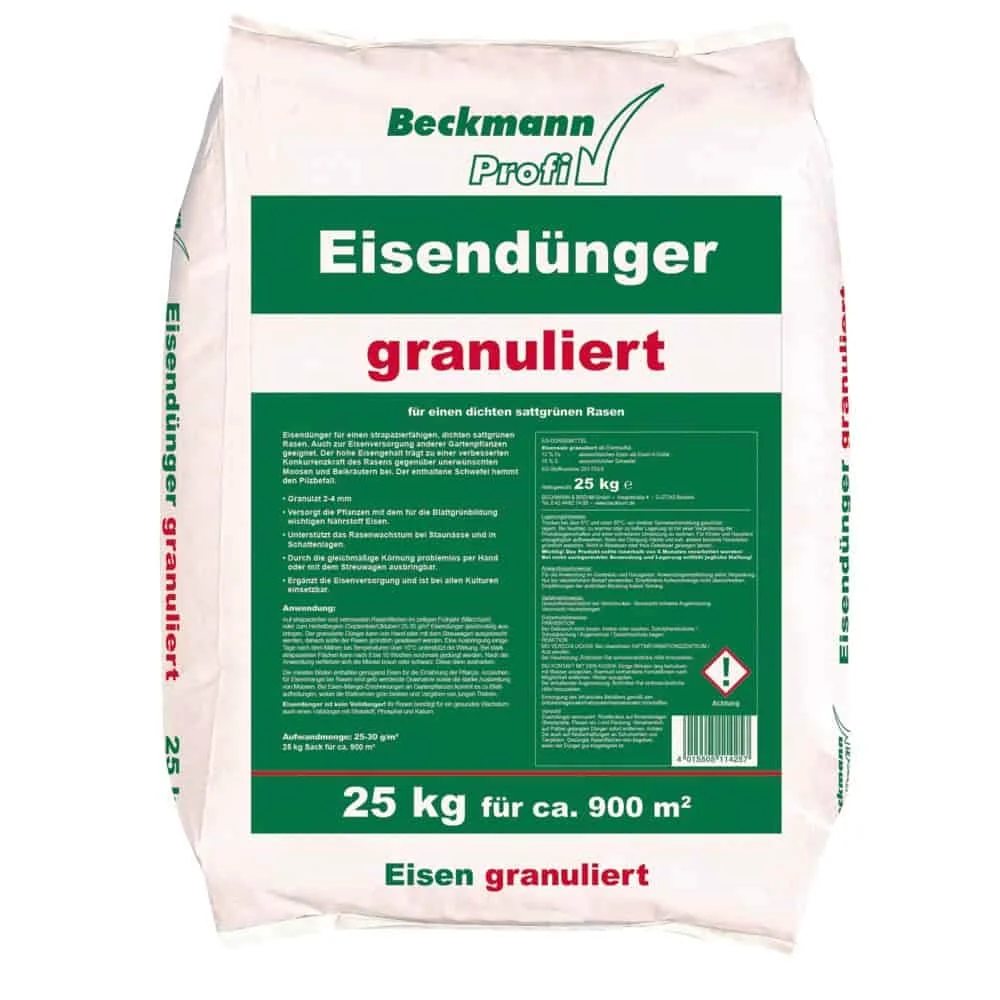
With the right know-how and product, you can turn your lawn into a resilient carpet of grass. A reliable choice for large areas is Beckmann iron fertilizer in a 25 kg bag. The fine granules are easy to spread and provide the nutrients needed for up to 900 m² of lawn.
Why does your lawn need iron fertilizer?
Iron (Fe) is an essential trace element for grass. It plays a key role in producing chlorophyll, the green pigment in plants. Without enough iron, grass cannot make sufficient chlorophyll, leading to yellowing. Iron deficiency doesn’t just make a lawn look pale; it also weakens the grass.
Iron supports several important processes in your lawn. It is a key component of enzymes involved in photosynthesis and cellular respiration. With enough iron, grass can convert sunlight into energy more efficiently, resulting in strong, dense growth. It also becomes more resilient to stress from drought, heat, and disease.
Another major benefit of iron fertilizer is its effect on moss. Iron sulfate, the main ingredient in many iron fertilizers for moss, damages moss on contact. The moss turns black and dies, while the grass is strengthened and can quickly fill in the bare spots.
Iron acts like a catalyst for life in the lawn. It boosts chlorophyll production and gives grass the deep-green color we associate with health and vitality.
How can you tell if your lawn is iron deficient?
Iron deficiency, also known as chlorosis, has specific symptoms. Unlike nitrogen deficiency, which first affects older, lower leaves, iron deficiency shows up first in the youngest, newly grown grass blades. This is an important way to tell the two apart.
The most typical sign is interveinal chlorosis. The areas between the leaf veins turn yellow, while the veins themselves initially stay green. This creates a fine striped pattern on the grass blades. In severe cases, the entire young leaves turn pale yellow or almost white. The lawn looks weak overall and grows sparsely.
Another sign is that moss and weeds are gaining ground. A weakened lawn can no longer compete effectively. If moss keeps taking over even when growing conditions are right, iron deficiency could be the cause.
Additional advice
Acidic soil (low pH) can prevent grass from absorbing iron, even when there is enough in the soil. A soil test every few years can tell you the pH and nutrient levels. If needed, you may have to add lime to adjust the soil pH.
When is the best time to apply iron fertilizer?
The calendar provides a general guide: the growing seasons in spring and fall. However, choosing the exact day depends heavily on the weather and the condition of your lawn. In the worst-case scenario, incorrect application can do more harm than good.
Iron fertilizer in spring: The wake-up call for lush green grass
Spring is the ideal time for the first application of iron fertilizer. After a long, gray winter, your lawn needs nutrients to awaken from dormancy. Applying it between March and May stimulates chlorophyll production and ensures rapid greening.
Wait until the soil temperature is consistently above 10 °C and the lawn has already started growing. A good guideline is after the first or second mowing of the season. The soil should be moist, but the grass should be dry. This ensures that the granules reach the soil properly. A spring lawn fertilizer with a high nitrogen content provides additional support for growth.
In spring, iron fertilizer also helps effectively combat moss that has developed over the winter. So you tackle two problems at once: You strengthen the grass and weaken the unwanted competitor before it can spread. A good alternative to the main product is Iron fertilizer 25 kg, granulated, which is also easy to apply.
Pro tip
Apply iron fertilizer on an overcast, windless day. Strong sunlight combined with the fertilizer can cause burns on the grass blades. Light drizzle after application is ideal for washing the granules into the soil.
Iron fertilizer in fall: Strengthening the lawn for winter
The second important application takes place in fall, typically from September to early November. While growth is the priority in spring, fall application focuses on preparing the lawn for the cold season. Applying iron strengthens the cell structure of the grass and makes it more resistant to frost.
Moss is particularly prevalent during the damp fall months. Fall fertilizing with iron effectively suppresses moss growth and ensures that your lawn is less matted in spring. Ideally, combine the iron application with a potassium-rich fall lawn fertilizer. Potassium further increases frost resistance. Iron fertilizer 25kg for a dense lawn is an excellent choice for this purpose.
Iron fertilizer as an immediate treatment for moss
In cases of extremely heavy moss infestation, you can also use iron fertilizer outside these ideal time windows as a targeted treatment. The moss will turn black and die within a few days. However, this treatment is only the first step. You must remove the dead material.
Important note
Scarifying is essential after targeted moss treatment with iron fertilizer. Wait about 10-14 days until the moss has completely died. Then rake or scarify it thoroughly out of the lawn. Reseed bare patches immediately to prevent new moss from taking hold.
How do you apply iron fertilizer correctly? A step-by-step guide
Correct application is crucial for success and helps prevent lawn damage. Take your time and work carefully. Proper preparation and aftercare are just as important as fertilizing itself.
- Preparation: Mow the lawn to a normal height (approx. 4 cm) two to three days before application. The grass should be dry when you fertilize, while the soil underneath should be slightly moist.
- Dosage: Read the instructions on the product packaging carefully. A typical application rate is 25-30 grams per square meter. Weigh out the required amount for a test area to get a feel for the correct quantity.
- Application: Always use a spreader for even distribution. Applying by hand almost always results in uneven coverage, leading to patchy results or burns. Work in straight, slightly overlapping passes across the entire area.
- Aftercare: Water the lawn thoroughly for about 15-20 minutes after application. The water dissolves the granules, washes them off the grass and carries the iron to the roots. This step is essential to prevent burns and activate the fertilizer.
- Wait: Do not walk on the lawn for the next 24 hours. Wait at least one week before mowing again.
A spreader is not a luxury but a necessity for serious lawn care. It is the only way to distribute fertilizer precisely and evenly. Anything else is a gamble with unsightly consequences.
What should you absolutely avoid when applying iron fertilizer?
Iron fertilizer is an effective product, but incorrect application carries some risks. Keep the following points in mind to avoid disappointment.
- Overdosing: More is not better. An excessively high concentration of iron sulfate burns the grass and harms soil life. Strictly follow the recommended application rate.
- Applying to dry grass: Never fertilize a dried-out, stressed lawn. Water it thoroughly in the days beforehand and wait for a cooler day.
- Contact with paving stones and clothing: Iron sulfate produces aggressive rust stains when combined with moisture, and they are difficult to remove. Immediately sweep spilled granules off paths, patios or clothing before they get wet. Wear gloves and old footwear while working.
- Neglecting to water: Without watering afterward, the granules remain on the leaves and cause burns. The fertilizer also will not be activated and cannot penetrate the soil.
Applying iron fertilizer correctly is not complicated; it is a matter of proper timing and care. With targeted applications in spring and fall, you lay the foundation for a dense, healthy and deep-green lawn that gives moss and weeds no chance. Explore the right selection of lawn fertilizers at Westfalia and give your lawn the nutrients it deserves.
Frequently Asked Questions
- Can I apply iron fertilizer and lawn fertilizer at the same time?
- Yes, if they are separate products. Many combination products already contain iron, so check the ingredients to avoid overfertilizing. If applying them separately, apply the lawn fertilizer first, then the iron fertilizer, and water thoroughly.
- How long after applying iron fertilizer can I walk on the lawn?
- Wait until the lawn has completely dried after watering. This usually takes 24 to 48 hours and helps prevent iron sulfate from sticking to shoes and leaving rust stains on paths or patios.
- My lawn has black patches after fertilizing. What should I do?
- Black or dark green patches indicate overfertilizing. The grass in these areas has been scorched. Water the affected areas thoroughly over the next few days to dilute the fertilizer. The patches often recover, but may need to be reseeded.
- Does iron fertilizer cause rust stains on patio pavers?
- Yes. Iron sulfate reacts with moisture and causes stubborn rust stains on concrete, pavers, and clothing. Carefully sweep up any spilled granules immediately, before they come into contact with water. Be sure to take care when applying it.
- How often should I apply iron fertilizer each year?
- As a rule, two applications per year are sufficient: one in spring and one in fall. If there is heavy moss growth or a clear iron deficiency, you can make an additional application in summer. Always follow the manufacturer's recommended dosage.
You may also be interested in
- Moss in your lawn? How Beckmann iron fertilizer helps quickly and effectively
- Fertilizing your lawn: The right time for quick results (NPK 21-6-12)
- Find the best lawn fertilizer
- When to apply lawn lime? The best time for a healthy lawn
- Yellow lawn? Get your grass green again fast
- How to fertilize your lawn in summer for lush, green grass