
In brief: Choosing the right wood lathe depends largely on your project requirements and experience level. Compact sets with medium power and good equipment are ideal for beginners, while experienced users and professionals should look for high performance, precise control and maximum flexibility. Our 2026 comparison helps you weigh the key criteria.
Would you like to enter the fascinating world of woodturning or upgrade your existing equipment? There is a wide range of wood lathes available, and the differences have a decisive impact on your results. Our 2026 test and comparison takes a close look at the most important models. We show you what really matters when choosing one.
Contents
What matters when buying?
Before choosing a particular model, you should clearly define your needs. Ask yourself: What projects am I planning? How often will I use the machine? Where will it stand?
Motor power indicates the machine's pulling power. For small, delicate work, 300-400 Watt is often sufficient. For larger workpieces or hard wood, you should choose at least 550 Watt.
Maximum swing and spindle diameter determine how large and heavy your workpieces can be. Measure what you want to turn.
Speed control is a key criterion. Variable speeds allow you to respond optimally to the size and material of the workpiece.
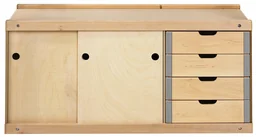
Tip: Plan space for a stable base from the outset. A sturdy tool cabinet significantly improves working ergonomics and reduces disruptive vibrations.
Wood lathe models compared
We analysed popular models from different performance classes. The following overview will help you assess them.
Entry-level and ambitious hobby use
In this segment, you will find compact, well-equipped machines. They are perfect for learning techniques and completing demanding projects.
The Bernardo Profi Lathe WQ 550 / 230V () offers 550 Watt of power for ambitious hobby use. It features variable speed control and a sturdy construction.
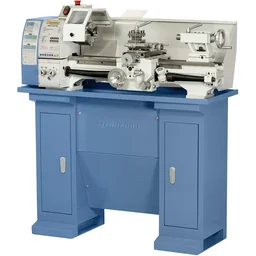
The professional class for demanding projects
This is all about maximum precision, performance and flexibility. These machines are designed for regular, intensive use.
A classic is the Bernardo Profi 700 Lathe BQV / 230V (). With 700 Watt of power and a robust design, it can handle large workpieces made from hard wood. It is the workhorse for professional-class woodworking machines.
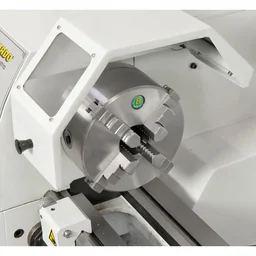
Modern technology: The digital version
Digital controls offer advantages in terms of precision and ease of use.
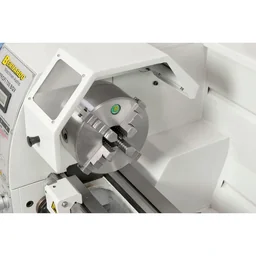
The Bernardo Profi 700 Lathe BQV / 230V. Digi () combines the proven robustness of the Profi 700 with a digital speed display and control. This enables the exact reproduction of work steps.
Warning: Do not overestimate your initial enthusiasm. A very expensive and complex professional model can overwhelm beginners. Start with a machine that matches your current skill level.
Comparison table of the best wood lathes
Here you can see the key data for the tested models in a direct comparison.
The highest-rated woodturning products in our range compared directly:
| Model | Customer rating | Availability |
|---|---|---|
| WORKBENCH SET 3TLG | – | Currently unavailable |
| Wood lathe set 3-piece - 370W - 150x28x35cm | – | Currently unavailable |
| 6-piece woodturning chisel set - H6TLG | – | Currently unavailable |
| Centrally adjustable chuck | – | Currently unavailable |
| Cabinet for Nordic Plus 1450 and Hobby Plus | – | Currently unavailable |
Accessories for professional results
The wood lathe is only half the setup. The right accessories turn it into a complete workstation.
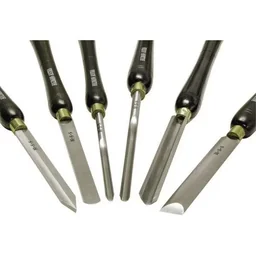
A high-quality 6-piece woodturning chisel set () is essential equipment. Look for sharp, well-made blades and ergonomic handles.
A self-centering chuck is essential for holding workpieces securely and precisely. It provides a firm grip without damaging the wood.
As mentioned above, a suitable lathe stand () is more than just a table. It provides a stable foundation for safe, comfortable work.
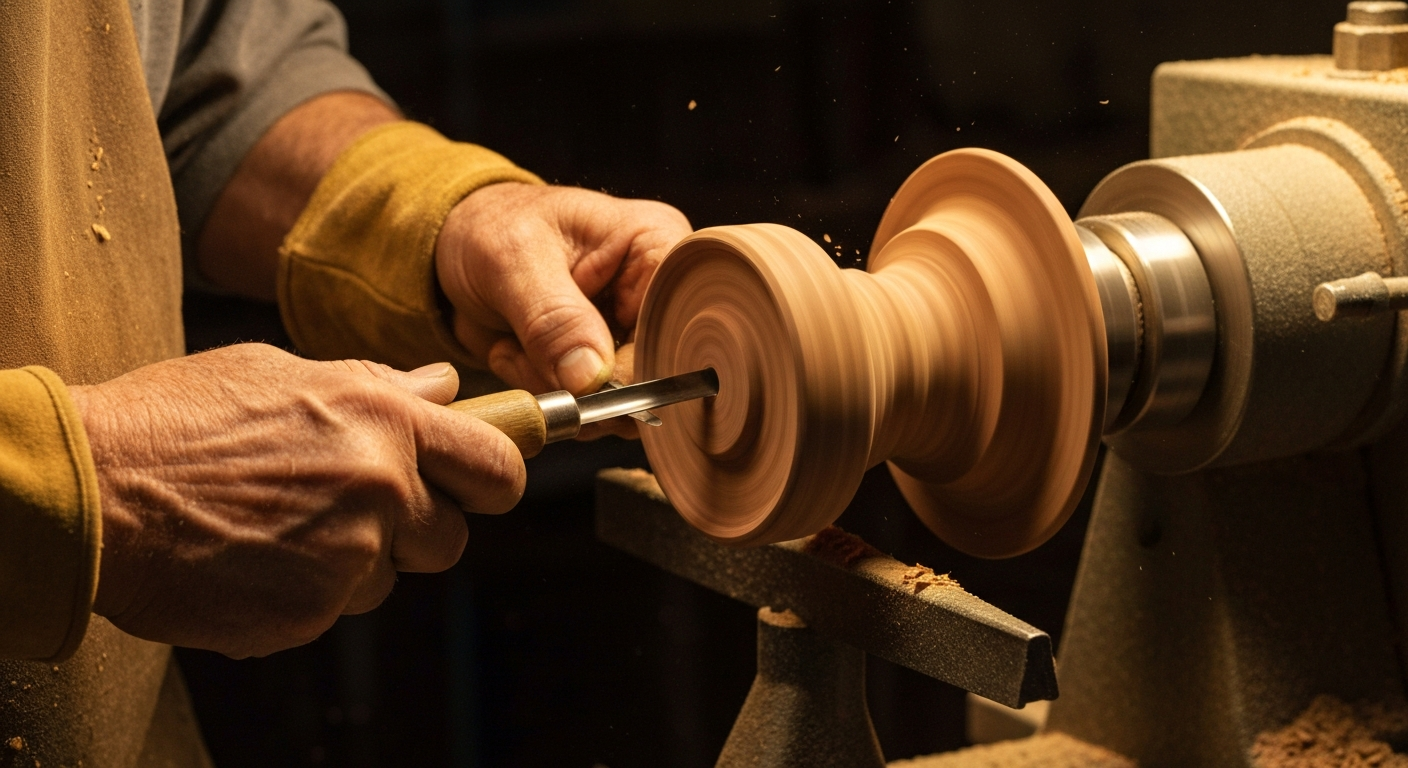
Note: Invest in a good dust collection system early on. Woodturning dust is fine and can be harmful to your health. Effective dust collection helps protect your health and gives you a clearer view of your workpiece.
Woodturning safety
Woodturning is enjoyable, but it involves a machine with significant kinetic energy. Always put safety first.
Always wear safety glasses to protect your eyes from wood chips. Wear a dust mask when working for extended periods.
Never remove wood chips by hand while the machine is running. Use a suitable scraper or wait until the machine has come to a complete stop.
Wear close-fitting clothing and tie back long hair. Avoid gloves, which can get caught in rotating parts.
Care and maintenance
A well-maintained wood lathe can last a lifetime and deliver precise results.
Thoroughly clean dust and wood chips from the machine after each use. Check regularly that all screws and connections are secure.
Lubricate moving parts, such as the tool rest and spindle ends, according to the manufacturer’s instructions. Store your wood lathe in a dry place to prevent rust.
Conclusion: How to choose the right wood lathe
Choosing the right wood lathe comes down to your needs. For reliable hobby use, the Bernardo WQ 550 () offers excellent value. If you work professionally or plan to tackle larger projects, the analogue Bernardo Profi 700 () or its digital counterpart () is a dependable choice.
Be sure to budget for essential accessories, including chisels, a chuck and a sturdy lathe stand (), from the start. That way, you’ll be ready to get started on your next woodturning project.
Frequently asked questions
- What is a good wood lathe for beginners?
- Beginners should look for a compact wood lathe with moderate power (approx. 300-550W), a solid starter kit and simple, safe controls. A set that includes suitable chisels and clear instructions makes it easier to get started. Avoid oversized or complex professional models at first.
- Which wood lathe specifications should I pay close attention to?
- Check the motor power in watts (which affects torque), spindle diameter and speed range. The chuck size and diameter determine which workpieces you can turn. A stable, low-vibration design is essential for clean results.
- Do I need a stand for my wood lathe?
- A stand such as PRODUCT_98708 is highly recommended. It raises the lathe to a comfortable working height, provides a stable, low-vibration base and offers convenient storage for tools and accessories. It can significantly improve comfort and safety.
- What’s the difference between analogue and digital speed controls?
- Analogue controls are often more robust and easier to use. Digital controls, such as those on PRODUCT_118838, provide a precise, easy-to-read speed display and often maintain more consistent performance across the adjustment range. They make it easier to repeat work steps but are usually somewhat more sensitive.
- Can you use a wood lathe to work with metal?
- Standard wood lathes are not designed for metalworking. They lack the stability, low speeds and cooling options required. For occasional light metalworking, use a dedicated metal lathe or a very sturdy wood lathe with extremely low speed settings.
You may also be interested in
- Electric Planer Test & Comparison 2026: The Best Models Reviewed
- Band Saw Test & Comparison 2026: The Best Models in Hands-On Testing
- Drill Press Test & Comparison 2026: The Best Models Reviewed
- Router Test & Comparison 2026
- Angle Grinder Test & Comparison 2026
- Oscillating Multi-Tool Test & Comparison 2026