
In brief: Choosing the right air treatment appliance primarily depends on your main need: cooling, air purification or dehumidification. Modern combination appliances often offer 2-in-1 or 4-in-1 functions. In our test, particularly powerful air purifiers with high airflow and flexible multifunction appliances with remote control impressed us. First decide whether you need an air cooler, dehumidifier or air purifier.
Indoor climate affects your wellbeing and concentration. Air that is too dry irritates the mucous membranes, while excessive humidity encourages mould. Dust and pollen put strain on the respiratory system. Modern air treatment appliances offer the solution. They cool, purify or dehumidify the air – often in clever combinations. Our 2026 test and comparison shows you which types of appliances are available and which models stand out in their categories. We help you make the right choice.
Table of contents
What types of appliances are available?
Not every air treatment appliance can do everything. First, understand the differences.
Air coolers and portable air conditioners
Air coolers use the evaporation principle. A fan blows air through a wet filter. The evaporating moisture cools the air. These appliances are energy-efficient and do not require an exhaust hose. They are suitable for moderate temperature peaks.
Portable air conditioners with a compressor work like a split air conditioner in a single housing. They cool more effectively, but require a fixed exhaust hose for the warm air, which must be routed through a window or door.
Air purifiers
These appliances draw in room air and filter out pollutants. High-performance filters remove dust, pollen, pet hair and fine particles. Activated carbon filters neutralise odours. Air purifiers are essential for allergy sufferers and in city flats.
Dehumidifiers
They reduce humidity, prevent mould and dry laundry. Compressor dehumidifiers are powerful. Desiccant dehumidifiers also work effectively at low temperatures, for example in basements.
Combination appliances: The all-rounders
More and more manufacturers are combining functions. 2-in-1 appliances purify and dehumidify the air. 4-in-1 models can cool, humidify and purify the air, as well as work as a fan. This flexibility comes at a higher purchase price.
Tip: Define your main problem. Is it heat, dust or humidity? Primarily buy an appliance that solves this problem as effectively as possible. Additional functions are a bonus.
Which buying criteria matter?
These technical details determine satisfaction and efficiency.
Performance and room size: The most important specification is airflow in cubic metres per hour (m³/h). An appliance should circulate the room air at least three times per hour. Multiply the room volume (m² x 2.5 m ceiling height) by 3. The result is the required m³/h capacity.
Filter technology: For air purifiers, a HEPA filter (H13/H14) is essential for allergy sufferers. A pre-filter captures coarse dust. An activated carbon filter tackles odours. Check filter costs and service life.
Noise level: Check the decibel rating for each operating level. For bedrooms and home offices, low settings should be below 40 dB(A). Night modes are particularly quiet.
Controls and convenience: A remote control or smart home connection via an app is convenient. Timers and operating modes automate use. Oscillation distributes the air evenly.
Energy consumption: Appliances intended for continuous operation should be economical. Check the wattage during normal operation. Low standby consumption saves additional energy.
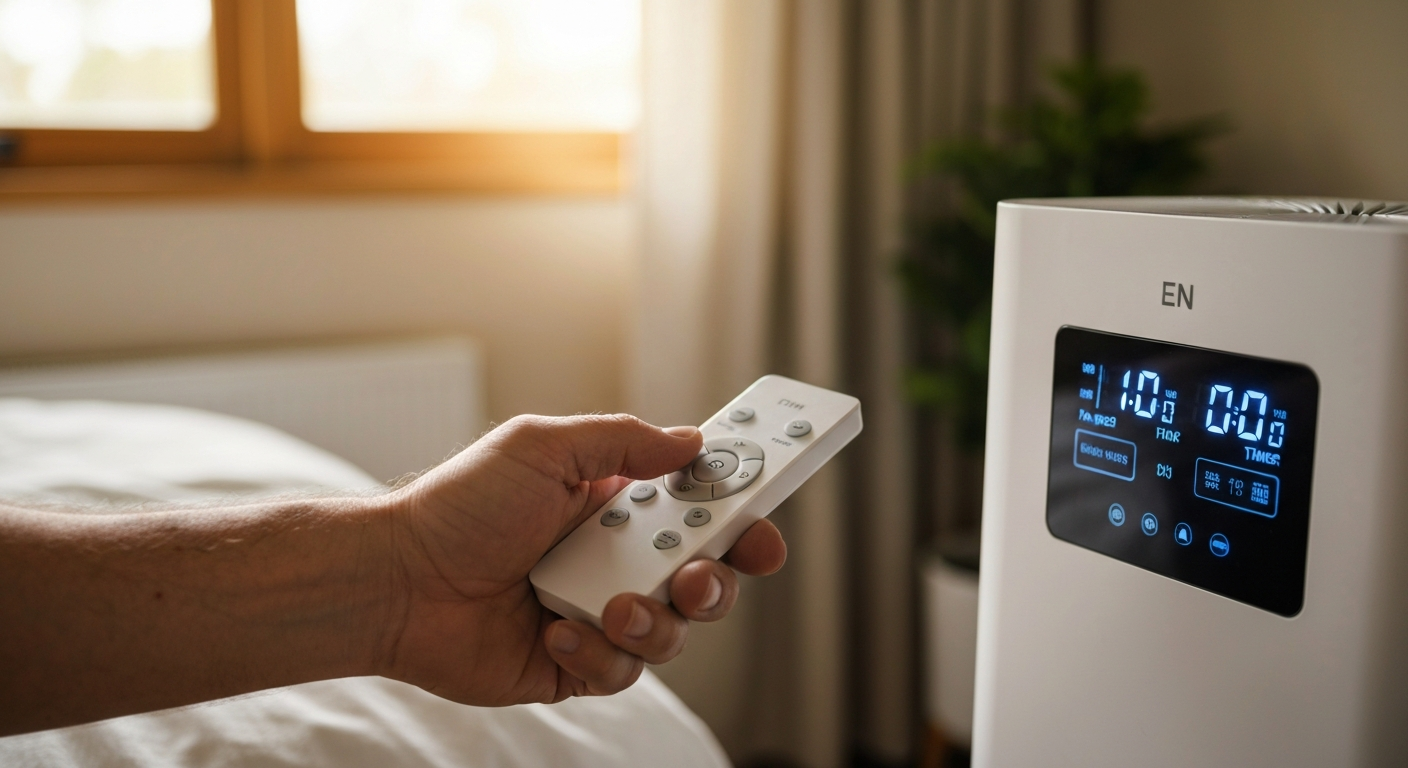
Important: Air coolers increase humidity. They are not a good choice in rooms that are already humid. The indoor climate may even deteriorate there. In this case, use a dehumidifier or combination appliance.
Test and comparison of the best air treatment devices
Our comparison presents models with different strengths. The following table gives you a quick overview of the most important data.
The most-reviewed air treatment devices in our range compared directly:
| Model | Customer rating | Availability |
|---|---|---|
| 180ml Aroma Diffuser for Essential Oils Humidifier with Adjustable LED Warm Lights, 2 Mist Mode, Timer, Waterless Auto-o | – | Currently unavailable |
| 2-in-1 Air Purifier and Dehumidifier | – | Currently unavailable |
| 2-in-1 Air Purifier and Dehumidifier incl. Replacement Filter | – | Currently unavailable |
| 3-in-1 Air Cooler - Portable Air Conditioner - 80W | – | Currently unavailable |
| 4-in-1 Portable Air Conditioner/Air Cooler/Fan Including 2 Cooling Elements | – | Currently unavailable |
Practical testing revealed specific strengths in individual products.
The impresses as a dedicated air cooler with its portability and low energy consumption of 80W. It is a simple and affordable solution for targeted cooling in a home office or bedroom.
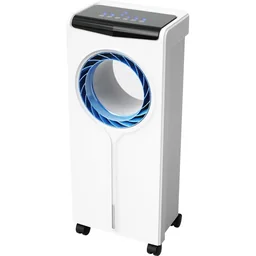
If you are looking for greater flexibility, the is a classic 4-in-1 option. With cooling elements, it can lower the temperature without significantly increasing humidity. The included fan and humidifying modes make it a versatile companion all year round.
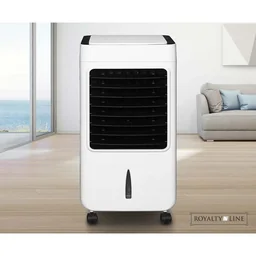
For convenient controls and modern design, the stands out. The remote control lets you adjust all functions from the comfort of your armchair. In testing, the oscillation provided particularly even air distribution, avoiding a drafty feeling.
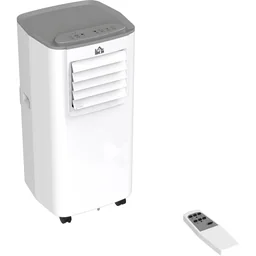
If improving air quality is your main goal, choose a specialized air purifier such as the . With an airflow rate of 780 m³/h, it is suitable for large living spaces. The oscillation function helps the AIR FRESH 15 clean the room quickly and thoroughly, removing pollen and dust.
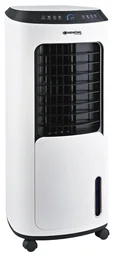
Note: Product availability may change. A look at our large air treatment devices category will always show you the latest offers. You will also find replacement filters and accessories there.
Which device is right for you?
Take the quick check.
- For allergy sufferers and city dwellers: An air purifier with a HEPA and activated carbon filter is essential. Look for a high airflow rate.
- For hot, dry summers: An air cooler or portable air conditioner provides relief from the heat. In high humidity, choose a compressor-based air conditioner.
- For damp rooms and basements: A dehumidifier with a large tank or hose connection is the solution.
- For flexible use across changing seasons: A 3-in-1 or 4-in-1 combination unit offers the greatest adaptability.
- For the bedroom: A quiet operating mode and sleep mode are key criteria.
Deepen your knowledge of home and climate technology in our Technology section.
Operation and maintenance
Here is how to get the most from your device over the long term.
Filter replacement: Replace filters promptly. A saturated filter reduces performance and increases energy consumption. With air purifiers and dehumidifiers, clean the water tank regularly to prevent the growth of germs.
Placement: Set up the device in an open position rather than pushing it into a corner. Air purifiers and coolers need unobstructed airflow in and out. Maintain minimum clearances from walls and furniture.
Seasonal storage: Clean the device thoroughly before storing it. Store it in a dry, frost-free place. Remove any batteries from the remote control if the device will be out of use for an extended period.
Conclusion
There is no one-size-fits-all air treatment device. It must suit your specific needs, room size and usage habits. For targeted cooling, simple air coolers such as the are a good choice. If you are looking for maximum flexibility, a 4-in-1 combination unit such as the or is the right choice. For pure air quality in large rooms, specialized air purifiers such as the are unbeatable.
Prioritize your requirements. Use our comparison to evaluate the technical data. A high-quality air treatment device is an investment in your health and everyday well-being.
Frequently Asked Questions
- What is the difference between an air cooler and an air conditioner?
- A portable air cooler evaporates water to provide cooling and slightly increases humidity in the process. An air conditioner cools using a compressor and actively dehumidifies the air. Air conditioners are more powerful, but require an exhaust hose to the outside.
- Can an air purifier also help with odours?
- Yes, high-quality air purifiers with activated carbon filters effectively bind odour molecules. For strong odours, special devices with ozone or photocatalytic technology are suitable, although they should not be operated in occupied rooms.
- How noisy are modern indoor climate appliances?
- Noise levels vary considerably. Air purifiers and dehumidifiers are often very quiet on low settings. Air coolers and air conditioning units with fans are audible. Pay attention to the decibel rating. Night modes significantly reduce the noise level.
- Do I need to empty the water from a dehumidifier regularly?
- Yes, most compact devices have a tank that needs to be emptied daily in high humidity. Larger devices often have a drain hose connection for continuous operation in damp cellars or bathrooms.
- What room size are the devices designed for?
- Each device has a recommended room size in square metres. Choose a model whose performance (m³/h airflow, cooling capacity in watts) slightly exceeds the requirements of your room. Devices that are too small work inefficiently.