
In brief: A good car battery tester measures more than voltage: it also checks cranking power (CCA), internal conductance and state of charge. In our review, modern digital testers with advanced diagnostic features stand out. A basic voltmeter is useful for quick checks, but it can’t tell you how well your battery will start your vehicle. Make sure the tester is compatible with your battery type.
A weak car battery is one of the most common causes of breakdowns. A vehicle that suddenly won’t start is frustrating and can even be dangerous. A reliable car battery tester gives you peace of mind by letting you check your battery’s condition before it fails. Our 2026 review and comparison explains what to look for and which testers deliver the best results.
Table of contents
How does a car battery tester work?
Modern car battery testers do more than simply measure voltage. They send a high-frequency signal through the battery and measure its response to calculate internal resistance. High internal resistance can indicate that the battery is ageing or damaged.
The other key measurement is cold cranking amps (CCA). The tester applies a brief, defined load to the battery to simulate the current drawn by the starter motor. It then estimates the battery’s cranking power based on the voltage drop under load. Good testers show the result as a percentage of the rated CCA.
Tip: Always test the battery at room temperature. A cold battery can give inaccurate readings. If you’ve just driven the vehicle, wait at least two hours for the battery to cool to room temperature.
Key buying criteria at a glance
Before choosing a tester, check a few key points. Start with compatibility: make sure the tester supports your vehicle’s electrical system. Most passenger cars use 12 Volt, while commercial vehicles and some classic cars use 24 Volt.
Next, check which battery technologies the tester supports. Conventional flooded batteries (SLI) are common. Vehicles with start-stop systems need a tester that can also diagnose AGM and EFB batteries. Some top models even identify the battery type automatically.
Ease of use and screen readability matter, too. A clear LCD with good backlighting is a plus, and the menus should be easy to navigate. Some testers have dedicated buttons for common checks, while others use rotary controls or more complex menus.
Useful extra features
Many testers offer handy features in addition to basic battery checks. An alternator test checks charging voltage and current under load. A state-of-charge reading as a percentage gives you a quick overview.
Memory for storing recent readings is especially useful, as is Bluetooth connectivity for sending results to a smartphone app. These features can help in workshops or when tracking battery deterioration over time.
Compatibility with different battery types
Car battery technology has evolved, so a versatile tester needs to do more than measure 12 Volt. Here’s an overview of common battery types and what your tester should be able to do.
Flooded battery (SLI): The traditional lead-acid battery with liquid electrolyte. Most basic testers are designed for this type and often require you to enter the rated CCA value manually.
AGM battery (Absorbent Glass Mat): The electrolyte is held in glass mat separators. These batteries deliver high starting currents and are more resistant to deep discharge. A tester must correctly account for this design’s specific internal resistance.
EFB battery (Enhanced Flooded Battery): An enhanced flooded battery, often fitted in vehicles with basic start-stop systems. It’s an intermediate option. Good testers include a dedicated mode for it.
Warning: Don’t use a tester unless it is specifically approved for your battery type. Otherwise, it may give inaccurate and overly optimistic results, leaving you to rely on a battery that could fail the next time you start your vehicle.
Test and comparison: our product recommendations
In our hands-on test, we assessed various devices for ease of use, measurement accuracy and features. Our picks range from simple testers for a home garage to professional diagnostic tools. Here are three standout models that impressed us in our comparison.
The
is a powerful all-around tester. It works with 12 and 24 volts and has an easy-to-read LCD display. Automatic battery type detection for standard, AGM and gel batteries makes it easy to use. It accurately measures voltage, CCA, internal resistance and overall battery condition.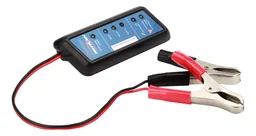
For users who value German engineering, the
is an excellent choice. This digital battery tester is designed specifically for 12V and 24V flooded batteries. It provides a clear pass/fail diagnosis and is ideal for a quick check before a long trip. Find more models in our car battery testers category.
If you also want to test small household batteries, choose the
. This compact 9V battery tester is ideal for smoke alarms, remote controls and kids' toys. It's a useful addition to your testing equipment. All the products mentioned are part of our extensive selection of battery chargers and jump starters.
Here are the top-rated car battery testers in our selection, compared side by side:
| Model | Customer rating | Availability |
|---|---|---|
| Areo Volt battery acid tester | – | Currently unavailable |
| "Smart" battery monitor - never need a jump start again: app-based protection against battery failure | – | Currently unavailable |
| 12 V battery tester | – | Currently unavailable |
| 12V / 24 V battery tester with LCD display | – | Currently unavailable |
| Battery, antifreeze and coolant tester set | – | Currently unavailable |
Note: The products featured here are examples from our test. The best choice depends on your needs. Consider which battery types you need to test and how often you'll use the device.
How to use a battery tester correctly
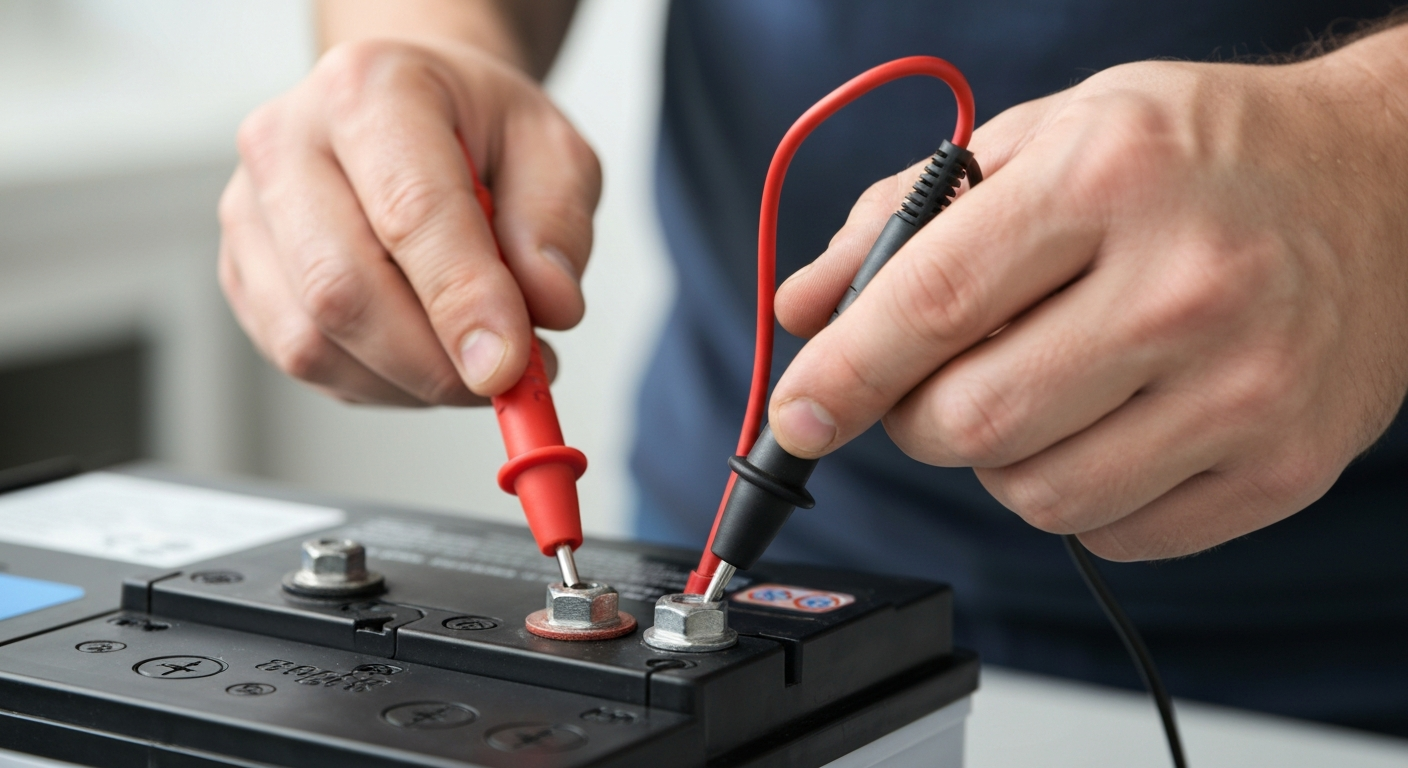
Using a battery tester correctly is essential for reliable results. Start by cleaning the battery terminals, since corrosion can affect the reading. Connect the test probes with the correct polarity: red to positive (+), black to negative (-).
With most digital testers, you'll need to enter your battery's rated CCA value, which you'll find on the battery label. Some modern testers can detect the value automatically. Confirm the entry and start the test. It takes only a few seconds.
Make sure no high-power electrical accessories are on in the vehicle during the measurement. Turn off the ignition and remove the key. Avoid using the power locks during the test, too.
Understanding the diagnosis: what do the values mean?
After the test, the device displays several readings. The open-circuit voltage of a fully charged, healthy battery is around 12.6 to 12.8 volts. If it's below 12.4 volts, you should recharge the battery. A reading below 12.0 volts indicates a deeply discharged or faulty battery.
The CCA reading is usually shown as a percentage of the rated value. A reading above 80% means the battery is in good condition. A reading between 50% and 80% indicates that the battery is starting to age, so keep an eye on it. Below 50%, the battery may struggle to start the vehicle and should be replaced soon.
Some testers give a direct verdict such as "good," "bad" or "recharge." Follow the recommendation. A "bad" verdict despite a high voltage is a typical sign of high internal resistance. The battery can no longer handle a load.
Battery care and how to extend battery life
A battery tester is a diagnostic tool, but proper care can help extend your battery's life. Regularly check the terminals for corrosion and clean them if necessary. For serviceable batteries, check the fluid level and top it up only with distilled water.
Avoid short trips. The alternator needs time to recharge the energy used during starting. If the vehicle will be parked for an extended period, such as over the winter, connect a trickle charger. You can find one in our Vehicle section.
Always turn off electrical accessories such as the interior lights before leaving the vehicle. Modern vehicles with many control units use some power even when parked. A battery monitor can help by disconnecting the battery if it becomes excessively discharged.
With a reliable car battery tester and regular care, you can avoid most breakdowns. Drive with peace of mind and plan a battery replacement in good time, without the stress.
Frequently Asked Questions
- What does a car battery tester measure?
- A car battery tester primarily measures the battery's resting voltage, cold cranking amps (CCA), and internal resistance. Higher-quality models also analyze the charge level as a percentage, estimate remaining capacity, and predict starting performance. They can also detect faults such as shorted cells or sulfation.
- Is a basic voltmeter enough to test a car battery?
- A voltmeter only displays voltage. It may show a full charge even when the battery fails under load, such as when starting the engine. For a reliable diagnosis, you need a tester that checks cold cranking amps (CCA) under simulated load.
- Can I use any battery tester with AGM and EFB batteries?
- No. Many basic testers are designed only for conventional flooded batteries (SLI). Modern vehicles with start-stop systems often use AGM or EFB batteries. Before buying, check that the tester explicitly supports these battery types.
- How often should I test my car battery?
- Test your battery before cold weather sets in and after the vehicle has been parked for more than two weeks. For older batteries, starting in the third year, regular checks every three to six months are recommended. Testing after a jump-start can also help you assess the battery's condition.
- What does the CCA rating on a battery tester mean?
- CCA stands for Cold Cranking Amps. This value indicates how much current the battery can deliver at minus 18 degrees Celsius for 30 seconds without dropping below a critical voltage. Your tester compares the measured value with the rating listed on the battery label.