
In brief: A cutting stand is essential for angle grinders when precise angles, consistently repeated lengths and clean cut edges are required, for example when building frames. For quick, rough cutting-to-length jobs where accuracy is secondary, freehand cutting is often sufficient. The stand also significantly improves safety.
Table of contents
An angle grinder is a powerhouse. It cuts through steel, stone and tiles at impressive speed. Many DIYers reach for the tool when they need quick cuts and guide it freehand. This works for rough jobs. But as soon as precision matters, the weaknesses of freehand cutting become apparent. Making a straight, square cut becomes a gamble. This is where a cutting stand comes in – an accessory that transforms your angle grinder into a precise metal cut-off saw.
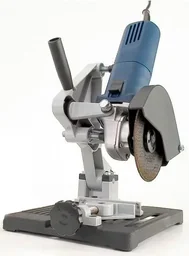
Imagine building a shelf from square tubing. The corners need to be cut perfectly for mitre joints. Freehand? Almost impossible. With the right tool, however, this task becomes child's play. The Cutting stand for one-handed angle grinders is designed precisely for jobs like this. It holds your 115 or 125 angle grinder and guides it safely and accurately through the workpiece. The result: clean, repeatable cuts that take your projects to a professional level.
What are the limitations of freehand cutting?
Freehand angle grinder cutting is quick and flexible, but it soon reaches clear limits. The biggest challenge is accuracy. Keeping a perfectly straight line over a longer distance requires an exceptionally steady hand and plenty of practice. The cut usually wanders, resulting in unattractive edges and ill-fitting parts. This not only wastes material but also valuable time on rework.
Repeatability is another problem. If you need to cut several pieces to exactly the same length, doing so freehand is practically impossible. Each piece becomes unique, with slight variations. For structures where a precise fit is essential, this is a deal-breaker. Freehand cutting is particularly unsuitable for angled or mitre cuts. Producing an exact 45-degree angle reliably is virtually impossible this way.
Important note
Freehand cutting carries a higher safety risk. The angle grinder can catch in the material and cause a severe kickback. Always wear safety goggles, hearing protection and sturdy gloves. Keep the workpiece securely clamped at all times, preferably with screw clamps.
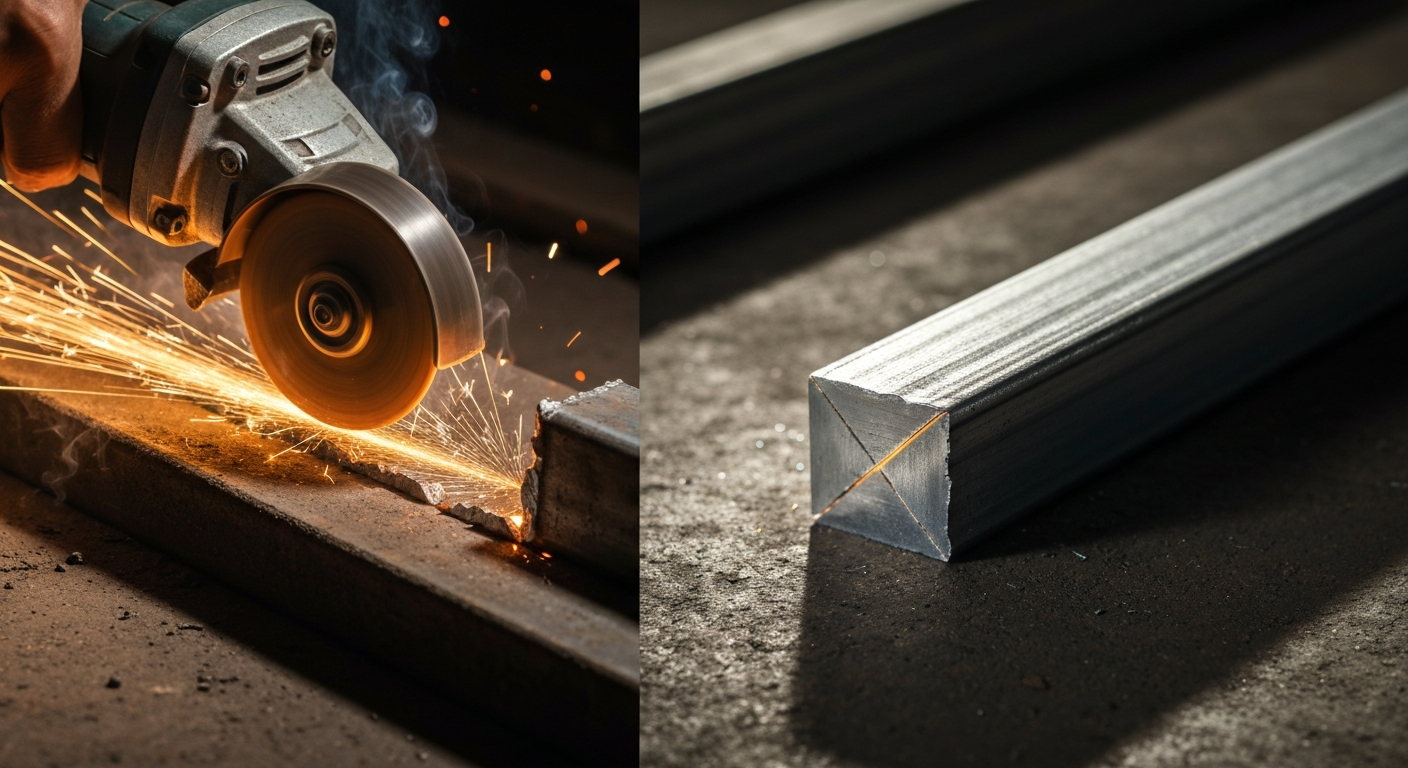
Cut quality also suffers. Uneven guiding often creates a pronounced burr on the workpiece. Deburring and sanding the cut edges is a tedious additional step. A clean, guided cut significantly reduces this work and produces a better end result. So if you value clean workmanship and accurately fitting parts, you cannot do without a guide.
Why a cutting stand revolutionises accuracy
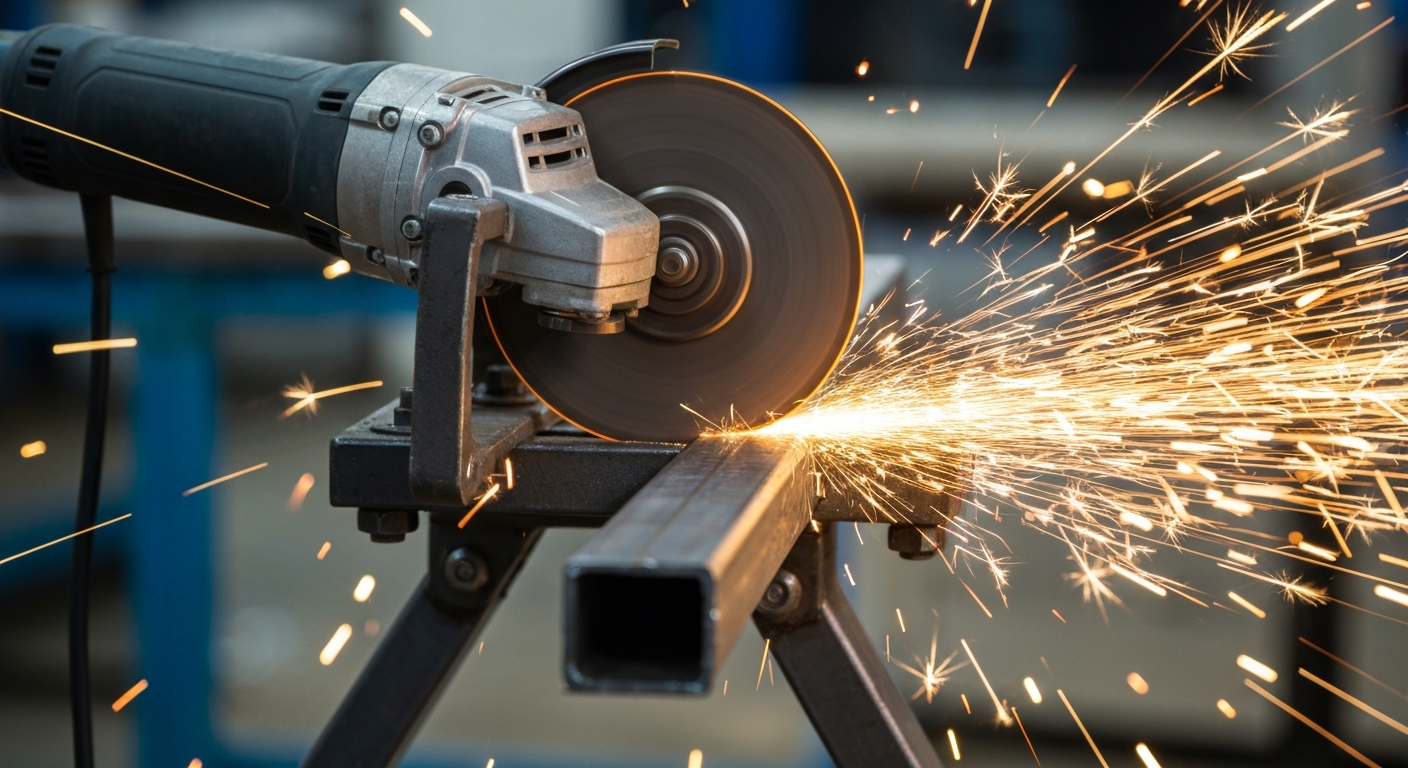
A cutting stand takes cutting stand accuracy to an entirely new level. Its core function is to guide the angle grinder precisely in one controlled movement. The pivoting arm ensures that the cutting disc always meets the workpiece at a perfect 90-degree angle. The result is cuts that are as square as if they had been made in a professional metalworking shop.
The integrated clamp holds the workpiece securely and firmly. Whether round steel, flat bar or square tubing, the material cannot slip during cutting. This fixation is the foundation of precision. You can concentrate fully on the smooth cutting motion without having to balance the workpiece at the same time. This improves not only accuracy but also your safety.
A precise cut is the foundation of every good construction. It saves time during assembly and provides stability. A tool that guarantees precision is not an expense but an investment in quality.
Many cutting stands, including the model presented here, also offer an adjustable mitre function. You can adjust the clamping fixture continuously to an angle of up to 45 degrees. This lets you make perfect mitre cuts for frames, corners and complex joints. This feature alone makes a cutting stand an indispensable aid for anyone doing more than rough cutting-to-length work.
 " alt="An angle grinder in a cutting stand makes a precise cut through a metal tube">
Metal Cutting Comparison: Freehand vs. Cutting Stand
The choice between freehand cutting and using a cutting stand depends largely on the project. A direct metal cutting comparison shows the strengths and weaknesses of both methods in specific applications. Let’s look at four typical tasks in a home workshop.
Scenario 1: Removing a Rusty Padlock
This calls for a fast, powerful cut in an awkward location. Precision is irrelevant. Freehand cutting is clearly the better option here. You are flexible, can get to the job quickly, and the work is done in seconds. A cutting stand would be impractical and unnecessary.
Scenario 2: Building a Square Frame from Steel Profile
For this project, you need eight precise 45-degree miter cuts. Any error in the angle will prevent the frame from being square. This is where a cutting stand really excels. Set the angle once and you can rely on every cut being identical. This project would be doomed to fail if done freehand.
Pro Tip
Mark your cutting line with a scribing tool and a square. When making freehand cuts, first guide the cutting disc very lightly along the line to create a small groove. This groove acts as a guide for the actual cut and prevents the disc from wandering.
Scenario 3: Cutting 20 Metal Rods to Exactly 30 cm
Repeatability and efficiency are crucial for this type of batch work. With a cutting stand, you can set a length stop. Each rod is pushed against the stop, clamped, and cut to length. All 20 pieces will be exactly the same length. Freehand, you would have to measure and mark each piece individually, inevitably resulting in variations. The stand saves a great deal of time and guarantees consistent results. It is ideal for tasks like these in the area of industrial supplies.
Scenario 4: Cutting Sheet Metal for a Repair
If you need to cut an irregularly shaped piece of sheet metal, freehand cutting is often the only option. With a thin cutting disc, you can cut contours and even slight curves. A cutting stand is designed for straight, guided cuts and cannot be used for free-form shapes.
If you have a larger angle grinder, there is a suitable solution for that too. The cutting stand for angle grinders 180/ 230 mm accommodates larger tools and offers the same benefits when working with heavier materials.
How Do I Know If I Need a Cutting Stand?
You may be unsure whether buying one is worthwhile. A simple checklist can help you decide. If you answer “yes” to one or more of the following points, a cutting stand will significantly improve your work.
- Precise angles are essential: You are building furniture, frames, railings, or other structures where exact angles matter. Without accurate angled cuts, the parts will not fit together or the structure will be unstable.
- Repeatability is a must: You are making several identical parts. A cutting stand with a length stop ensures that every part has exactly the same dimensions.
- Safety comes first: You feel uncomfortable making freehand cuts or frequently work with small pieces that are difficult to hold securely. The cutting stand holds everything firmly and minimizes the risk of accidents.
- You want to save time: Clean cuts require very little reworking. You avoid the tedious process of deburring and grinding and can move straight on to assembly.
- You mainly work with profiles: Cutting square tubing, angle profiles, or T-beams straight through by hand is a skill in itself. A cutting stand guarantees a clean, straight cut on every profile.
Additional Advice
The cutting stand also demonstrates its strengths when working with thick materials. During freehand cutting, the disc tends to “wander” in thicker material. The stand’s guided movement keeps the disc exactly on track even during deep cuts and ensures a square result.
 " alt="Comparison between a clean cut with a cutting stand and an uneven freehand cut">
Using It Correctly: How to Get the Most from Your Cutting Stand
Using a cutting stand is simple and intuitive. In just a few steps, you can set it up for a perfect cut. The foundation is always a stable workbench on which you securely fasten the stand, ideally by bolting it down.
First, mount your angle grinder. Follow the manufacturer’s instructions. Make sure all screws are tightened firmly and that the tool sits securely in the holder without any play. Check that the angle grinder guard is in the correct position to protect you from flying sparks. The right equipment is part of the basic range of power tools and accessories.
Now place your workpiece in the clamping fixture. Align your mark precisely beneath the cutting disc. Tighten the clamping fixture spindle so that the material is held absolutely securely. If you are making a miter cut, set the desired angle on the scale and lock the guide before clamping the workpiece.
The best tool is only as good as its application. Correct setup and a calm, even cutting motion are the keys to perfect results and maximum safety.
Start the angle grinder and let it reach full speed. Then guide the lever arm downward with steady, moderate pressure. Do not apply excessive pressure—let the cutting disc do the work. Too much pressure slows the disc, increases wear, and can lead to uneven cuts. After cutting, return the arm to its starting position and switch off the tool. Wait until the disc has come to a complete stop before removing the workpiece.
This precise working method is highly beneficial not only in the workshop but also for projects in the area of Garden + Outdoor, such as building metal fences or trellises. Investing in a cutting stand quickly pays off through clean results, time savings, and a significant increase in safety. It bridges the gap between a flexible handheld tool and the precision of a stationary machine.
Frequently asked questions
- Can I mount any angle grinder in a cutting stand?
- No, cutting stands are designed for specific angle grinder sizes (e.g. 115/125 mm or 180/230 mm). Before buying, check that your tool is compatible with the stand's specifications, especially the mounting point on the gear head.
- Is cutting with a cutting stand really safer?
- Yes, considerably safer. The workpiece and angle grinder are securely fixed, making jamming or kickback almost impossible. The guided movement provides maximum control throughout the cutting process.
- Which materials are best suited to a cutting stand?
- A cutting stand is ideal for making precise cuts in metal profiles, pipes and bars made of steel, aluminium or non-ferrous metal. With the right cutting disc, you can also work on materials such as stone or tiles, although specialised tile cutters are often better suited to these applications.
- Does a cutting stand extend the life of my cutting discs?
- Yes, indirectly. The straight, guided cut distributes the load on the cutting disc more evenly and reduces uneven wear. Jamming, which often causes the disc to break, is prevented, increasing its service life.
- Is buying a cutting stand worthwhile for occasional jobs?
- Absolutely. Given the low price, a cutting stand turns your existing tool into a quasi-stationary machine. Even for a single project requiring clean mitre cuts, the investment quickly pays off in terms of precision and safety.
You may also be interested in
- Buying a cutting stand: The ultimate guide for your workshop
- When is a cutting stand worthwhile for your angle grinder?
- Standing dustpan and brush set vs. hand brush: Which is worthwhile?
- Cutting Disc Review & Comparison 2026
- Should you paint with or against the grain? How to paint wood correctly
- Side Cutter Review & Comparison 2026