
In brief: Choosing the right mobility scooter largely depends on how you plan to use it. For short indoor trips and easy transport, slow, foldable models such as PRODUCT_133544 are ideal. For longer outdoor trips and higher speeds, more powerful 4-wheel mobility scooters such as PRODUCT_89781 are the better choice. Range, speed, ride comfort and safety features are key considerations.
Maintaining your mobility is a key concern as you get older. A mobility scooter, also known as an electric mobility scooter, can significantly increase your freedom and independence. However, the range of options is vast and confusing. Our 2026 test and comparison provides clarity. We analyse the most important models and help you find the right device for your individual needs.
Contents
- Which mobility scooter is right for me?
- The most important buying criteria at a glance
- Test results: the best mobility scooters
- 3-wheel vs. 4-wheel: the detailed comparison
- Safety and legal requirements: what you need to know
- Care and maintenance for a longer service life
- Conclusion: finding the right mobility scooter
Which mobility scooter is right for me?
Before choosing a specific model, you should define how you intend to use it. The requirements vary considerably.
Are you mainly planning short shopping trips in your neighbourhood, or do you want to remain mobile inside your house or apartment? Then compact, slow and often foldable models are the ideal choice. A typical example is the (4-wheel mobility scooter Assisi 2.0 6 km/h Basic). It is lightweight, easy to handle and perfect for indoor use.
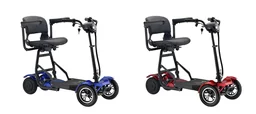
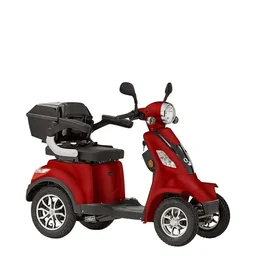
However, if you want to take longer trips to the park, run errands in the city centre or ride on gently hilly terrain, you will need a more powerful mobility scooter. This is where models with higher speeds and greater range come into their own. The (4-wheel mobility scooter Palermo 25 km/h red) is an example of this type of everyday mobility scooter for active seniors.
Tip: Take a test drive before buying. This is the only way to find out whether the seat comfort, controls and ride feel suit you. Many specialist dealers offer this service.
The most important buying criteria at a glance
You should weigh up these factors when making your decision.
Speed and range
Top speeds range from a leisurely 6 km/h to 25 km/h. 6 km/h is more than enough for use around the home and on busy sidewalks. 15 or 25 km/h is more practical for longer distances. Range depends on the battery. Lithium-ion batteries are now standard; they are lighter and longer-lasting than lead-acid batteries.
Comfort and features
Look for an adjustable, padded seat and comfortable armrests. Good suspension cushions bumps on uneven paths. Practical accessories such as a luggage basket or bag are essential for shopping trips. Wind and weather protection, included with some Palermo models, provides comfort in all conditions.
Handling and transport
Can the mobility scooter be folded or disassembled? This is important for transporting it in the car or storing it in a space-saving way at home. Weight is another crucial factor, especially if you need to move the mobility scooter without assistance.
Test verdict on the best mobility scooters for seniors
Our comparison focuses on models that meet different needs. Here is a direct comparison of the most important features.
The most highly rated mobility scooters for seniors in our range compared directly:
| Model | Customer rating | Availability |
|---|---|---|
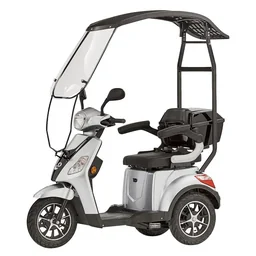
| 3-wheel mobility scooter Bologna 25 km/h silver with wind and weather protection | – | Currently unavailable |
| 4-wheel mobility scooter Palermo 15 km/h silver | – | Currently unavailable |
| 4-wheel mobility scooter Palermo 25 km/h red | – | Currently unavailable |
| 4-wheel mobility scooter Assisi 2.0 6 km/h Basic: 36V/10Ah lithium-ion, foldable, blue | – | Currently unavailable |
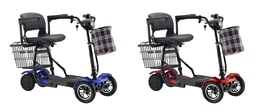
| 4-wheel mobility scooter Assisi 2.0 6 km/h Safety: 36V/10Ah lithium-ion with luggage bag/basket, indicators, foldable, blue | – | Currently unavailable |
Based on this overview, we can make some clear recommendations.
For compact use and easy transport, the foldable Assisi 2.0 series is the first choice. The (Safety version) comes with useful accessories such as indicators for added safety and a luggage bag.
For active seniors who value range and speed, the Palermo models are ideal. The offers a solid basis for longer trips at 25 km/h. If you want additional protection from the weather, look for models with integrated wind protection.
For users who place particular value on manoeuvrability, the (3-wheel mobility scooter Bologna 25 km/h) could be a good option. The three-wheeler has a smaller turning circle than a four-wheeler.
Important: The stated range is a manufacturer's figure under ideal conditions. Factors such as your body weight, terrain, temperature and tyre pressure can significantly reduce the actual range. Allow for a realistic reduction of 20-30%.
3-wheel vs. 4-wheel mobility scooters: The big comparison
The number of wheels has a fundamental impact on handling.
Advantages of a 3-wheel mobility scooter:
- Better manoeuvrability: A smaller turning circle makes it superior in confined spaces and on narrow paths.
- Often lighter: Its construction can result in a lower overall weight.
Advantages of a 4-wheel mobility scooter:
- Greater stability: The wider base provides greater security, especially when cornering and on uneven ground.
- Usually more comfortable: The seats are often wider and the suspension more pronounced.
- Higher load capacity: You can generally carry more weight.
The decision comes down to personal preference. Try both variants to find out which gives you the greatest sense of security. Discover our selection of mobility scooters for seniors in both designs.
Safety and the law: What you need to know
The legal classification of your mobility scooter is crucial for safe use.
Road traffic regulations
Mobility scooters with a maximum speed of 6 km/h are classed as mobility aids and may be used on pavements and in pedestrian zones. They do not require a driving licence, helmet or insurance. Faster models, usually from 15 km/h, may be classified as invalid carriages or electric mopeds. In these cases, an insurance registration plate, a moped test certificate or certain technical requirements, such as indicators and mirrors, may be necessary. Be sure to clarify this with the retailer or your local registration office before buying.
Safety equipment on the mobility scooter
In addition to legally required equipment, there are several useful features. A reverse brake prevents the scooter from rolling away unintentionally. Reflectors and bright LED lighting are essential for visibility at dusk. A parking brake must work reliably.
Note: Even when helmets are not compulsory, we recommend wearing a bicycle helmet for safety reasons, especially at higher speeds or on rougher terrain.
Care and maintenance for a longer service life
With the right care, your mobility scooter for seniors can last for many years.
Battery care: Avoid deep discharges. Recharge the battery as soon as possible after every trip, even if it is not completely empty. If the mobility scooter is not used for an extended period, store it in a dry, frost-free place and keep the battery charged.
Mechanical maintenance: Check the tyre pressure regularly. Underinflated tyres increase rolling resistance and reduce the range. Check that the brakes are working properly. Clean the mobility scooter with a damp cloth and do not use a pressure washer.
Find out about all the possibilities of electric mobility for an active life.
Conclusion: Finding the right mobility scooter
Choosing the ideal mobility scooter for seniors is a very personal decision. There is no model that is perfect for everyone. Take a systematic approach: first define your main area of use, indoors or outdoors and short or long distances. Then focus on the right speed and range. Consider comfort features such as the seat and suspension, as well as practical factors such as transport and weight.
Use our comparison as a well-founded starting point for your research. Ultimately, however, an extensive test drive should be the deciding factor. A good mobility scooter is an investment in your freedom, independence and quality of life. Choose carefully.
Frequently asked questions
- Do I need a licence for a mobility scooter?
- For most mobility scooters with a maximum speed of up to 6 km/h, no licence is required in Germany. They are classified as mobility aids. Different regulations apply to faster models with speeds of 15 km/h or 25 km/h. Always check the local regulations before buying.
- How far can I travel on a single charge?
- The range varies greatly depending on the model, battery capacity, terrain and rider weight. Basic models often cover 15-25 km, while powerful mobility scooters can reach 40 km or more. Please note that manufacturers' specifications are based on ideal conditions. Allow for a safety margin in everyday use.
- Can I also use a mobility scooter inside my home or flat?
- Yes, many models are suitable for this. 3-wheel mobility scooters are particularly compact and manoeuvrable. Pay attention to the overall dimensions and turning circle. Foldable models such as the Assisi 2.0 series (e.g. PRODUCT_139411) are ideal because they can be stored in a space-saving way.
- What is the difference between 3-wheel and 4-wheel models?
- 3-wheel mobility scooters are generally more manoeuvrable and have a smaller turning circle, making them ideal for tight spaces. 4-wheel mobility scooters offer greater stability, especially on uneven ground, and often feel safer. The choice depends on your preferred riding experience and intended area of use.
- How safe are mobility scooters in traffic?
- Safety is the top priority. Do not use mobility scooters with a speed of 25 km/h on the road; use cycle paths or pavements where permitted instead. Important safety features include working brakes, reflectors, indicators (as on PRODUCT_132910) and good lighting. Always drive cautiously and defensively.
You may also be interested in
- Electric Mobility Test & Comparison 2026
- Kids' Ride-On Vehicles Test & Comparison 2026: The Best Vehicles for Children
- Walking Aids Test & Comparison 2026: The Best Models Reviewed
- Hearing Amplifiers Test & Comparison 2026
- Remote-Controlled Cars Test & Comparison 2026
- Bicycle and Scooter Shop Test & Comparison 2026