
Kurz erklärt: Ob Moos im Garten gut oder schlecht ist, hängt vom Standort ab. Im Rasen ist es ein Indikator für Bodenprobleme und verdrängt das Gras. In schattigen Ecken, als Fugenfüller oder bewusster Bodendecker kann es jedoch eine pflegeleichte und ästhetisch ansprechende Alternative zu anderen Pflanzen sein.
Inhaltsverzeichnis
Ein grüner Teppich im Garten – für die einen der Inbegriff eines gepflegten Rasens, für die anderen ein samtiger Moosfleck in einer schattigen Ecke. Moos spaltet die Gärtnergemüter. Während es im Rasen als unerwünschter Konkurrent des Grases gilt, gewinnt es als pflegeleichter Bodendecker an Beliebtheit. Die Wahrheit liegt dazwischen: Moos ist weder grundsätzlich gut noch schlecht. Es ist vor allem ein cleverer Überlebenskünstler und ein wichtiger Indikator für die Bedingungen in Ihrem Garten.
Warum wächst Moos überhaupt in meinem Garten?
Moos ist keine Krankheit, sondern eine Pflanze, die sich ansiedelt, wo sie optimale Bedingungen vorfindet. Diese Bedingungen sind meist genau jene, unter denen sich Rasengräser unwohl fühlen. Wenn Sie Moos im Rasen entdecken, signalisiert Ihnen Ihr Garten, dass etwas im Ungleichgewicht ist.
Schatten und Feuchtigkeit: Das ideale Moos-Biotop
Moose besitzen keine echten Wurzeln, um Wasser aus tieferen Bodenschichten zu ziehen. Sie nehmen Feuchtigkeit direkt über ihre Blättchen auf. Schattige Lagen unter Bäumen, an Nordseiten von Gebäuden oder in dicht bebauten Gebieten trocknen langsamer ab und bieten Moosen somit ein perfektes, feuchtes Milieu. Hier hat sonnenliebendes Gras kaum eine Chance.
Der Bodenzustand: Verdichtung, pH-Wert und Nährstoffe
Ein harter, verdichteter Boden ist für Graswurzeln eine unüberwindbare Barriere. Luft und Wasser dringen kaum ein, Staunässe entsteht. Moos hingegen kommt mit diesen Bedingungen hervorragend zurecht. Es wächst einfach oberflächlich auf dem verdichteten Grund.
Ein weiterer entscheidender Faktor ist der pH-Wert. Viele Moosarten bevorzugen saure Böden (pH-Wert unter 6,0), während Rasengräser einen leicht sauren bis neutralen Boden (pH 6,0-7,0) benötigen. Ein Nährstoffmangel, insbesondere ein Mangel an Kalium, schwächt den Rasen zusätzlich und macht ihn anfällig für die Ausbreitung von Moos.
Falsche Rasenpflege als Einladung für Moos
Auch die Pflege spielt eine Rolle. Ein zu tief gemähter Rasen (unter 4 cm) schwächt die Gräser erheblich. Die Graspflanzen können weniger Photosynthese betreiben und ihre Wurzeln bilden sich zurück. Die entstehenden Lücken im Rasen sind eine offene Einladung für Moos und Unkraut, sich anzusiedeln.
Die häufigsten Moosarten im Garten bestimmen
Wenn Sie wissen, welches Moos bei Ihnen wächst, können Sie die Ursachen besser eingrenzen. Es gibt Tausende von Moosarten, doch im typischen Garten finden sich meist nur wenige Vertreter:
- Sparriger Runzelbruder (Rhytidiadelphus squarrosus): Dieses Moos ist der häufigste Gast in Rasenflächen. Sie erkennen es an seinen unordentlichen, gelbgrünen Polstern mit abstehenden, sternförmigen Spitzen. Es deutet oft auf Nährstoffmangel und einen zu tiefen Rasenschnitt hin.
- Silber-Birnmoos (Bryum argenteum): Dieses widerstandsfähige Moos wächst oft in den Fugen von Pflastersteinen oder auf verdichteten Wegen. Sein Name kommt vom silbrigen Schimmer, den die Polster bei Trockenheit annehmen. Es ist ein Zeichen für verdichtete Böden.
- Zypressen-Schlafmoos (Hypnum cupressiforme): Ein sehr anpassungsfähiger Alleskönner. Es bildet dichte, flache Matten auf Erde, Holz oder Steinen. Im Rasen deutet es meist auf Schatten und sauren Boden hin.
Die genaue Bestimmung ist für den Hobbygärtner nicht immer einfach, aber die Wuchsform und der Standort geben bereits wichtige Hinweise.
Moose sind ein faszinierender und oft übersehener Teil unseres Ökosystems. Sie sind Pionierpflanzen, die kahlen Boden besiedeln und so die Bedingungen für das Wachstum anderer Pflanzen schaffen.
Moos im Rasen: Wann und wie sollten Sie es entfernen?
Im Rasen ist Moos ein klarer Feind. Es verfilzt die Grasnarbe, blockiert Luft, Wasser und Nährstoffe und verdrängt die Gräser. Um es dauerhaft loszuwerden, reicht es nicht, nur das Moos zu entfernen. Sie müssen die Ursachen bekämpfen und dem Rasen helfen, wieder stark und konkurrenzfähig zu werden.
Schritt 1: Die mechanische Entfernung durch Vertikutieren
Der effektivste Weg, Moos und Rasenfilz mechanisch zu entfernen, ist das Vertikutieren. Ein Vertikutierer ritzt mit seinen Messern die Grasnarbe an und reißt Moos und abgestorbenes Material heraus. Der beste Zeitpunkt dafür ist das Frühjahr (April) oder der Frühherbst (September), wenn der Rasen kräftig wächst.
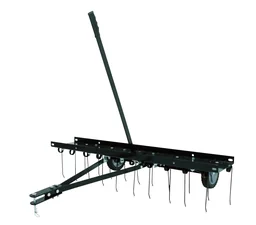
Mähen Sie den Rasen vor dem Vertikutieren auf etwa 3-4 cm. Fahren Sie dann mit dem Vertikutierer einmal längs und einmal quer über die Fläche. Mit einem leistungsstarken Gartenwerkzeug wie dem Anbaugerät für Rasentraktoren Vertikutierer 96 cm bewältigen Sie auch große Flächen mühelos.
Schritt 2: Boden lüften und Struktur verbessern
Nach dem Vertikutieren sehen Sie das wahre Ausmaß der Bodenprobleme. Bei stark verdichteten, lehmigen Böden folgt nun das Aerifizieren. Dabei stechen Sie mit einer Aerifiziergabel oder einem Rasenlüfter tiefe Löcher in den Boden. Diese Löcher füllen Sie anschließend mit grobem Sand. Das verbessert den Luft- und Wasserhaushalt im Boden nachhaltig und bricht die Verdichtung auf.
Profi-Tipp
Testen Sie den pH-Wert Ihres Bodens, bevor Sie kalken. Ein einfacher Test aus dem Gartencenter gibt Ihnen Klarheit. Ein pH-Wert zwischen 6,0 und 7,0 ist für die meisten Rasengräser ideal und erschwert dem Moos die Ausbreitung.
Schritt 3: Den pH-Wert mit Kalk regulieren
Wenn Ihr Bodentest einen zu sauren Wert (unter 6,0) ergeben hat, ist jetzt der richtige Zeitpunkt zum Kalken. Rasenkalk hebt den pH-Wert an und verbessert die Krümelstruktur des Bodens. Dadurch werden Nährstoffe für die Gräser besser verfügbar. Bringen Sie den Kalk nach den Anweisungen auf der Verpackung aus, am besten an einem windstillen, bedeckten Tag.
Schritt 4: Gezielte Bekämpfung und Stärkung des Rasens
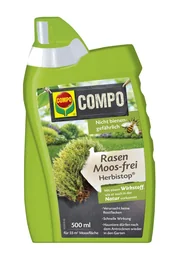
Nach der mechanischen Entfernung können Sie verbliebene Moosreste mit einem speziellen Moosentferner bekämpfen. Produkte wie das Bio Rasen Moos-frei Herbistop wirken gezielt gegen das Moos, ohne den Rasen zu schädigen. Anschließend benötigt der geschwächte Rasen dringend Nährstoffe. Ein kaliumbetonter Herbstrasendünger oder ein stickstoffbetonter Starterdünger im Frühjahr gibt den Gräsern die Kraft, die Lücken schnell zu schließen.
Wichtiger Hinweis
Vermeiden Sie den Einsatz von Eisendünger (Eisen-II-Sulfat) als alleinige Maßnahme. Er bekämpft zwar kurzfristig das Moos, das schwarz wird und abstirbt, ändert aber nichts an der Ursache. Ohne weitere Bodenverbesserung kehrt das Moos schnell zurück.
Ein gesunder, dichter Rasen ist die beste Verteidigung gegen Moos. Alle Maßnahmen, die das Gras stärken – richtige Düngung, Belüftung und ein angepasster Schnitt – schwächen das Moos nachhaltig.
Schritt 5: Lücken schließen durch Nachsaat
Wo das Moos entfernt wurde, sind nun kahle Stellen. Diese müssen Sie schnell mit hochwertigem Rasensaatgut nachsäen, sonst siedeln sich sofort wieder Moos und Unkraut an. Verwenden Sie eine spezielle Nachsaat-Mischung, die schnell keimt. Halten Sie die eingesäten Stellen in den folgenden Wochen konstant feucht. Das entfernte Moos und den Rasenfilz sammeln Sie sorgfältig auf und entsorgen es im Gartenabfallsack oder auf dem Kompost, falls Sie keine Moosvernichter verwendet haben.
Moos gezielt als Bodendecker nutzen: Die grüne Alternative
Anstatt Moos an ungeeigneten Standorten zu bekämpfen, können Sie es auch gezielt fördern, wo es seine Stärken ausspielen kann. In schattigen, feuchten Gartenbereichen, in denen Gras ohnehin nicht wachsen will, ist Moos ein idealer Bodendecker.
Die Vorteile eines Moosteppichs
Ein Moosgarten hat viele Vorteile. Er ist immergrün und bietet auch im Winter eine ruhige, grüne Fläche. Er muss nie gemäht, gedüngt oder vertikutiert werden. Moos ist extrem trittfest, sobald es etabliert ist, und unterdrückt das Keimen von Unkraut. Zudem speichert es Wasser und verbessert so das Mikroklima im Garten.
Wo passt Moos in die Gartengestaltung?
Moosflächen wirken besonders gut in naturnahen Gärten, Schattengärten oder Gärten im japanischen Stil. Sie schaffen eine Atmosphäre der Ruhe und Beständigkeit. Moos eignet sich hervorragend zur Begrünung von Flächen unter großen Bäumen, zur Gestaltung von Wegen zwischen Trittplatten oder zur Bepflanzung von Steingärten und Mauerkronen.
Wie pflege ich einen Moosgarten richtig?
Ein etablierter Moosgarten ist extrem pflegeleicht, aber nicht völlig pflegefrei. Mit wenigen Handgriffen erhalten Sie die Schönheit Ihrer Moosfläche.
Reinigung und Bewässerung
Die wichtigste Pflegemaßnahme ist das regelmäßige Entfernen von Laub und herabfallenden Zweigen. Eine dicke Laubschicht erstickt das Moos. Verwenden Sie einen Laubbläser auf niedrigster Stufe oder eine weiche Harke, um das Moos nicht zu verletzen. In langen Trockenperioden freut sich das Moos über eine gelegentliche Dusche aus dem Gartenschlauch, um seine saftig grüne Farbe zu behalten.
Zusätzlicher Rat
Moos zwischen Pflastersteinen lässt sich oft einfach mit einem Fugenkratzer oder einer harten Bürste entfernen. Für größere Flächen kann auch ein Hochdruckreiniger nützlich sein, aber verwenden Sie ihn mit Vorsicht, um die Fugen nicht auszuspülen.
Unkrautkontrolle im Moosbeet
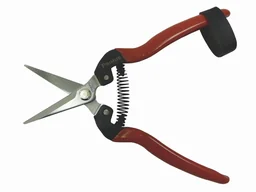
Gelegentlich kann sich Unkraut im Moosteppich ansiedeln. Da Moos keine tiefen Wurzeln bildet, lässt sich Unkraut meist sehr leicht von Hand herausziehen. Achten Sie darauf, die Wurzeln vollständig zu entfernen. Bei feinen Arbeiten oder dem gezielten Entfernen von Grashalmen hilft ein präzises Werkzeug wie die "Wunderschere" - der Allesschneider für Haus & Garten.
Moos im Garten ist also eine Frage der Perspektive. Indem Sie die Ursachen für sein Wachstum im Rasen bekämpfen, schaffen Sie eine gesunde Grasfläche. Und indem Sie es an den richtigen Stellen gezielt einsetzen, gestalten Sie pflegeleichte und ästhetisch ansprechende Bereiche in Ihrem gesamten Garten + Outdoor-Bereich.
Häufige Fragen
- Was ist die Hauptursache für Moos im Rasen?
- Die häufigste Ursache ist eine Kombination aus mehreren Faktoren: verdichteter, saurer oder nährstoffarmer Boden, zu viel Schatten und Staunässe. Moos ist anspruchsloser als Gras und nutzt diese schlechten Bedingungen, um sich auszubreiten. Ein gesunder Boden ist der beste Schutz vor Moos.
- Hilft Kalken wirklich gegen Moos?
- Kalken hilft nur, wenn der Boden tatsächlich zu sauer ist (niedriger pH-Wert). Es hebt den pH-Wert an und verbessert die Bodenstruktur, was dem Rasen zugutekommt. Bei neutralem oder alkalischem Boden ist Kalken wirkungslos oder sogar schädlich. Testen Sie daher immer zuerst den pH-Wert.
- Kann ich Moos einfach wachsen lassen?
- Ja, das können Sie. Außerhalb des Rasens, zum Beispiel unter Bäumen, in Steingärten oder zwischen Trittplatten, ist Moos ein ausgezeichneter, pflegeleichter Bodendecker. Es bleibt ganzjährig grün, muss nicht gemäht werden und unterdrückt Unkraut. Es ist eine Frage der persönlichen Gartengestaltung.
- Wann ist die beste Zeit, um Moos zu entfernen?
- Der beste Zeitpunkt zum Vertikutieren und Entfernen von Moos ist das Frühjahr (März/April) oder der frühe Herbst (September). Der Boden sollte trocken, aber nicht gefroren sein. Zu diesen Zeiten kann sich der Rasen am besten von der Behandlung erholen und die kahlen Stellen schnell wieder schließen.
- Sind Moosentferner schädlich für andere Pflanzen oder Tiere?
- Chemische Moosentferner, besonders solche mit Eisen-II-Sulfat, sollten mit Vorsicht angewendet werden. Sie können bei Kontakt Flecken auf Terrassenplatten verursachen und für Haustiere schädlich sein, bis sie eingewässert sind. Biologische Alternativen wie PRODUCT_98640 sind oft schonender. Lesen Sie immer die Anwendungshinweise.
Das könnte Sie auch interessieren
- Moos im Garten: Ursachen, Vorbeugung und wirksame Entfernung
- Moos & hartnäckiges Unkraut aus Fugen entfernen: Der Guide
- Moos im Rasen? So hilft Beckmann Eisendünger effektiv & schnell
- Unkraut im Garten: Erkennen, verstehen und natürlich bekämpfen
- Immergrün pflegen: So bleiben Ihre Pflanzen ganzjährig schön
- Maulwürfe im Garten: Nützliche Helfer oder Plagegeister?