
In brief: The best photography gear for you depends on how you plan to use it. Dedicated batteries such as PRODUCT_111944 are essential for action cameras. When choosing storage, pay attention to speed classes. A high-quality memory card such as PRODUCT_136077 helps protect your footage. Our comparison explains what to look for when buying.
Photography gear includes more than cameras and lenses. A reliable setup also needs essentials such as high-performance batteries and fast storage. Our 2026 review and comparison focuses on these often-overlooked essentials. We look at which accessories stand out and offer clear buying advice.
Whether you’re capturing adventures with an action camera or getting creative with a DSLR, the right accessories make all the difference. They affect battery life, data security, and workflow speed. In this comparison, we feature selected batteries and storage solutions that are a great fit for your photography gear.
Table of contents
Action camera battery reviews
Action cameras go with you into extreme situations, so reliable power is essential. A weak battery can bring your adventure to an early end. We’ve reviewed dedicated replacement batteries for popular camera series.
These batteries are designed to fit specific models. They aren’t universal solutions; each is made for a particular camera. This ensures a secure fit and optimal power delivery. For owners of a BlackHawk 4K or Stage 2.5K camera, the
is a suitable choice. It offers the capacity you need for longer recording sessions.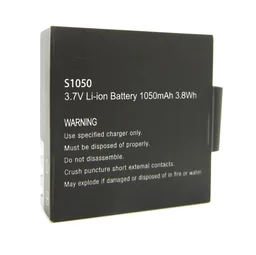
Tip: Keep a compatible replacement battery on hand. It can double your action camera’s operating time. On longer trips, simply swap batteries and recharge the empty one on the go with a power bank.
For camera series such as Rallye, Endurance, Discovery, and Pioneer, the
provides compatible power. As with any replacement battery, choosing the correct product is essential. The wrong battery may not fit or may not deliver full performance. Always check compatibility with your exact camera model before buying.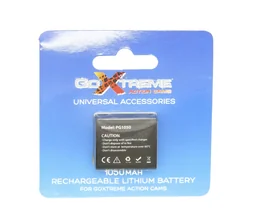
What makes a good action camera battery?
Capacity in mAh isn’t the only important factor. A good battery performs consistently even as temperatures change. It charges reliably and retains its capacity over many charge cycles. Safety comes first. High-quality batteries have protective circuits to guard against overheating, deep discharge, and short circuits.
SD and microSD memory card comparison
Your memory card stores all your valuable photos and videos. Choosing the right one helps prevent frustrating wait times and data loss. Several standards are widely used for SD and microSD cards.
Speed class matters for demanding photography and, especially, high-quality video recording. A Class 10 card such as the
is a solid entry-level option. It’s often sufficient for Full HD video. For 4K recording or high bit rates, however, you’ll need a U3-class card.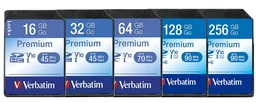
Important: Always use U3 memory cards for 4K video recording. Slower cards may not support the required write speed. This can interrupt recordings or significantly reduce image quality. Choose the right card for the job.
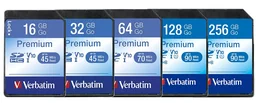
The
is a microSDXC card with U3 and UHS-I support. It includes an SD adapter, making it highly versatile. The , a 128GB SDXC Premium memory card, also offers excellent performance. It’s ideal for DSLR and mirrorless cameras.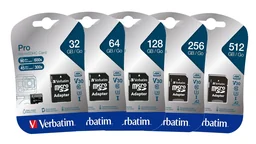
Benefits of microSDXC cards with an adapter
Cards such as the
combine the compact size of microSD with the wide compatibility of SD. Insert the card directly into your action camera or smartphone. Then use the included adapter to read it with your laptop’s or photo printer’s SD slot. This saves time and means you need to carry fewer cards.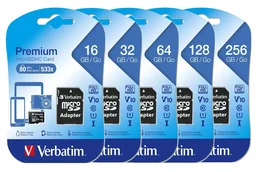
USB Flash Drives for Data Transfer
Alongside memory cards for your camera, USB flash drives are an essential part of your workflow. Use them for fast temporary storage, backing up data or easily carrying large files. Fast transfer speeds and a durable design are key.
The
is a 128 GB USB 3.2 GEN1 flash drive. Its key advantage is the high speed of the USB 3.2 standard. Transfer photos and videos much faster than with older USB 2.0 flash drives. This can save a lot of time, especially when working with the large files generated by video projects.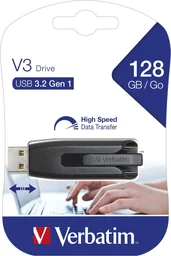
Note: USB 3.2 flash drives are backward compatible. They also work with older USB ports, but at the slower speeds of the older standard. For maximum performance, use the flash drive with a USB 3.2 port, usually marked in blue.
A durable flash drive such as the V3 Store n Go can handle being carried in your pocket or backpack. It's a practical, reliable addition to your photography gear.
Buying Guide: What to Look for in Batteries
Buying a replacement battery may seem simple, but there are a few things to watch out for. Use this checklist to choose the right one.
- Check compatibility: This is the most important step. Match your camera's exact model number to the battery's compatibility list. Batteries are often compatible only with specific series or even certain submodels.
- Compare capacity (mAh): A higher mAh rating means longer battery life. Check whether the manufacturer lists the same or a higher capacity than the original battery.
- Safety features: A quality battery has a protection circuit to prevent overcharging, deep discharge and short circuits.
- Charge cycle performance: Good batteries retain most of their capacity through many charging and discharging cycles.
Keep in mind that the wrong battery could damage your camera. It's best to invest in a compatible branded product or a certified compatible battery such as the PRODUCT_IDs featured above.
Buying Guide: Choosing the Right Storage Media
When choosing memory cards and flash drives, speed, capacity and reliability all matter. Your photos and videos are too valuable to trust to a cheap, no-name card.
- Choose a speed class that suits your needs:
- Class 10 / U1: Suitable for Full HD video and JPEG burst shooting.
- U3 / V30: Essential for recording 4K video (up to 60/120 fps). Also recommended for shooting RAW burst photos.
- Plan for enough storage: 128 GB, as with or , is a good balance of capacity and value. It offers room for plenty of photos or hours of 4K video. For longer recording sessions or trips without a computer, 256 GB or more may be useful.
- Choose a trusted brand: Established manufacturers often offer better data integrity and warranties. Their products are also more resistant to extreme temperatures, impacts and moisture.
- Consider the format and adapter: microSDXC cards with an SD adapter (e.g. ) offer flexibility across different devices.
One more tip: Don't store all your photos and videos on a single, high-capacity card. Use several medium-capacity cards instead. That way, a defective card won't put your entire project at risk.
The Future of Photography Technology
Technology in the tech sector is always evolving, and camera accessories are no exception. Battery capacities will continue to increase without changing the size of the battery, perhaps thanks to new materials such as solid-state batteries. That could mean longer runtimes for your cameras.
Storage media will keep getting faster. Standards such as SD Express and CFexpress, which use PCIe technology, will support even higher data transfer rates. This is essential for future video formats such as 8K and high-frame-rate slow-motion footage. Compatibility with existing devices remains a challenge.
Connectivity will become more important. In the future, storage media and batteries could increasingly use NFC or Bluetooth to report their status. Imagine your camera warning you before the battery runs out or the memory card fills up. Our comparison shows that even seemingly simple accessories can play a key role in your photography. Choose carefully.
Our top-rated photography products compared:
| Model | Customer rating | Availability |
|---|---|---|
| 1050 mAh battery for Vision 4K | – | Currently unavailable |
| 1050 mAh battery for BlackHawk 4K & Stage 2.5K | – | Currently unavailable |
| 1050 mAh battery for Rallye, Endurance, Discovery & Pioneer | – | Currently unavailable |
| 128 GB USB 3.2 GEN1 flash drive, V3 Store n Go in gray | – | Currently unavailable |
| 128 GB microSDXC memory card with SD card adapter, Class 10 | – | Currently unavailable |
Frequently Asked Questions
- What should I look for when buying a replacement battery for my action camera?
- Make sure it is compatible. Not every battery fits every camera model. Check the mAh rating for battery life and the exact product name of your camera. A compatible battery such as PRODUCT_111944 ensures optimal performance.
- What is the difference between an SDHC and an SDXC memory card?
- The main difference is the maximum storage capacity. SDHC cards hold up to 32 GB, while SDXC cards such as PRODUCT_136077 or PRODUCT_108646 start at 64 GB and go up to 2 TB. For modern cameras with high data rates, SDXC cards are usually the better choice.
- What do the U3 and Class 10 speed classes mean on memory cards?
- These classes guarantee a minimum write speed. Class 10 guarantees at least 10 MB/s, while U3 guarantees at least 30 MB/s. For 4K video recording, U3, as used by PRODUCT_136281, is almost always required to prevent data bottlenecks.
- Can I use a microSDXC card with an adapter in any SD card slot?
- Yes, that is the main advantage. Cards such as PRODUCT_136077 or PRODUCT_136281 come with an SD adapter. This lets you use them flexibly in devices with a microSD slot, such as action cameras, and devices with a standard SD slot, such as DSLR cameras or laptops.
- Is a USB 3.2 flash drive sufficient for transferring photos and videos?
- Absolutely. A USB 3.2 flash drive such as PRODUCT_95137 offers high transfer speeds. This is ideal for quickly backing up large amounts of data from your computer or transferring files between devices. It is a practical addition to memory cards.