
In brief: You can save your boxwood by identifying pests such as box tree moth early and treating them specifically with insecticides or biological products. Diseases such as box blight and Volutella blight can be treated with fungicides and improved care conditions. Good boxwood care with the right fertiliser and pruning tools helps prevent problems.
Save Boxwood: Identify & Treat Pests and Diseases
Healthy boxwood is a real delight. But box tree moth and fungi threaten this popular hedge plant. This guide shows you how to identify pests, treat diseases and protect your boxwood in the long term.
Why is boxwood so susceptible?
Boxwood is a slow-growing, evergreen plant. Its dense foliage creates a humid microclimate. This encourages fungal diseases. The leaves provide plenty of food for pests such as box tree moth. The plant's popularity helps the pest spread quickly.
Buxus was once considered robust. Today, you need to protect it actively. The right boxwood care with suitable tools is the first step towards keeping it healthy.
Box tree moth has no natural predators in our region. This explains its rapid spread. Early intervention by the gardener is therefore essential.
Box tree moth: identifying features and life cycle
Box tree moth is the most dangerous enemy of your boxwood. The moths are active at night and inconspicuous. The green caterpillars with black heads strip the plant from the inside out.
What does box tree moth look like?
The caterpillars grow up to five centimetres long. They are green with black spots and white bristles. Webbing inside the plant protects them. Adult moths have white wings with a brown edge.
Important note
Do not just search the outside. Box tree moth begins feeding in the centre of the plant. Carefully open up the foliage. Without this check, an infestation can remain undetected for a long time.
When is box tree moth most active?
The first caterpillars become active from April. They overwinter in webs on the boxwood. They start feeding at temperatures of seven degrees Celsius. They go through several generations per year. The final generation prepares for winter from September.
Products such as help control the pest. Timing is important. Spray immediately when you see an infestation.
Controlling box tree moth: methods compared
You have several options. Your choice depends on the severity of the infestation and your gardening experience.
Manual control
For a light infestation, pick off the caterpillars by hand. Wear gloves. Place a sheet under the bush. Shake the plant vigorously. The caterpillars will fall down. Dispose of them safely.
Vacuuming with a handheld vacuum cleaner also works. This removes webs and droppings as well. This method is laborious but chemical-free.
Expert tip
Cut out heavily infested shoots immediately. Dispose of the material in household waste, not on the compost heap. This effectively interrupts the pest's life cycle.
Using biological insecticides
Products based on Bacillus thuringiensis are highly effective. These bacteria produce a toxin that is harmful only to caterpillars. Beneficial insects such as bees remain unharmed.
Products such as are suitable for this purpose. Thoroughly wet all the leaves, including the undersides. Repeat the application after 10 to 14 days. This catches newly hatched caterpillars.
Chemical insecticides as a last resort
In cases of extremely severe, recurring infestations, systemic products may be considered. The plant absorbs the active ingredient. The caterpillars ingest it while feeding. These products work for longer, but must be used carefully.
Follow the instructions for use strictly. Protect yourself with suitable clothing. Observe periods when bees must be protected.
The best strategy is prevention through regular checks. Anyone who spends five minutes each week checking their boxwood for infestation will save a lot of work later and protect the plant.
Fungal diseases in boxwood: box blight and more
In addition to pests, fungi threaten boxwood. The two most common are box blight and Volutella blight.
Box blight (Cylindrocladium)
This fungus thrives in damp conditions. It initially attacks the leaves. They develop orange-brown spots. The spots grow larger. Entire shoots die back. A white layer of spores on the underside of the leaf is a clear sign.
Cut all affected parts back to healthy wood. Disinfect your garden tools after every cut. Dispose of the cuttings in the general waste bin.
Volutella blight in boxwood
This fungus often appears on weakened plants. The leaves first turn pale, then brown. However, they remain attached for a long time. The pink spore deposits on the underside of the shoots are distinctive.
Treatment is similar to that for Cylindrocladium. Pruning and hygiene are crucial. Improve the site conditions. Ensure better air circulation.
Additional advice
Boost the resilience of your boxwood with a special fertiliser. Products such as provide all the nutrients needed for robust growth. Healthy boxwood is better able to resist disease.
Preventive boxwood care: the best defence
The ideal location and proper care make all the difference.
The ideal location for Buxus
Boxwood thrives in sunny to partially shaded locations. The soil should be well-drained and rich in lime. Avoid waterlogging. A drainage layer of gravel in the planting hole helps. Do not plant too closely together. Air must be able to circulate.
Our range of garden equipment includes everything you need for planting.
Watering and fertilising correctly
Water in the morning, directly at the root area. The leaves should remain dry. Use a watering can with a long spout or an irrigation system.
Fertilise in spring and early summer with boxwood fertiliser. You can find it in the Fertilisers category. Avoid over-fertilising. This makes the plant more susceptible to frost and fungi.
Pruning perfectly
Only prune on dry days. Use sharp, clean shears. Blunt tools crush the shoots and create entry points for fungi. The main pruning period is from April to September.
Topiary encourages branching. Thinning improves ventilation inside the plant. Regularly remove old leaves from around the root area.
Planting resistant boxwood alternatives
If your location is highly susceptible, starting again with robust varieties may be worthwhile.
The 'NewGen Freedom' variety is considered significantly more resistant to box blight. It grows compactly and densely. With
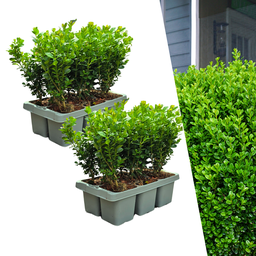
Other good alternatives include Ilex crenata (Japanese holly) and barberries. They look similar to boxwood but are less susceptible.
Summary: How to save your boxwood
Check your boxwood weekly from spring onwards. Look inside the plant for caterpillars and webbing. If you spot box tree moth, use biological treatments immediately. Repeat the application.
If your boxwood has a fungal infection, cut affected shoots well back into healthy wood. Keep the leaves dry and ensure good air circulation. Strengthen the plants with suitable fertiliser.
These measures give your boxwood a real chance of survival. Healthy Buxus plants will reward you with many years of lush greenery.
Frequently Asked Questions
- How can I spot box tree moth infestation early?
- Look for green caterpillars with black heads, black spots and white bristles. Feeding damage along the leaf edges and webbing inside the plant are clear signs. Check your boxwood weekly from spring onwards, especially inside the plant.
- What works immediately against box tree moth?
- For a light infestation, remove the caterpillars by hand. For a heavier infestation, spray an approved biological insecticide based on Bacillus thuringiensis. Repeat the application as stated on the product label and spray thoroughly into the foliage.
- Why is my boxwood turning brown and losing its leaves?
- Brown leaves and leaf loss may indicate the fungal pathogen Cylindrocladium buxicola (shoot blight). Symptoms often begin after wet weather. Salt damage, drought stress or sun scorch after pruning are also possible causes.
- Can I still save an infested boxwood?
- Yes, it is often possible to save it. If your boxwood has a fungal infection, cut affected shoots well back into healthy wood. Dispose of the cuttings with household waste. Choose an airy location and water from below. Treat pest infestations consistently.
- How can I prevent diseases in boxwood?
- Choose a sunny to partially shaded, airy location. Use specialist boxwood fertiliser to support strong plants. Only prune with clean, sharp garden tools. Water in the morning and never over the leaves.
You may also be interested in
- How to control box tree moth: The ultimate guide
- Caring for boxwood: Pruning, location & protection from pests
- Planting & caring for boxwood hedges: A garden classic
- How do I control diseases and pests on ornamental plants?
- Olive tree diseases: How to identify and control fungi & pests
- How to identify and effectively control rose diseases