
In brief: Trailer electrical testers quickly and reliably check the function of your vehicle’s trailer socket and trailer lights. They save time when troubleshooting and can help you avoid costly trips to the repair shop. To choose the right one, distinguish between simple test bars, comprehensive diagnostic kits and specialist adapters. Our 2026 test and comparison shows which device best suits your needs.
Faulty turn signals, a failed brake light or no lights at all on your trailer—electrical problems can be frustrating. Before spending time checking cables or taking your vehicle to a repair shop, use a dedicated tester. These tools quickly show whether the fault is in the tow vehicle, the wiring or the trailer lights.
In our trailer electrical testers range, you’ll find simple test bars, comprehensive diagnostic kits and smart adapters. Our 2026 test and comparison helps you find the right tool for your needs. We introduce the main types of products and explain what to look for when buying.
Contents
What types of trailer electrical testers are available?
Options range from simple testing tools to professional diagnostic systems. The right choice depends on your experience and how thoroughly you need to diagnose the problem.
The classic test bar
Test bars are the simplest and most affordable option. Plug one into your vehicle’s trailer socket. A separate LED lights up for each plug function (for example, the left turn signal or brake light). This lets you see at a glance which signals the vehicle is sending. One good example is the . It’s ideal for a quick initial check.
The comprehensive diagnostic kit
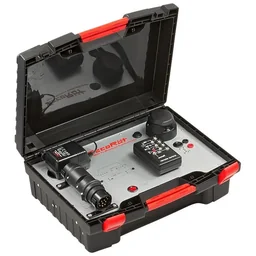
Diagnostic kits take testing a step further. They simulate a complete trailer with all its electrical components. As well as displaying signals, they let you check continuity through to the trailer and perform load tests. The is a versatile choice for most vehicle applications.
Specialist devices for modern electronics
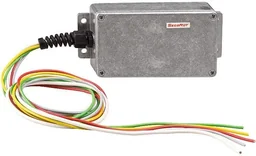
Vehicles with CAN bus systems need special care. Conventional testers may register as a fault and be switched off. Specialist CAN bus testers, such as the , communicate correctly with the system, allowing you to diagnose problems safely without interference.
Adapters for compatibility
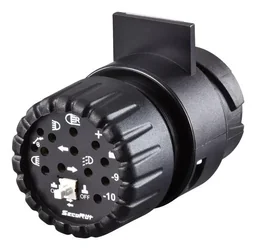
Adapters don’t fix electrical problems, but they’re essential for some tests. If your vehicle has a 13-pin socket and your tester has a 7-pin plug, you’ll need an adapter. The solves this compatibility issue and lets you use your tester with different sockets.

Tip: Always start troubleshooting at the tow vehicle. Connect your tester directly to the vehicle socket. If all signals work properly there, the fault is in the trailer wiring or lights.
Buying guide: what should you look for?
Not every tester is right for every application. Consider these key points before you buy.
Plug type (7-pin vs. 13-pin)
Make sure the device has a plug that matches your vehicle. 13-pin sockets are standard today. With an adapter, you can usually connect a 13-pin tester to a 7-pin socket as well. The reverse—connecting a 7-pin tester to a 13-pin socket—won’t work without further modification because some contacts are missing.
Voltage range (12V vs. 24V)
For car trailers and light commercial vehicles, you need a 12V device. Heavy-duty trucks and some buses use 24V electrical systems. Using a 12V device with one of these systems can damage it, so check the specification before you buy.
Functions and ease of use
Think about how thoroughly you want to investigate the problem. Is a simple signal display enough, or do you need to check continuity and test under load? More complex kits offer more options but also require more expertise. Choose a device with intuitive controls and clear instructions.
Build quality and protection
You may use the device in a workshop or on the side of the road. Look for a robust housing, protected electronics and clear, easy-to-read labels. Splash protection can also be useful.
Warning: Never connect a tester while the engine is running or the ignition is on. Plug in the device first, then turn the ignition to the “trailer electrics” or “ignition on” position. This helps prevent short circuits and damage to your vehicle’s electronics.
The best trailer testers compared in 2026
Our experts took a close look at a range of models. Here are our recommendations for different needs.
Here are the top-rated trailer testers in our range, compared:
| Model | Customer rating | Availability |
|---|---|---|
| ABS test plug | – | Currently unavailable |
| Diagnostic kit for trailer sockets and plugs | – | Currently unavailable |
| Diagnostic kit for 24-volt trailer sockets and plugs | – | Currently unavailable |
| Fritz Göbel 13-pin to 7-pin trailer adapter for cars | – | Currently unavailable |
| Fritz Göbel GmbH 7-pin to 13-pin trailer adapter - converts 7-pin car connection to 13-pin | – | Currently unavailable |
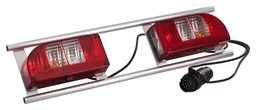
Alongside the devices listed in the table, the is also worth mentioning. This LED trailer box is more than just a tester: it can also provide temporary lighting for a trailer with faulty lights, helping you get it safely to a repair shop.
Note: The product IDs listed help you find the exact devices in our store. Our selection is based on build quality, features, and customer experience. The order does not indicate a ranking.
How to use a trailer tester correctly
A systematic approach is the quickest way to find the problem. Follow these steps.
Step 1: Prepare and work safely
Park your vehicle on level ground and set the parking brake. Turn off the ignition and all electrical accessories. Check the tester for any obvious damage.
Step 2: Test the towing vehicle
Insert the tester into the vehicle's clean, dry trailer socket, using a suitable adapter if necessary. Turn on the ignition or select the special mode for the trailer wiring. Test each function in turn: left and right turn signals, brake lights, tail lights, rear fog light, and so on. The device should display each function correctly.
Step 3: Interpret the results
All functions light up correctly: The vehicle socket is working properly, so the problem is likely in the trailer. If your diagnostic kit supports it, continue by checking the trailer wiring.
One or more functions fail: The problem is on the vehicle side. Check the corresponding fuse. If it is intact, the control unit or the wiring to the socket may be faulty. You will need professional help.
Step 4: Check continuity through to the trailer
A diagnostic kit lets you test the cables from the vehicle socket through to the trailer plug. Connect the device at one end and use the kit's test probe to take a measurement at the other. This can help you find breaks or short circuits in the trailer wiring.
Care and storage
With proper care, a trailer tester can last for many years. Keep these points in mind.
After use, clean the plug and contacts to remove dirt and oxidation. Use contact cleaner to protect the contacts. Store the device in its original packaging or a clean toolbox to protect it from dust and moisture. Avoid extreme temperatures, such as direct sunlight in the car or an unheated garage in winter. Before using it again, briefly check that it works properly, for example by testing it on a known working socket.
Conclusion: An investment in safety and peace of mind
A reliable trailer tester is more than just a tool; it helps keep you safe on the road. Faulty trailer lights put you and other road users at risk. With a trailer socket tester or diagnostic kit, you can usually identify the cause in just a few minutes.
For quick basic checks across different vehicles, a simple, durable trailer socket tester such as the is a good choice. If you want to investigate problems in more detail or check the trailer wiring, invest in a comprehensive diagnostic kit such as the . Owners of modern vehicles should look for CAN bus compatibility, as offered by the .
A one-time purchase of a high-quality device gives you more independence and can save time and money in the long run. You can count on your trailer tester to work reliably whenever you need it – before your next trip.
Frequently asked questions
- When do I need a trailer tester?
- Use a trailer tester when your trailer lights are not working. It helps identify whether the problem is in the vehicle socket, the wiring, or the trailer lights. This can prevent you from replacing working bulbs unnecessarily or paying for a repair shop visit to fix a simple electrical problem.
- What is the difference between 7-pin and 13-pin plugs?
- A 7-pin plug is the standard for basic lighting functions such as turn signals, brake lights, and tail lights. A 13-pin plug has additional contacts for a car trailer power supply, rear fog light, and backup light circuit. The 13-pin plug is now the most widely used type in Europe.
- Can a trailer socket tester check every function?
- Yes. A high-quality trailer socket tester such as PRODUCT_124304 uses a separate LED for each contact to show whether voltage is present and whether functions such as the turn signals and brake lights are working correctly. It is the quickest and easiest way to carry out a basic check of the vehicle socket.
- What can a diagnostic kit do that a basic trailer socket tester cannot?
- A diagnostic kit, such as PRODUCT_104083, simulates a complete trailer. It can display the towing vehicle's output signals and check whether the socket works correctly under load. Many kits can also test cable continuity through to the trailer.
- Are trailer testers suitable for vehicles with CAN bus systems?
- Modern vehicles with CAN bus control systems need special devices such as PRODUCT_124450. These communicate with the vehicle and simulate a connected trailer without triggering error messages in the onboard computer. Basic trailer socket testers can cause faults in CAN bus systems.