
In brief: Your lawn mower needs regular unleaded gas with an octane rating of 95 (E5 or E10). Use it straight in 4-stroke engines. For 2-stroke engines, mix the gas with special 2-stroke oil at the ratio specified by the manufacturer. Avoid alkylate gas unless you’re storing the mower over winter or using it in an enclosed space.
What Gas Does a Lawn Mower Need? Choose the Right Fuel
Choosing the wrong gas can ruin your lawn mower in a single season. Modern engines are precision machines and are sensitive to contaminated or unsuitable fuel.
We explain the differences between 2-stroke and 4-stroke engines, why octane ratings matter, and which fuel to choose. This will help protect your investment in garden tools.
4-Stroke vs. 2-Stroke: The Fundamental Difference
The engine design determines which fuel you need. Don’t confuse the two types; the consequences can be serious.
How a 4-Stroke Engine Works
4-stroke engines are the standard in most lawn mowers. They have a separate oil system. The name describes the four operating stages: intake, compression, power, and exhaust.
For these engines, fill the tank with straight gas. The engine oil sits in a separate reservoir and must be changed regularly.
„A 4-stroke engine is like a car engine in miniature. It needs two separate fluids: gas for combustion and oil for lubrication. Mixing oil into the gas can damage the catalytic converter and foul the spark plug.“
How a 2-Stroke Engine Works
You’ll often find 2-stroke engines in lightweight equipment such as brush cutters, clearing saws, and small leaf blowers. They combine intake and compression, as well as power and exhaust, in just two strokes.
There is no separate oil system. The oil mixed into the fuel provides lubrication, and the mixture burns inside the cylinder.
Important note
Never fill a 2-stroke engine with straight gas. Without added oil, the engine runs without lubrication. Within just a few minutes, the piston can seize, causing irreparable engine damage. Read the owner’s manual and mix the fuel exactly as specified.
Octane Ratings: What Do 95, 98, or 102 Mean?
The octane rating (RON) measures how resistant gas is to engine knock. A knocking engine runs inefficiently and can be damaged. A low octane rating is perfectly adequate for lawn mower engines.
Super E5 (95 Octane) – The Standard Recommendation
Unleaded gas with 95 octane and no more than 5% ethanol is the ideal fuel for almost all lawn mowers. These engines are designed for it. Higher octane ratings don’t improve performance.
You simply spend more money. Pay attention to the ethanol content. E5 is well tolerated.
Super E10 (95 Octane) – Use with Caution
E10 contains up to 10% ethanol. This bioethanol can be harsh on seals, hoses, and metal parts. It also attracts moisture.
E10 is usually approved for modern equipment made from around 2011 onward. Check the manufacturer’s specifications. For older mowers and all 2-stroke engines, E5 is the safer choice.
Pro tip
Always buy gas for your lawn mower at a gas station, not from the fuel can section of a home improvement store. Gas station fuel meets quality standards and sells more quickly, so it’s fresher. Pour it into an approved blue gas can.
Super Plus (98 Octane) & Ultimate (102 Octane) – Unnecessary
These fuels are designed for high-performance sports car engines. Your lawn mower can’t make use of the higher octane rating, so combustion won’t become more efficient.
You pay extra without getting a benefit. Stick with Super 95.
The Mixing Ratio for 2-Stroke Engines
The correct mixture is vital for your 2-stroke engine. Too little oil causes wear. Too much oil fouls the spark plug and exhaust.
How to Mix It Correctly
Use only special 2-stroke engine oil. It is formulated to burn in the fuel mixture. Automotive or 4-stroke engine oil produces too much soot.
Typical mixing ratios are 1:50 or 1:25 (1 part oil to 50 or 25 parts gas). A measuring cup or mixing bottle helps ensure accuracy. Don’t guess.
„The biggest problem with 2-stroke mixtures is inaccurate measuring. A little more or less oil may seem insignificant, but over time, an incorrect mixture can cause power loss, higher fuel consumption, and ultimately engine damage. Precision pays off.“
Pre-Mixed Fuel – Convenient but Expensive
Specialty retailers sell pre-mixed 2-stroke gas in cans. It’s ideal for occasional users who don’t want to store full gas cans.
The price per gallon is significantly higher. If you use it regularly, mixing the fuel yourself makes sense. For yard work with several machines, a gas can is the more economical option.
Alkylate Gas: The Premium Fuel
Alkylate gas is a highly refined fuel that is almost free of sulfur and aromatics. It burns cleanly, producing very little soot or odor.
Advantages of Alkylate Gas
Its long shelf life is its greatest advantage. It stays usable for years without losing quality, making it ideal for winter storage.
Because it gives off very few harmful fumes, it’s a good choice for enclosed spaces, garages, or greenhouses. It’s also better for your health.
Disadvantages and Costs
Alkylate gas costs around three times as much per gallon as standard Super. For weekly lawn mowing outdoors, the extra cost is hard to justify.
Engine performance stays the same. You’re paying for cleanliness and longevity—for both your equipment and the fuel itself.
Additional advice
Fill the tank with alkylate gas for your last mowing session before winter. This helps prevent deposits from forming in the carburetor during storage, so your mower will start right up again in spring. It’s a worthwhile investment that can save you an expensive cleaning.
Fuel Storage and Shelf Life
Gas gets old. The ethanol in E5 and E10 in particular causes chemical changes over time. Improper storage can ruin the fuel and put your equipment at risk.
How to Store Gas Correctly
Always store gas cans in a cool, dark, dry place. A garden shed or well-ventilated garage works well. Keep the can out of direct sunlight.
Use only approved containers. Seal them tightly to limit oxygen exposure and evaporation. Label each can with the purchase date.
When Gas Goes Bad
Standard Super E5/E10 is no longer fresh after around 3 months. After 6 months, its quality is often so impaired that you shouldn’t use it.
You can identify old gas by its stale smell and possible discoloration. It can form gummy deposits that clog the small jets in the carburetor.
Practical Tips for Refueling
Refueling carefully helps prevent contamination. Dirt in the fuel tank is a common cause of problems.
Before Refueling: Safety Comes First
Always let the engine cool completely. Never refuel while the engine is running or hot. Place the lawn mower on a level surface.
Keep a fire extinguisher or sand nearby. Don’t smoke. Work outdoors or in a well-ventilated area.
While Refueling: Keep It Clean
Use a funnel with a strainer to catch coarse dirt and dust. Don’t fill the tank all the way to the top.
Leave around 2 cm of air space to allow room for the fuel to expand. Close the fuel cap immediately and securely.
After Refueling: Clean Up Any Spills
Wipe up spilled gas immediately with a cloth. Dispose of the cloth safely, not in your household trash.
Move the mower away from the fueling area before starting it. This helps keep it away from gas fumes near the refueling area.
Choosing the Right Tools for Your Garden
Choosing the right fuel is part of proper equipment care. The right powerful tool makes the work easier. Browse our range to find reliable helpers.
The
is a versatile helper for hard-to-reach areas. Its 2-stroke engine requires a gas and oil mixture. Its power makes it ideal for maintaining your property.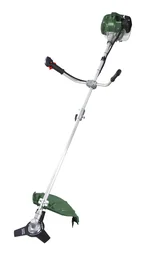
For precise hedge trimming, the
is an excellent choice. Its 4-stroke engine runs on straight gas for smooth operation and lower fuel consumption. Maintenance is simple.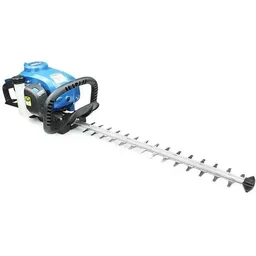
The
is a powerful grass trimmer for large areas and tall grass. It also has a 4-stroke engine. For the best performance, use fresh, low-ethanol gas.
Conclusion: Simple Rules for Choosing the Right Fuel
Choosing the right gas is straightforward, but it does require care. Follow the manufacturer's specifications and always distinguish between 2-stroke and 4-stroke engines.
For everyday use, choose fresh Super E5. Remember to prepare for winter by either emptying the tank or using alkylate gas. With the right care and suitable fuel, your lawn mower will serve you for many years.
Take a few minutes to refuel correctly. You could save yourself expensive repairs and trouble the next time you start the mower.
Frequently Asked Questions
- Can I use E10 gas in my lawn mower?
- For most modern lawn mowers with a 4-stroke engine built from 2011 onward, E10 is usually fine. Check the owner's manual or rating plate. For older equipment and all 2-stroke engines, unleaded Super E5 (up to 5% ethanol) is the safer choice because ethanol can damage materials and cause water to separate in the tank.
- What's the difference between 2-stroke and 4-stroke fuel?
- 4-stroke fuel is straight, unmixed gas (E5/E10). 2-stroke fuel is a mixture of gas and special 2-stroke oil. A 2-stroke engine needs oil in the fuel for lubrication. Always mix it at the exact ratio specified by the manufacturer (e.g. 1:50). Never use straight gas in a 2-stroke engine—it can cause the piston to seize.
- How long can gas sit in a lawn mower?
- Regular gas containing ethanol (E5/E10) starts to go bad after 4-6 weeks. It can form resins and gum that clog the carburetor and fuel lines. Before storing your mower for winter, drain the remaining fuel or use ethanol-free alkylate gas, which can remain stable in storage for up to 5 years. A fuel stabilizer can also extend its shelf life.
- Why won't my lawn mower start after winter?
- The most common cause is old, degraded gas in the carburetor. Ethanol attracts water, which can cause corrosion and clog the carburetor. Before storing your mower for winter, empty the tank or run the mower until it's out of gas. Use ethanol-free gas for the final tankful. Regular maintenance helps prevent this.
- Is premium alkylate gas worth it for a lawn mower?
- Alkylate gas contains almost no harmful aromatics, burns more cleanly and stays fresh in storage for a long time. It's ideal for storing equipment over winter and for use in garages or greenhouses. For regular use in the garden, standard Super E5 is perfectly adequate and more affordable. The extra cost is worthwhile for winter storage or when using sensitive equipment.