
In brief: A lawn often fails to grow because of incorrect watering, nutrient deficiencies or compacted soil. Check that the lawn seeds have constant contact with the soil and that the ground is moist but not waterlogged. Fertilising and loosening the soil by scarifying can quickly stimulate growth again.
You look out at your garden and see only bare patches, yellow blades and sparse greenery. The dream of a thick carpet of grass seems to have moved far away. Many garden owners know this frustrating lawn problem. But the causes are usually easier to fix than you might think. Often, small mistakes in lawn care or sowing are preventing growth.
Before you despair, take a strategic approach. Analyse the situation and take the right measures. With the right knowledge and tools, you can turn your problem area back into a robust, green oasis. The foundation for every success is choosing the right seed. A high-quality mix is hardier and germinates more reliably.
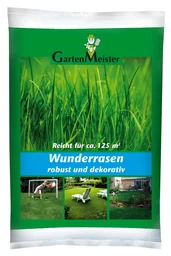
For a quick, dense lawn that can withstand heavy use, we recommend Lawn seed "Wunder Rasen". This special mix is known for its rapid germination and excellent durability. It is ideal for creating a new lawn and repairing bare patches, helping to solve lawn problems effectively.
Why aren’t my lawn seeds germinating? The first check
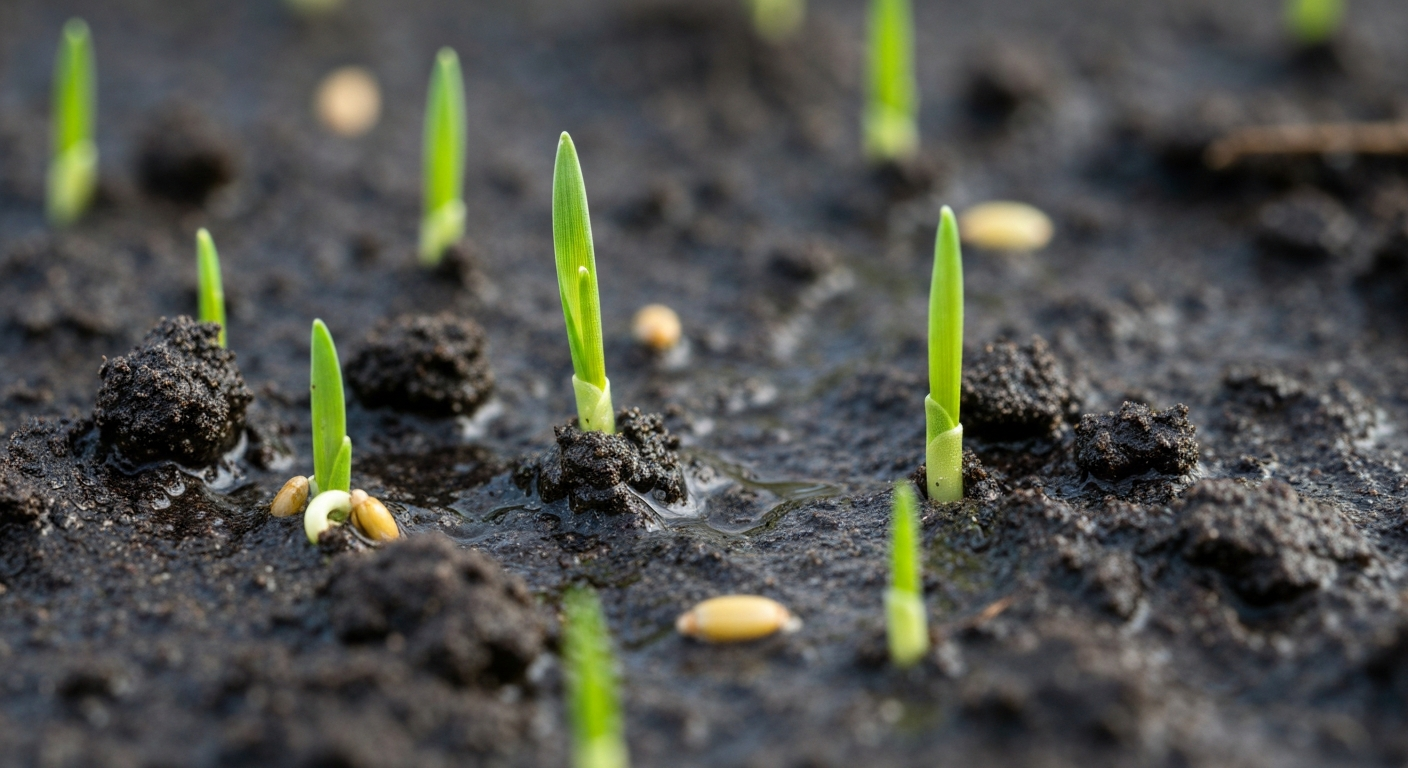
You have scattered new lawn seeds, but nothing happens for weeks. That is discouraging. The problem is usually one of the basic conditions needed for successful germination. Check these three factors first.
Sowing at the wrong time
Lawn seeds are not magic beans. They need certain temperatures to germinate. The ideal soil temperature is consistently above 10 °C. If you sow too early in the year, when the soil is still cold, the seeds remain inactive or rot. If you sow in midsummer during extreme heat, the delicate seedlings dry out immediately.
The best times for sowing are spring (April/May) and early autumn (September). The soil is warm enough, and rainfall helps with watering. Check the weather forecast to find a stable period without late frosts or heatwaves.
Insufficient contact with the soil
Lawn seeds need firm contact with the soil to absorb moisture. If you simply scatter the seeds on hard, compacted ground, they lie loose on the surface. Birds eat them, the wind blows them away or they dry out. Germination becomes impossible.
Before sowing, thoroughly loosen the soil with a rake. After scattering the seeds, work them in lightly, to a depth of around 0.5 to 1 cm. A roller or board can help press the seeds firmly into the soil. This ensures essential contact with the soil.
Incorrect watering: too much or too little
The first few weeks after sowing are crucial. The soil must be kept constantly moist, but should never be waterlogged. Allowing it to dry out just once can kill the seedlings. Too much water, on the other hand, washes the seeds away and encourages rot.
Water the freshly sown area several times a day with a fine spray. The soil should feel like a wrung-out sponge. Avoid using a powerful jet of water, which can wash away the soil and seeds. Once the grass is a few centimetres high, you can water less often but more deeply.
Expert tip
It is best to water your lawn early in the morning. Evaporation is lowest at this time, allowing the water to penetrate deep into the soil. Watering in the evening leaves the grass damp overnight, which can encourage fungal diseases.
How can I tell if my lawn is lacking nutrients?
A lawn is a monoculture made up of thousands of small plants, all competing for the same resources. Without an adequate supply of nutrients, your lawn effectively goes hungry and its growth stagnates. Nutrient deficiency is one of the most common causes of a poor-quality lawn.
Yellow grass blades and slow growth
The clearest sign of nutrient deficiency is a yellowish or pale green colour in the grass blades. The lawn lacks the vibrant green colour created by chlorophyll. Nitrogen (N) is particularly essential for producing chlorophyll. If nitrogen is lacking, the grass discolours and grows only slowly or stops growing altogether.
Also observe the density of your lawn. If bare patches are becoming more common and weeds are spreading, this is a clear indication. Weeds are often less demanding and take advantage of weak grass to spread. You can effectively repair your lawn by addressing the underlying cause—the deficiency.
A well-nourished lawn is the best defence against weeds and moss. It forms such a dense sward that competitors have hardly any chance to establish themselves.
The importance of N-P-K
Every good lawn fertiliser displays an N-P-K ratio. These letters stand for the three main nutrients every plant needs to live:
- N (Nitrogen): Promotes leaf growth and provides a rich green colour. It is the most important nutrient for a dense lawn.
- P (Phosphorus): Supports root growth and is particularly important for young plants and germination. A good starter lawn fertiliser has a higher phosphorus content.
- K (Potassium): Increases resistance to drought, frost and disease. It strengthens cell walls and makes the lawn more resilient.
A deficiency in any of these nutrients inevitably leads to growth problems. Balanced fertilisation is therefore essential.
Proper fertilisation as the solution
To correct a nutrient deficiency, you need to fertilise your lawn. Regular fertilisation, around three to four times a year, supplies the lawn with everything it needs. Start in spring to stimulate growth after winter, and finish the season with an autumn fertiliser that prepares the lawn for winter.
For natural and sustainable lawn care, an organic lawn fertiliser is ideal. It releases its nutrients slowly and evenly, reducing the risk of over-fertilisation and supporting soil life. The Organic Lawn Fertiliser with its balanced NPK ratio of 8+3+6 is an excellent choice for supplying your lawn organically and promoting sustainable growth.

Important note
More is not always better. Over-fertilisation, especially with fast-acting mineral fertilisers, can burn grass roots and damage the soil. Follow the dosage instructions on the packaging exactly.
Can soil problems prevent lawn growth?
Even the best seed and fertiliser are of little use if the soil itself is the problem. Healthy soil is the foundation for everything. Compaction, an incorrect pH level or a thick layer of thatch can effectively block growth.
Compacted soil: no room for roots
Heavily compacted soil, often found in clay soils or on heavily used areas, allows hardly any water, air or nutrients to reach the roots. The grass roots cannot spread and become stunted. You can identify compacted soil by the fact that water remains on the surface for a long time after rainfall.
To loosen the soil, you can aerate it. This involves making deep holes in the turf with an aerating fork or a specialised tool. Then fill these holes with coarse sand. This improves drainage and aeration over the long term. On smaller areas, regularly loosening the soil with a digging fork can already help.
Think of compacted soil as a stone wall blocking the roots. No living thing can survive without air and water. Aeration breaks down this wall and gives the lawn room to breathe again.
Incorrect pH level: acidic or alkaline?
The pH level of the soil determines how well plants can absorb nutrients. For lawns, a slightly acidic to neutral pH level between 5,5 and 7,0 is ideal. If the soil is too acidic (below 5,5), moss spreads rapidly. If it is too alkaline (above 7,5), grasses can no longer absorb important trace elements such as iron, which causes yellow leaves.
You can quickly determine your soil's pH level with a simple test kit from a specialist retailer. If the soil is too acidic, applying lawn lime & garden lime helps raise the pH level. If the soil is too alkaline, you can work in acidic materials such as peat or a special fertiliser.

How do light and shade affect growth?
Every plant needs light for photosynthesis. Grass is no exception. While most lawn varieties love full sun, almost every garden has areas that are in shade for much of the day. This presents a particular challenge.
The problem with shady corners
Under large trees, on the north-facing sides of houses or next to tall hedges, lawns receive only a few hours of direct sunlight. The grass grows thinner there, is more susceptible to disease and provides ideal conditions for moss. Standard lawn mixtures are not designed for these conditions and quickly become weak.
In addition, grass under trees competes with tree roots for water and nutrients. The soil is often drier and poorer in nutrients. Targeted care is essential here if you want to have any chance of growing green grass.
Choosing the right seed for shady areas
Don't give up on shady areas. The solution lies in choosing the right grass varieties. Special shade-tolerant lawn mixtures are available that contain grasses such as supina bluegrass (Poa supina) or red fescue (Festuca rubra). These varieties need significantly less light and form a dense sward even in shady locations.
If you have lawn problems in shady areas, overseed them specifically with one of these specialist mixtures. Care for these areas slightly differently as well: Mow shade-tolerant grass one to two centimetres higher than the rest of the lawn. This gives the blades more leaf surface for photosynthesis.
Which lawn care tasks are essential?
A lawn is not a low-maintenance wild meadow. Regular, correctly performed lawn care is the key to a consistently thick and healthy green lawn. Incorrect mowing or failing to scarify can hinder growth just as much as a lack of nutrients.
The right mowing height
Mowing too short puts the lawn under extreme stress. It removes too much leaf area, restricting photosynthesis and weakening the roots. The soil dries out more quickly and weeds can easily take hold. Grass that is too long, on the other hand, tends to become matted and block out light near the soil.
The ideal mowing height for a standard lawn is between 4 and 5 cm. Follow the one-third rule: never remove more than one third of the grass blade length when mowing. This means that if you want a height of 4 cm, you should mow no later than when the grass reaches 6 cm.
Additional advice
Make sure your mower blades are sharp. Blunt blades tear the grass blades instead of cutting them cleanly. The frayed cut ends provide entry points for disease and result in brown, unsightly grass tips.
Scarifying: air for the grass roots
Over time, a layer of moss, dead plant material and weeds known as thatch forms between the grass blades. This layer acts like a sponge, preventing water and air from reaching the roots. The lawn essentially suffocates.
You should scarify your lawn at least once a year, ideally in spring. A scarifier uses its blades to score the turf and remove the thatch. This creates space, allows air to reach the roots and encourages the grass to tiller, meaning it develops new side shoots. The result is a thicker lawn.
Weeds: competing for nutrients
Dandelions, clover and other weeds are not just an eyesore. They aggressively compete for light, water and nutrients. A severe weed infestation significantly weakens the lawn and can displace it in many areas.
The best way to remove individual weeds is by hand using a weed puller. For widespread infestations, specialist lawn fertilisers containing weed killer can help. However, the best prevention is a strong, dense lawn. Ensure an optimal supply of nutrients and a dense sward so that weed seeds cannot germinate in the first place.
Is your lawn not growing? You now know the most common causes and how to take targeted action. From sowing correctly and applying fertiliser as needed to providing the right care, every step contributes to success. Give your lawn the attention it needs and you will soon be rewarded with a lush, dense carpet of grass that invites you to walk on it barefoot.
Frequently asked questions
- How long does it take for grass seed to germinate?
- Depending on the variety, weather and soil temperature, grass seed takes between 7 and 21 days to germinate. Consistent moisture and a soil temperature of at least 10 °C are important. Warmer temperatures speed up the process, while cold temperatures slow it down.
- Why is my lawn turning yellow and not growing?
- Yellow grass usually indicates a lack of nutrients, especially nitrogen. A lack of water during hot weather or overly acidic soil can also be the cause. A soil analysis and targeted fertilisation can help solve the problem and stimulate growth again.
- Can you sow grass seed on clay soil?
- Yes, but the soil should be prepared first. Loosen the clay soil thoroughly and work in sand and compost. This improves drainage and aeration, prevents waterlogging and makes it easier for the grass roots to grow. Specialist lawn sand is ideal for this.
- How often should I water a new lawn?
- Freshly sown grass needs consistent moisture. Water the area daily during the first two to three weeks, possibly even several times a day in hot weather. The soil should always be moist but never waterlogged. Once the lawn is established, deeper, less frequent watering is sufficient.
- My lawn is full of moss. What can I do?
- Moss is a sign of unfavourable conditions such as shade, waterlogging or a lack of nutrients. Scarify the lawn to remove the moss. Then improve the soil by adding sand, applying lime and using a balanced fertiliser to give the grass a growth advantage.
You may also be interested in
- Promoting lawn growth: your path to a dense green lawn
- Lawn care basics: how to achieve the perfect lawn step by step
- Green lawn: the 5 most common lawn fertilising mistakes
- How to identify and effectively treat lawn diseases
- Grass seed: sown too much? Tips for the perfect lawn
- Yellow lawn? Immediate help for a lush green lawn