
In brief: A 1.5 Ah battery is ideal for short, light tasks such as driving screws, drilling or powering LED lights. Its low weight and affordable price make it perfect for overhead work and as an inexpensive spare battery. For power-hungry tools such as lawnmowers or angle grinders, a 3.0 Ah battery is the better choice.
You are standing in front of the shelf and see two 18-volt batteries. One has 1.5 Ah, the other 3.0 Ah. The price difference is significant. Your first reaction: more is better. But that is only half the story. Choosing the right battery does not depend on maximum capacity, but on your specific application. Often, the smaller, lighter and more affordable battery is the smarter choice.
In this guide, we compare battery capacity in detail. We show you when a compact powerhouse like the 18 Volt Li-Ion 1.5 Ah battery is not only sufficient, but the superior solution for your project. Discover how to save money and work more comfortably by choosing the right battery size for the right task.
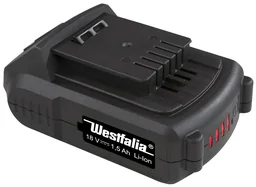
The best tool setup is always the one that matches the task perfectly. An oversized battery is like using a lorry for the weekly shop: it gets the job done, but it is awkward and inefficient.
What do ampere-hours (Ah) mean for a battery?
Think of voltage (volts, V) as the engine power of your car. The 18V is the horsepower, which remains constant. Ampere-hours (Ah) are the size of your fuel tank. A 3.0 Ah battery therefore has a tank twice the size of a 1.5 Ah battery. It can supply the 18V motor with energy for twice as long.
A 1.5 Ah battery can deliver 1.5 amps for one hour or 0.5 amps for three hours. The 18V battery power in terms of output remains the same, but the runtime changes dramatically. Capacity therefore determines how long you can work before you need to recharge the battery.
1.5 Ah vs. 3.0 Ah: The key differences in detail
The most obvious difference is runtime. However, other factors also play a crucial role in your buying decision and working comfort. Let us look at the details.
H3: Runtime: Power for longer projects
This is where the 3.0 Ah battery clearly comes out on top. Under identical loads, it offers roughly twice the runtime. If you are building an entire deck, trimming the lawn or facing a long sanding job, the higher capacity often saves you from frequent battery changes. For short, occasional tasks, however, this advantage is often negligible.
H3: Weight and ergonomics: The key comfort factor
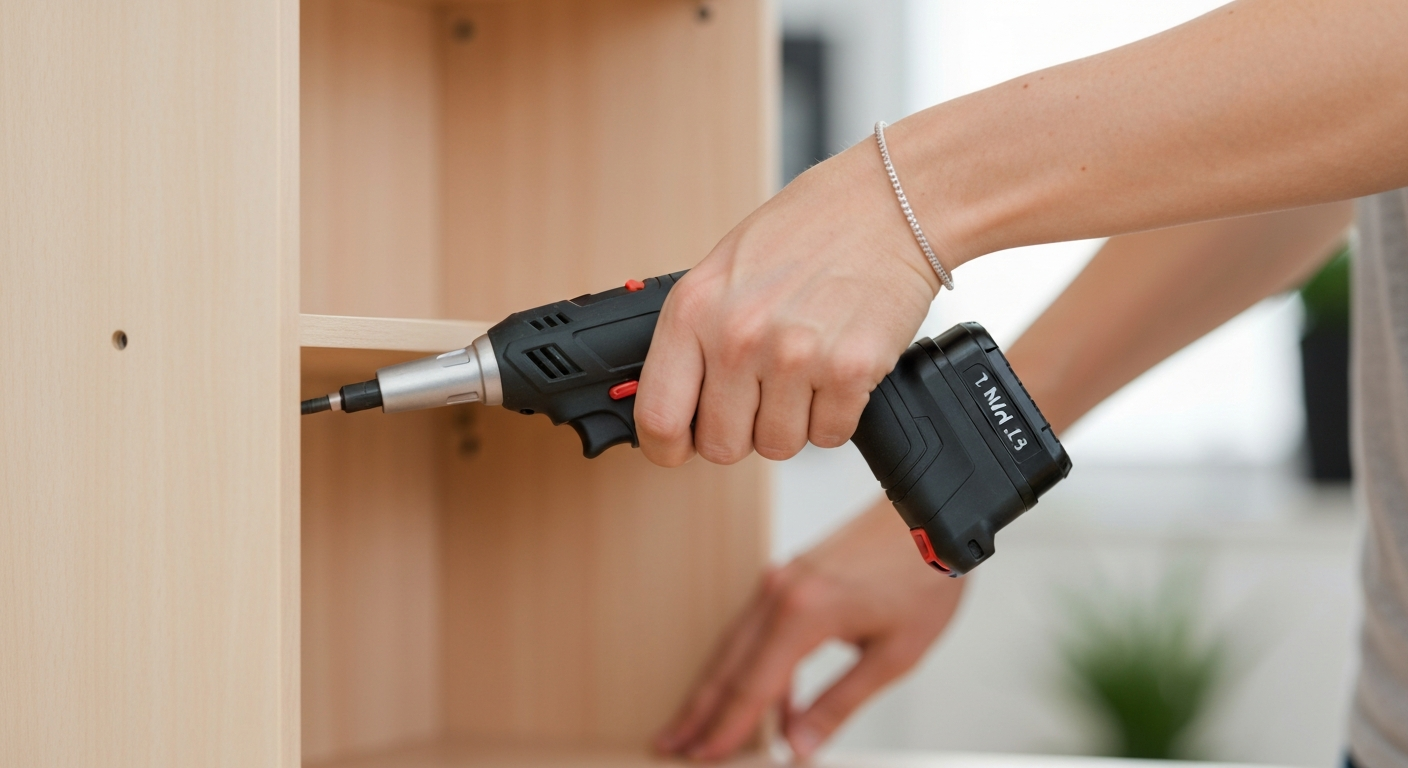
A 3.0 Ah battery contains more cells and is therefore noticeably heavier and larger. A 1.5 Ah battery is more compact and lighter. You notice the difference immediately. During overhead work, such as installing a light or fastening ceiling panels, every gram takes strain off your arms. A lighter battery also improves handling and control during precision work, when you need to guide the tool accurately.
Additional advice
Before buying, check how the tool feels in your hand with each battery. A well-balanced tool with a lightweight 1.5 Ah battery often feels more agile and allows you to work without fatigue for longer periods, even though the battery runtime itself is shorter.
H3: Charging time: Ready to use again sooner
A smaller tank fills up faster. A 1.5 Ah battery is generally fully charged in half the time of a 3.0 Ah battery. If you use a smart two-battery strategy, with one battery charging while the other is in use, the 1.5 Ah battery can even have the edge here. It is often fully charged again before you have drained the second battery.
H3: Price: Use your budget wisely
Cost is an important factor. The price difference between a 1.5 Ah battery and a 3.0 Ah model can be considerable. For the price of one large battery, you can often get two small ones. This allows you to work continuously using the changeover strategy mentioned above while still saving money. The 1.5 Ah battery is a perfect example of excellent value for money.
When is the 1,5 Ah battery the better choice?
The compact 1,5 Ah battery is ideal for many everyday tasks around the home and garden. It really comes into its own whenever runtime is not the top priority.
- Light screwdriving and drilling jobs: You are assembling a shelf, hanging pictures or drilling a few holes in a wall. For tasks that usually take only a few minutes, a 1,5 Ah battery is more than sufficient.
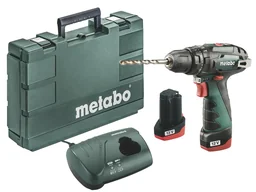
- Overhead work and tight spaces: The low weight is worth its weight in gold here. Whether you are using a cordless hammer drill/driver such as the cordless hammer drill/driver (as an example of this class of tool) or mounting components to the ceiling, your arms will thank you.
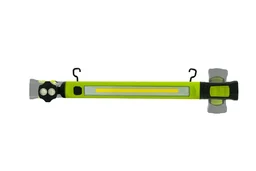
- Low-power devices: A cordless work light such as the multiposition cordless work light will run for hours on a 1,5 Ah battery. It is also the perfect power source for a small cordless radio or hot glue gun.
- As a second or replacement battery: A lightweight 1,5 Ah battery is the ideal companion to your larger battery. If your 3,0 Ah battery runs out during continuous use, you can comfortably bridge the charging time with the small, fast-charging replacement.
- For budget-conscious beginners: If you are just starting to build your collection of power tools, starting with more affordable 1,5 Ah batteries is an economically sensible decision.
Pro tip
Combine different battery types. Use a 3,0 Ah or 4,0 Ah battery for power-hungry tools such as saws or lawnmowers, and equip your screwdrivers and smaller tools with lightweight 1,5 Ah batteries. This allows you to make the most of the benefits of both options.
When do you definitely need a 3,0 Ah battery (or more)?
Some tasks simply require a high battery capacity. For these jobs, a 3,0 Ah battery or a model with even more amp-hours is an essential prerequisite for efficient work.
This applies especially to tools that demand high, consistent power over a long period. A cordless lawnmower would stop after just a few passes with a 1,5 Ah battery. A cordless angle grinder or circular saw working through thick materials needs the energy reserves of a larger battery to avoid constantly reaching its limits.
Important note
Using a battery that is too small in a very powerful tool can shorten the battery's service life. Constant discharge at the limit creates heat and puts stress on the cells. For power-intensive tasks like these, always choose a capacity recommended by the manufacturer.
Projects in the Garden + Outdoor category are classic candidates for larger batteries. Consider:
- Cordless lawnmowers: High capacity is essential for areas of 50 m² or more.
- Cordless leaf blowers: Clearing autumn leaves requires long runtimes at full power.
- Cordless chainsaws: When cutting firewood or pruning trees, every minute of runtime counts.
- Extensive sanding or sawing work: If you are sanding for hours or sawing many metres of wood, constantly changing batteries is extremely disruptive.
How can you optimise the use of your 1,5 Ah batteries?
With the right strategy, you can get the most out of your compact 1,5 Ah batteries and work more efficiently than someone using just one large battery.
The key is the "two-battery strategy". While you work with one battery, charge the second. Since a 1,5 Ah battery often charges faster than it discharges during typical DIY tasks, this creates a seamless workflow without forced breaks. This system requires minimal organisation of your workspace and workshop supplies, but pays off immediately.
You should also store your batteries correctly. Lithium-ion batteries are happiest at room temperature and with a charge level between 40 % and 60 %. Never store batteries completely empty or fully charged for extended periods. This helps maximise the service life and cycle stability of your energy cells.
Myth or fact: Does capacity affect performance?
You often hear the claim that a battery with more amp-hours is also "stronger". Technically speaking, this is not entirely correct. The voltage of 18 Volt determines the tool's basic performance. An 18V screwdriver has the same maximum speed and torque with both batteries.
However, there is a physical effect: Under very high loads, the voltage of every battery drops slightly. A larger 3,0 Ah battery has more cells connected in parallel, which share the current. This allows it to deliver high currents more consistently, with less voltage drop. In practice, this can feel as though the larger battery has "more bite" in extreme applications – such as driving a very long screw into hardwood without pre-drilling.
For over 90 % of all DIY applications, the perceived performance difference between a 1,5 Ah and a 3,0 Ah battery is negligible. The difference in weight and handling, however, is noticeable in every single application.
Conclusion: It's not about better, but about the better fit
There is no clear winner in the 1,5 Ah vs. 3,0 Ah debate. The question is not which battery is better, but which battery is better suited to your needs. The trend towards ever larger capacities can make you overlook the considerable benefits of smaller models.
The 1,5 Ah battery is the unsung hero of everyday use. It is lightweight, easy to handle, quick to charge and easy on your budget. For countless tasks around the home, workshop and garden, it is the smartest choice. It is the perfect entry point into a cordless battery system and an indispensable addition as a lightweight second battery.
So go ahead and confidently choose the 18 Volt Li-Ion 1,5 Ah battery. You are investing in convenience, efficiency and unbeatable value for money for all your everyday challenges.
Frequently Asked Questions
- Will a 3.0 Ah battery fit a tool that came with a 1.5 Ah battery?
- Yes, as long as the voltage (volts) and the manufacturer's battery platform are identical, you can switch between them without any problems. A 3.0 Ah battery simply provides longer runtime. Make sure it is compatible with the manufacturer's system.
- Is a battery with more Ah more powerful?
- Not directly. The power output (volts) remains the same. However, a battery with more ampere-hours (Ah) delivers that power for longer. Under very high loads, a larger battery may maintain a more stable voltage, which can make it feel more powerful.
- Can I charge a 1.5 Ah and a 3.0 Ah battery with the same charger?
- Yes, provided both batteries belong to the same voltage class and manufacturer's series. The charger is designed for the platform, not for a specific capacity. The 1.5 Ah battery will reach a full charge noticeably faster.
- Is a 1.5 Ah battery suitable for garden tools?
- It is often sufficient for smaller tools, such as a cordless trimmer for lawn edges or a small hedge trimmer for shaping. For a lawn mower or leaf blower that runs for longer periods, a capacity of 3.0 Ah or more is recommended.
- How does the battery's weight affect your work?
- Weight is crucial for ergonomics. When working overhead or guiding a tool precisely, a lighter 1.5 Ah battery makes a significant difference. You will tire more slowly and work more accurately.
You may also be interested in
- 18V Battery Buying Guide: How to Find the Right Li-Ion Battery
- The Best Cordless Tools for Your 1.5Ah 18V Battery
- Battery Capacity: When 2.0 Ah Is the Perfect Choice (and When It Isn't)
- 18V Battery Not Charging? Causes & Solutions for Your Problem
- 10 Expert Tips: How to Charge 18V Li-Ion Batteries Correctly & Maximise Their Lifespan
- One Battery, Countless Projects: Get the Most from Your 18V Battery